




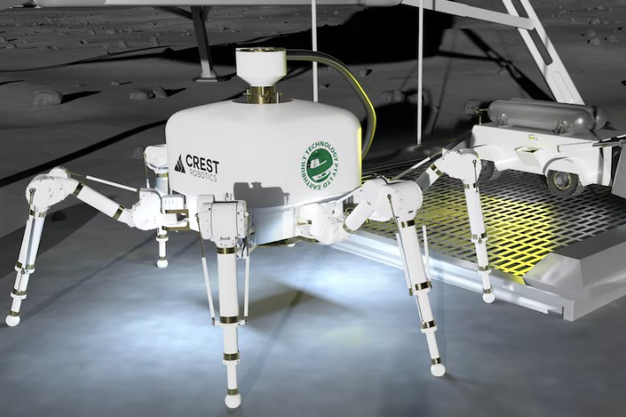
In a dusty, windswept construction yard, a six-legged robot unfurls its limbs and begins to move—not with jerky mechanics, but with a kind of deliberate grace. What it’s weaving isn’t silk, but walls. Meet Charlotte, the spider-inspired 3D-printing robot that’s rewriting the rules of homebuilding. Developed by Crest Robotics in collaboration with Earthbuilt Technology, Charlotte is designed to construct a 200-square-meter home—roughly 2,150 square feet—in just 24 hours, with a minimal carbon footprint and ambitions that stretch from Earth to the Moon.
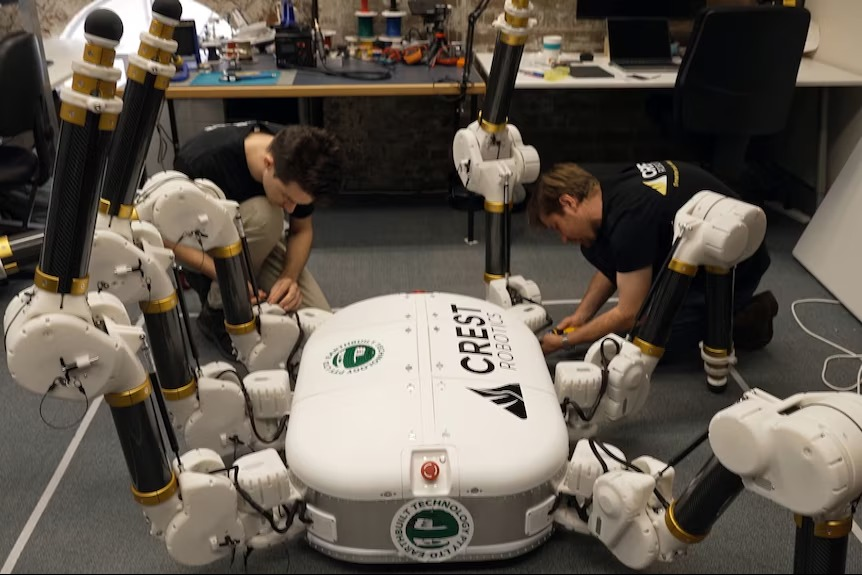
From Vision to Mechanics: What Is Charlotte?
Charlotte is the brainchild of a partnership between roboticists and sustainable construction innovators. Crest Robotics brings expertise in agile, mobile robotic systems, while Earthbuilt contributes a novel extrusion and compaction process that uses raw and recycled materials to form structural walls directly on site. The robot’s undercarriage houses Earthbuilt’s extrusion tool, which draws in locally available materials such as sand, soil, crushed brick, or even waste glass. These materials are combined into a flexible fabric-like form, compressed, and layered in precise patterns that form the skeleton of a home.
Charlotte’s spider-like mobility is what makes it different from traditional gantry-style 3D printers. Rather than being confined to rails or scaffolding, Charlotte can walk the site on jointed legs, positioning itself exactly where each wall segment needs to be printed. This mobility allows it to navigate uneven terrain and adapt to complex architectural designs without requiring heavy on-site infrastructure. Once its work begins, Charlotte moves continuously—printing, compacting, and forming walls as it goes—until the shell of the home is complete within a single day.
Even more impressive, Charlotte is designed to fold itself up for transport. It can be deployed in remote areas or disaster zones and, in the not-so-distant future, could be sent into space to build habitats using lunar regolith.
Why It Matters: Problems Charlotte Tries to Solve
The global construction industry is under enormous strain. Skilled labor shortages, rising material costs, and constant delays have made building slower and more expensive than ever. Charlotte’s creators claim the robot can match the output of 100 bricklayers working at once, cutting build times dramatically and freeing human labor for finishing and specialized tasks.
Beyond speed, Charlotte represents a shift toward carbon and material efficiency. Traditional buildings rely heavily on high-emission materials like cement and steel, often transported long distances. Charlotte’s method turns to what’s already on the ground—earth, sand, and recycled waste—to create strong, sustainable walls with much lower embodied carbon. By sourcing and printing with local materials, the robot also reduces supply chain dependencies and transportation costs.
Its mobility adds another layer of innovation. Many 3D-printed building systems require flat, highly controlled sites. Charlotte, in contrast, can adapt to irregular terrain and complex geometries, making it practical for rural areas, disaster recovery zones, and locations where traditional machinery can’t operate efficiently. And perhaps most boldly, Charlotte’s designers are looking beyond Earth. Its lightweight design, autonomous navigation, and ability to use native materials make it a candidate for off-world construction—an early step toward lunar or Martian colonies.

Hurdles and Open Questions
For all its promise, Charlotte’s path to widespread use won’t be easy. Engineers and builders will need to validate the structural strength and durability of the materials it uses. Can these compressed and cured earth-based walls withstand moisture, seismic shifts, and decades of weathering as well as traditional concrete or brick? There’s also the question of complexity. Homes aren’t just walls—they need doorways, windows, embedded utilities, insulation, and finishes. Integrating all of that with a robotic-printed shell requires a careful orchestration of technologies and trades.
Autonomy is another challenge. How much human oversight will Charlotte still require on-site? Full automation sounds appealing, but most jurisdictions still require licensed professionals to ensure code compliance. And speaking of codes, building regulations in many regions don’t yet account for robotic-printed earthbag-style structures, which could slow adoption until standards evolve.
Finally, economics will determine Charlotte’s future. The initial cost of developing and deploying such a robot must be offset by faster build times, lower material costs, and reduced labor requirements. Proving that equation at scale will be crucial before builders adopt it widely.
A Day in the Life (Imagined)
Picture Charlotte arriving at a vacant lot early in the morning. After scanning and mapping the site, it begins its work—extruding and layering the walls of a home as it moves gracefully across the terrain. By sundown, the walls stand complete, strong and curing in place. Overnight, the material sets. The next morning, tradespeople arrive to install windows, electrical conduits, roof trusses, and interior finishes. What once might have taken weeks or months has been compressed into a matter of days.
Looking Ahead: What Charlotte Could Enable
Charlotte could help unlock affordable housing at a scale the world desperately needs. Imagine deploying fleets of these robotic builders in regions hit by natural disasters, quickly constructing resilient shelters from locally sourced earth and waste. The same technology could reshape rural development, enabling communities to expand using sustainable, low-carbon materials rather than imported supplies.
In urban contexts, Charlotte could work alongside traditional trades, printing shells that are later customized and finished by human crews. And as the technology matures, the vision extends beyond our planet—printing the first lunar habitats using the dust and rock already there.
Charlotte may never fully replace traditional construction methods, but it represents a bold new chapter in how we think about building. Instead of stacking bricks or pouring concrete, we may soon live in homes spun from the very ground we stand on—woven not by hand, but by the delicate precision of a robotic arachnitect.
.
With over 9,000 published articles on modular and offsite construction, Gary Fleisher remains one of the most trusted voices in the industry.
.
CLICK HERE to read the latest edition

Contact Gary Fleisher