





An investigative look at production impacts, environmental controversies, and whether modular lines are ready for it.
Walk into any offsite factory and mention Rockwool, and you’ll immediately see the divide. On one side are the building scientists, fire officials, and commercial developers who insist it’s the gold standard for insulation. On the other side are production line managers who see it as a material that slows their entire system to a crawl. And hovering over both sides is a broader, louder debate about its environmental footprint—an issue that seems to ignite more heat than the volcanic melting process used to make the stuff.
Rockwool, also known as mineral wool or stone wool, has never been just an insulation product. It has become a symbol of a larger tug-of-war in the construction industry: high-performance building systems versus the realities of factory efficiency and environmental stewardship. This article takes a hard look at what Rockwool really is, the controversies surrounding how it’s made, and whether it truly belongs on modular production lines that value speed, precision, and efficiency above all else.
What Rockwool Actually Is
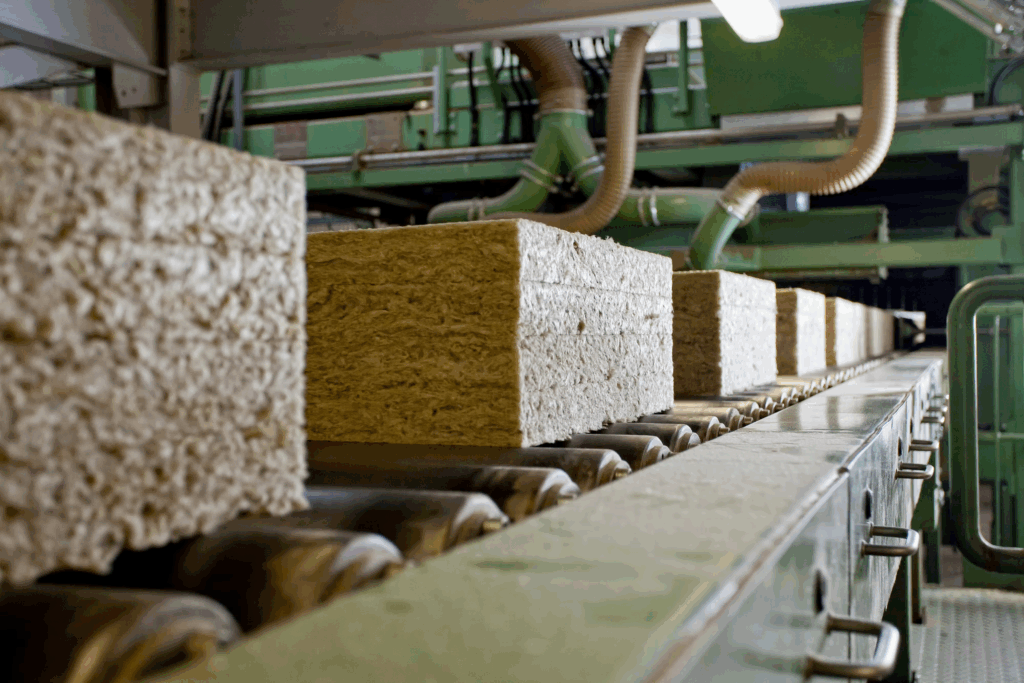
Rockwool is produced by superheating basalt rock and recycled steel slag until the mixture reaches roughly 2,900°F. At that point, it becomes molten and is spun into fibers that resemble a volcanic version of cotton candy. Those fibers are pressed into batts, boards, and loose-fill products and then shipped to construction sites around the world.
Its natural characteristics—fire resistance, dimensional stability, moisture resistance, and exceptional sound attenuation—are well documented. This is the reason multifamily developers, commercial architects, and fire marshals treat Rockwool almost as a default material in certain assemblies. From New York to Seattle, it has become synonymous with higher performance expectations and stricter fire codes.
But modular factories live in a very different world than field builders. Their relationship with Rockwool is complicated, and increasingly, so is the public conversation about its environmental impact.
The Pros of Rockwool Production
For those who champion Rockwool, the benefits often begin with its inherent fire resistance. Because it is literally made from stone, Rockwool does not require added chemicals or fire-retardant treatments. In an industry still grappling with how to remove questionable additives from building materials, this characteristic alone has made Rockwool a favorite in healthcare, hospitality, dormitories, and multifamily projects—especially in regions with aggressive fire protections.
Beyond fire performance, Rockwool’s moisture behavior gives it another advantage. Unlike fiberglass, which can slump or hold moisture, Rockwool dries out and returns to shape if it gets wet. In a modular industry shipping homes across four or five climate zones on a single truck, that resilience is not insignificant. It supports long-term performance even when weather or delays disrupt the perfect shipping timeline.
Rockwool also earns praise for its raw material profile. Basalt, the primary ingredient, is one of the most abundant rocks on earth. When paired with recycled slag from steel production, the feedstock offers a level of material stability that petrochemical-based insulation simply cannot match. This appeals to builders and developers who want environmentally predictable supply chains or who operate under strong ESG mandates.
Finally, Rockwool’s lifecycle performance is exceptional. It does not break down, lose R-value, feed insects, or support mold growth. Once installed, it usually stays put for the life of the building. That longevity translates into lower lifecycle energy consumption and reduces the probability of future insulation failures—an argument the product’s advocates make often and loudly.
The Cons of Rockwool Production
But this positive story has an equally powerful counterpoint, and it begins with the Rockwool manufacturing process itself. Superheating rock is not a delicate process. It requires enormous amounts of energy, usually from natural gas or coke. The furnaces involved in mineral wool production create a carbon and energy footprint that critics argue is incompatible with modern sustainability standards.
Communities near Rockwool facilities have raised concerns about local emissions, including particulate matter, sulfur dioxide, nitrogen oxides, and small amounts of VOCs. These emissions are heavily regulated, and Rockwool maintains that its plants meet or exceed all applicable standards. Yet the protests that have occurred around proposed Rockwool plants in both Europe and North America demonstrate how contentious this issue remains. Even when legally compliant, the optics of thick industrial stacks producing the insulation used in “sustainable buildings” doesn’t sit well with some environmental groups.
Another often-overlooked factor is transportation. Rockwool is bulky. While light compared to its size, it still occupies considerable volume in shipping containers and truckloads. The result is more trips, more fuel consumption, and more onsite or factory handling complications. In a factory environment that thrives on just-in-time delivery, this inefficiency can quickly add up.
When the environmental debate is combined with these logistical challenges, the product’s green reputation becomes more complicated than many architects want to admit.
Is Rockwool Viable for Modular Production Lines?
To understand Rockwool’s place in modular construction, you must view it from the factory perspective—not the field-builder perspective and not the sustainability advocate’s perspective. Factories operate on speed, precision, predictability, and labor efficiency. Anything that disrupts those four pillars gets scrutinized heavily.
Here’s where Rockwool begins to show its limitations.
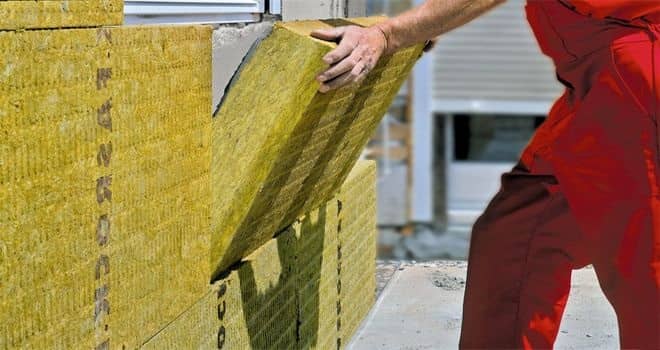
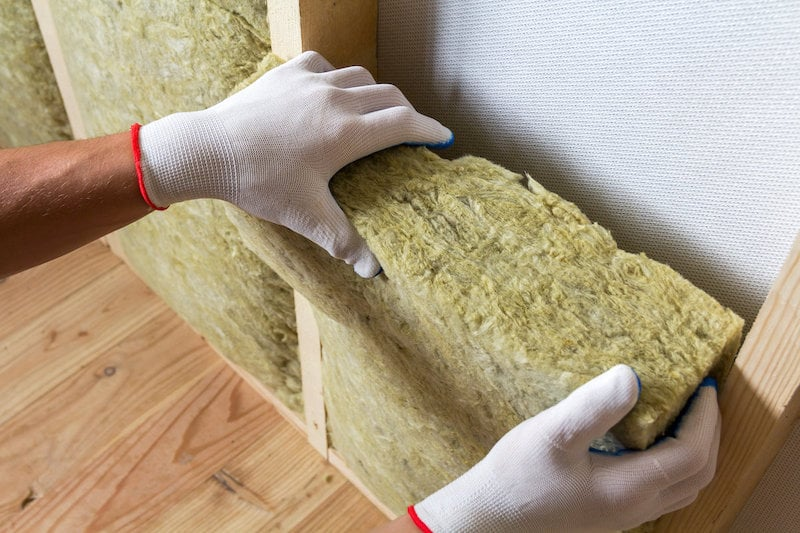
On a fast-moving modular line, Rockwool batts can slow everything down. The material is stiffer and heavier than fiberglass. It does not compress or squeeze neatly into undersized cavities. If framing tolerances drift even slightly, workers spend their time cutting and forcing the fibers into place rather than moving efficiently down the line. Even factories proud of tight tolerances find that Rockwool requires extra adjustments, trimming time, and more careful placement.
Line workers regularly describe Rockwool as “a fight.” It sheds fibers. It demands premium PPE. It requires more cleanup. And while the product is less itchy than the old generation of fiberglass, it is still an irritant, especially when handled for hours on a production floor.
Then there is the cost. Rockwool commands a premium price per square foot compared to fiberglass batt insulation. For builders targeting the affordable housing market—or for modular lines designed to hit competitive price points—this cost penalty is difficult to justify unless required by building code or a specific engineering specification.
This is why Rockwool is far more common in modular factories serving multifamily, hospitality, workforce housing, and commercial markets than it is in factories focused on ADUs, starter homes, or high-volume low-margin products.
Where Rockwool Makes Sense in Modular
Despite its challenges, there are markets and building types where Rockwool is not just viable—it’s the most logical choice.
Factories serving mid-rise housing, institutional clients, or any market with rigorous fire requirements often have no better alternative. The product’s acoustic performance also makes it a strong fit for dormitories, hotels, and multifamily housing where noise control is essential.
Additionally, factories building advanced, high-performance envelopes—especially those chasing Passive House or Net-Zero scores—rely on Rockwool’s stability and vapor profile. Exterior Rockwool board paired with rainscreen cladding is becoming a standard detail for architects in major metro markets, and modular producers in these regions are finding ways to integrate it effectively.
These factories tend to have stronger QA programs, tighter framing tolerances, and the willingness to adjust workflow to accommodate the material. In these cases, Rockwool elevates the product rather than slowing it down.
Where Rockwool Fails the Modular Test
Conversely, factories built around speed—especially those supplying ADU developers, entry-level housing, or production-volume single-family homes—generally avoid Rockwool. In these environments, every second saved in the insulation station counts. Anything that slows the line, increases training requirements, or creates dust and debris is rejected quickly.
In high-speed environments, Rockwool not only slows production but increases the risk of inconsistent installation. For a factory that markets itself on precision, introducing a material that requires more manual finesse simply doesn’t pencil out.
In My Opinion
Rockwool is a high-performance insulation with undeniable advantages, particularly for fire resistance, moisture management, and acoustic performance. But the environmental footprint of its production remains a valid concern, and the demands it places on factory workflow can’t be ignored.
In the end, Rockwool is not the “best insulation” or the “worst insulation.” It is the right insulation for certain factories, markets, and building types—and the wrong insulation for others. Modular construction thrives on matching materials to system design and production capability. Rockwool fits beautifully when those conditions align. When they don’t, it becomes a production bottleneck waiting to happen.
.
With over 9,000 published articles on modular and offsite construction, Gary Fleisher remains one of the most trusted voices in the industry.
.
CLICK HERE to read the latest edition

Contact Gary Fleisher