I’ve had more conversations lately with developers who are curious about modular than ever before. Some are excited, some are cautious, and a few think they already understand it. What I’ve noticed is that most aren’t asking the wrong questions—they’re just missing a few of the right ones. And in modular, the questions you don’t ask early are usually the ones that come back to cost you later.
Modular Isn’t a Product—It’s a Process
One of the biggest misconceptions developers bring into modular construction is thinking they’re simply choosing a different product. They’re not. They’re choosing an entirely different process of delivering a building.
Modular construction is built in a factory, transported, and assembled onsite—but that simple description hides a much bigger shift. It requires rethinking design, sequencing, procurement, and coordination from the very beginning.
Too many developers try to “convert” a traditional project into modular halfway through. That rarely works. Modular has to be baked into the project from day one, not layered on top of an existing design.
This isn’t an option—it’s the entry fee.
If You Don’t Design for It Early, You Pay for It Later
In traditional construction, you can make decisions late. Fixtures, layouts, and details can evolve as the job progresses.
Modular flips that completely.
Everything—from structural layout to finishes—needs to be decided early because the factory depends on precision and sequencing. Even small details that would normally be decided at the end need to be locked in upfront.
And here’s where developers get into trouble:
They underestimate how much early decision-making impacts the entire project.
Delay those decisions, and you don’t just delay the project—you disrupt the entire manufacturing process.
It’s Not Always Cheaper—It’s Smarter When Done Right
Let’s clear up another myth.
Modular construction is not automatically cheaper.
It’s built to the same codes, often with even stricter inspection processes, and must withstand transportation and craning, which can add structural requirements.
Where modular shines isn’t always in cost—it’s in:
- Speed (parallel site and factory work)
- Predictability
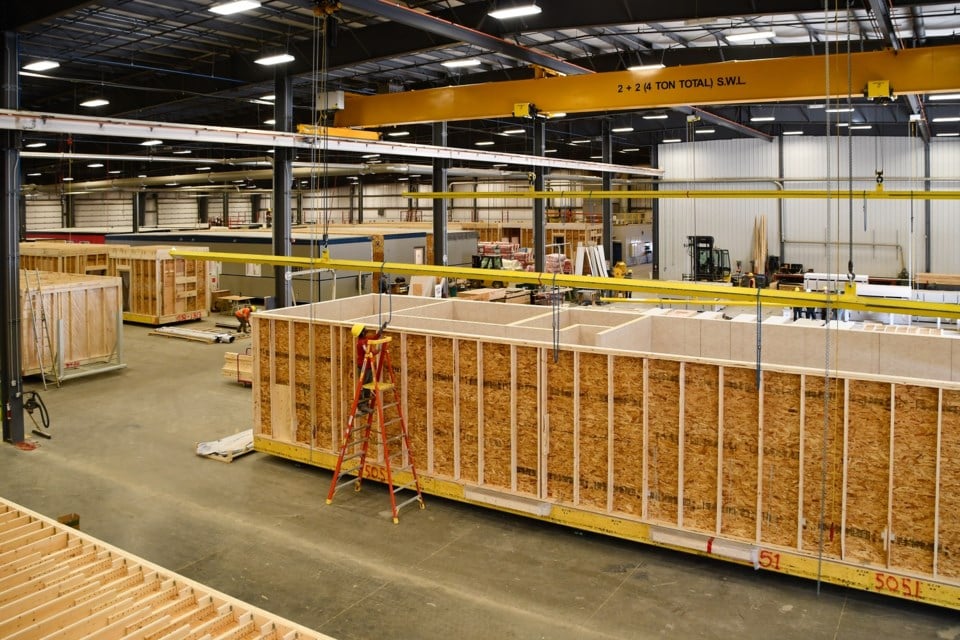
- Quality control in a controlled environment
Projects can move significantly faster because site work and manufacturing happen simultaneously, often reducing overall timelines dramatically.
But if the developer doesn’t understand how to leverage that advantage, modular can end up costing more—not less.
Repeatability Is the Secret Weapon (That Most Ignore)
Factories thrive on repeatability.
Developers, on the other hand, love customization.
The magic in modular happens when those two forces are balanced.
Successful projects identify what should be standardized—and what should remain flexible. Interior layouts, structural systems, and core components often benefit from repetition, while exteriors and aesthetics can still deliver uniqueness.
Developers who treat every modular project as a one-off lose the biggest advantage the system offers.
The real opportunity isn’t building one project.
It’s building a repeatable product platform.
Logistics Will Make or Break You
Here’s something that rarely shows up in early conversations—but always shows up later:
Transportation.
Modules don’t magically appear onsite. They have to be shipped, routed, permitted, lifted, and set. That introduces constraints most developers have never had to think about before—size limits, road restrictions, crane access, staging areas, sequencing.
Poor planning here doesn’t just create headaches.
It creates delays, cost overruns, and sometimes complete redesigns.
In modular, logistics isn’t a line item.
It’s a strategy.
The Factory Is Your Biggest Advantage—If You Use It Right
The factory environment is where modular delivers its biggest value.
Controlled conditions improve quality, protect materials, and allow for consistent production.
Developers can even walk through full-scale prototypes before production ramps up—something unheard of in traditional construction.
But here’s the catch:
You have to collaborate with the factory, not treat it like a vendor.
The most successful developers don’t hand off drawings and wait.
They engage early, align design with manufacturing, and optimize the process together.
The Modcoach Observation
I’ve watched developers walk into modular thinking they’ve found a shortcut—faster builds, lower costs, less hassle. What they actually find is something better—and more demanding. Modular rewards those who think ahead and punishes those who don’t.
The ones who succeed are the ones who decide early, standardize where it makes sense, respect the factory process, and understand that this isn’t just construction—it’s manufacturing. They don’t just “try” modular—they learn how to use it.
The ones who struggle try to force modular to behave like site-built construction. They push decisions downstream, treat the factory like a vendor instead of a partner, and assume they can adjust along the way. And modular never plays along.
Here’s the part that matters most. Modular isn’t the future—it’s already here. But understanding it is still lagging behind. And that gap is where the opportunity is. The developers who take the time to truly understand how it works won’t just build faster—they’ll build smarter, more predictably, and more profitably. The rest will keep wondering why something that looked so simple on the surface turned out to be anything but.

Gary Fleisher—known throughout the industry as The Modcoach—has been immersed in offsite and modular construction for over three decades. Beyond writing, he advises companies across the offsite ecosystem, offering practical marketing insight and strategic guidance grounded in real-world factory, builder, and market experience.