
A Small Project With Big Implications
Las Vegas just approved a 50-unit tiny home community for seniors, and at first glance, it doesn’t sound like the kind of project that changes an industry. But if you’ve been around offsite construction long enough, you know better. The projects that look modest on paper are often the ones that quietly reset expectations.
The development, Sunridge on Searles, will bring approximately 50 factory-built homes to a 2.25-acre parcel. Each unit will measure about 360 square feet and rent in the $900 to $1,000 range, with utilities included. In a market where affordability continues to drift further out of reach, those numbers alone make this project worth paying attention to. But the real story isn’t the rent or even the size of the homes. It’s how they’re being built and how quickly they can be delivered.
Speed Changes Everything
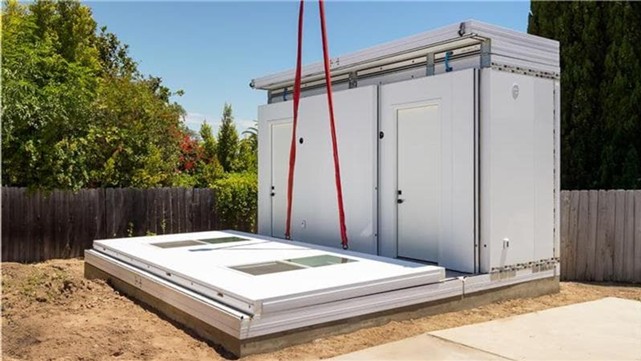
This community will use factory-built units from Boxabl, a Las Vegas-based manufacturer that has been pushing a very different approach to housing. Their foldable, factory-produced units are designed to be built in controlled environments, shipped efficiently, and installed rapidly once the site is ready.
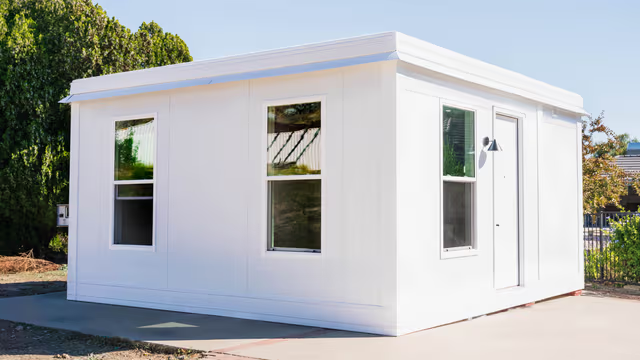
That last part is where things start to get interesting. In traditional construction, timelines stretch due to weather, labor coordination, and the inevitable surprises that show up on every jobsite. With a system like this, much of that unpredictability is removed. Once the groundwork is complete, units can be delivered and set in place in a fraction of the time, sometimes in hours rather than days.
For cities facing housing shortages, that kind of speed isn’t just convenient. It’s becoming essential.
Why Cities Are Watching Closely
Las Vegas is dealing with the same pressures seen across the country: rising construction costs, limited skilled labor, zoning constraints, and a growing population priced out of conventional housing. What makes this project different is that it addresses all of those issues at once, not perfectly, but in a way that is practical enough to move forward.
The appeal for municipalities is not just affordability. It’s predictability. Factory-built systems bring a level of consistency that site-built projects struggle to match. Costs are easier to control, schedules are more reliable, and the risk of major delays is reduced. That combination is exactly what city planners have been searching for, even if they haven’t always had the right tools to achieve it.
The Advantage of Repeatability
If there’s one thing offsite construction has always promised, it’s repeatability. The challenge has been delivering on that promise at scale. Boxabl’s approach leans heavily into standardized production, where each unit is built using the same process, the same materials, and the same sequence every time.
That consistency does more than speed up construction. It improves quality control and reduces long-term maintenance concerns. Materials and assemblies are designed to minimize issues like moisture intrusion, pest damage, and wear over time, which are exactly the kinds of problems cities worry about when approving higher-density housing.
Of course, those concerns don’t disappear overnight. During the approval process, questions were raised about durability and how the community would look years down the road. That’s part of the evolution of any new system. Every project like this has to prove itself not just on day one, but over time.
Where This Model Makes Sense
This type of housing isn’t going to replace traditional single-family homes, and it’s not meant to. Its strength lies in specific use cases where speed, cost, and simplicity matter more than customization.
Smaller infill lots that don’t pencil out for conventional construction suddenly become viable. Senior housing benefits from compact, single-level designs that are easy to maintain. Transitional housing and workforce housing can be delivered quickly when demand spikes, and urban areas where land costs dominate the equation can finally make smaller-scale developments work.
These aren’t fringe scenarios. They represent some of the most pressing housing challenges facing cities today.
The Quiet Impact of Zoning
One of the most important aspects of this project isn’t visible on the site plan. It’s the fact that the city had to adjust and interpret its zoning to allow it in the first place.
That matters more than most people realize. Every time a municipality approves a project like this, it creates a precedent. The next developer has an easier path. The next planning board has a reference point. Over time, what once required special approval becomes part of the normal process.
That’s how real change happens in construction. Not through sweeping mandates, but through a series of projects that gradually shift what is considered acceptable.
Not a Cure, But a Step Forward
No one involved in this project is claiming it will solve the housing crisis, and that’s a good thing. There are no silver bullets in this business, only better tools.
What this project represents is one of those tools finally being used in a meaningful way. It doesn’t replace traditional construction, but it complements it by filling gaps that have been difficult to address with conventional methods.
And right now, those gaps are getting wider.
What Comes Next
If this community performs the way many expect—delivered on schedule, operating within budget, and accepted by residents—it won’t stay an isolated example for long. Other cities will take notice. Developers will start running the numbers. Planning departments will revisit their codes.
Companies like Boxabl will find themselves part of a much larger conversation, not because they’ve solved every problem, but because they’ve aligned with what the market is demanding: faster delivery, controlled costs, and scalable solutions.
Modcoach Observation
Our industry has never lacked innovation. What it has lacked is the ability to take those innovations and apply them in a way that works consistently in the real world.
What Las Vegas just approved isn’t flashy, and it isn’t perfect. But it is grounded in something we don’t talk about enough—practical execution. It’s a reminder that progress doesn’t always come from the biggest projects or the boldest ideas. Sometimes it comes from doing something simple, doing it well, and proving that it can be repeated.
If you’re in this industry, whether you’re building, developing, or planning, this is the kind of project you should be watching closely. Not because it answers every question, but because it asks the right ones.