


Every once in a while, a company disappears just long enough for people to assume the story is over—only to come back sharper, quieter, and a little more focused. That’s the feeling I got digging into Big Turtle Homes.
This isn’t a startup in the traditional sense. It’s more like a second chapter written by people who have already learned a few hard lessons about what works—and what doesn’t—when you try to solve homelessness with modular construction.
And in this business, those lessons are rarely cheap.
The Shadow of Microshelters
The backstory matters here. The principals behind Big Turtle Homes are tied to the earlier Microshelters initiative, which sought to address temporary housing needs but didn’t have an entirely smooth ride. The new company, formed in 2025, signals a reset—not a retreat.
In offsite construction, we see this all the time. Ideas don’t fail nearly as often as execution, timing, and expectations do.
What Big Turtle appears to be doing now is taking that original concept—small, rapid-deployment shelters—and rebuilding it with a clearer understanding of municipal needs, procurement realities, and long-term community integration.
That’s not reinvention. That’s evolution.
Not Just Tiny Homes—A System
It would be easy to dismiss Big Turtle Homes as “another tiny house company.” That would be a mistake.
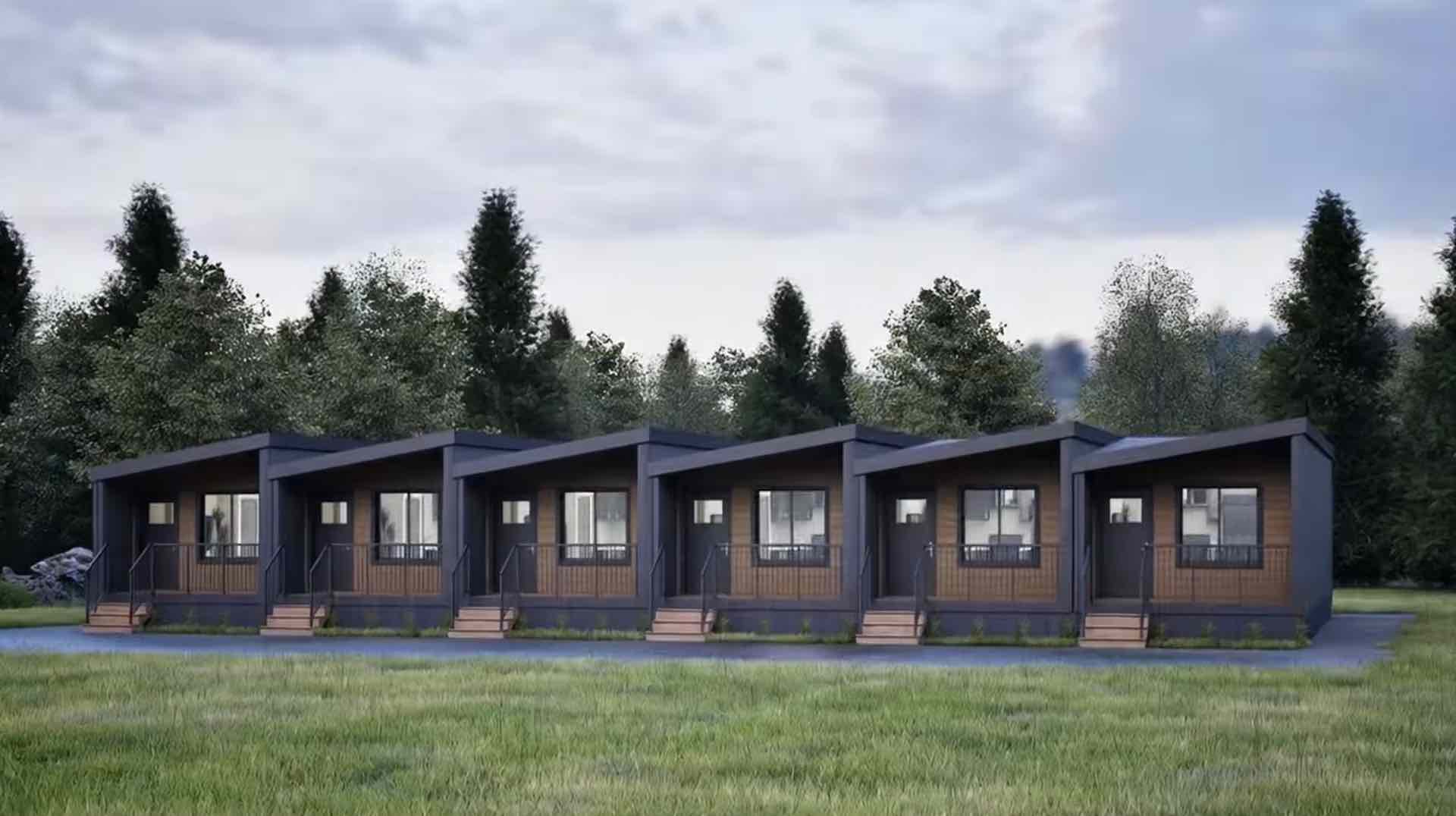
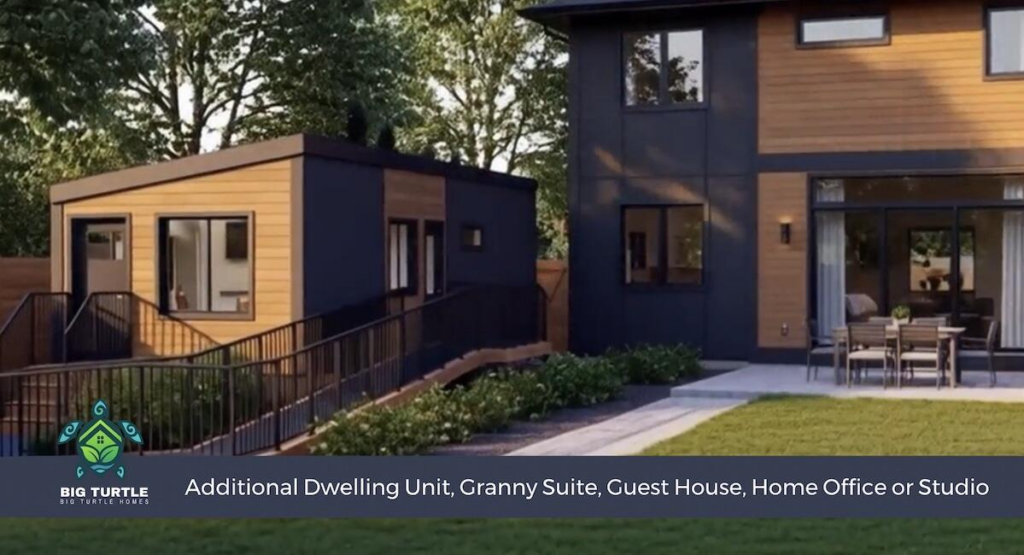
Their approach is broader and more strategic. These are prefabricated modular units built in controlled factory environments, delivered to sites as permanent or semi-permanent housing, and designed to serve everything from homelessness response to workforce housing and disaster relief.
That’s a system, not a product.
And the difference between the two is where most offsite companies either make money—or lose it.
Speed Is the Hook… But Not the Story
Let’s talk about speed, because that’s always the headline in modular.
Big Turtle is quoting delivery timelines of 2 to 3 months from contract to deployment.
That gets attention. It should.
But speed alone doesn’t solve homelessness. Cities don’t just need units fast—they need them to work within zoning, services, infrastructure, and public perception. They need something that doesn’t create a political problem six months after installation.

From what I can see, Big Turtle is leaning into that reality by offering fully finished units, engineered designs, and flexible configurations that can adapt to different municipal strategies.
That’s a more mature play than just “we can build it faster.”
Built for Transition, Not Permanence
One of the more interesting aspects of their model is the focus on transitional housing.
These units aren’t pretending to be the final answer. They’re positioned as a bridge—from tents and encampments to something safer, more stable, and more dignified.
That distinction matters.
Too many companies in our industry try to sell a single product as the solution to every housing problem. Big Turtle seems to understand that temporary housing has a very specific role—and that role is part of a larger ecosystem.
In other words, they’re not trying to win the whole game. Just their part of it.
Materials, Manufacturing, and Reality
From a construction standpoint, they’re using SIP panel systems, which offer durability, energy efficiency, and resistance to the kinds of issues that plague low-cost housing—mold, rot, and pests.
That’s a practical choice, not a flashy one.
And I like that.
There’s also an emphasis on factory-controlled production, which reduces site disruption and allows for faster scaling when municipalities need dozens—or hundreds—of units.
Again, nothing revolutionary. But sometimes, doing the fundamentals right is the real innovation.
The Indigenous Ownership Factor
One element that shouldn’t be overlooked is that Big Turtle Homes is Indigenous-owned and aligned with Canada’s reconciliation and procurement initiatives.
That’s not just a social statement—it’s a strategic advantage.
Government contracts, especially in housing and infrastructure, increasingly prioritize partnerships that align with Indigenous economic development. Big Turtle is positioned to participate meaningfully in that space.
And in this industry, positioning often determines who gets the call—and who doesn’t.
The Real Test: Can They Scale?
Here’s where things get interesting—and where the story is still unwritten.
Big Turtle has already delivered projects, including a recent initiative providing dozens of shelters for individuals experiencing homelessness.
That proves they can execute.
The next question is whether they can scale without losing control of cost, quality, and timelines—the three things that quietly kill more offsite startups than any market condition ever will.
Because scaling modular isn’t just about building more units. It’s about managing logistics, labor, supply chains, and municipal relationships—all at the same time.
That’s where most companies stumble.
A Different Kind of Confidence
What I like most about this company is what they’re not saying.
There’s no claim that they’ve solved the housing crisis. No promises that modular alone will fix everything. No over-the-top marketing language about disruption.
Just a clear focus on delivering practical, repeatable solutions.
That kind of restraint usually comes from experience.
And experience, in this industry, is often written in the margins of things that didn’t go as planned the first time.
Modcoach Observation

I’ve said it before, and I’ll keep saying it—offsite construction doesn’t need more ideas. It needs more companies that understand where their solutions fit into the bigger picture.
Big Turtle Homes feels like a company that has stopped trying to be everything and started focusing on being effective at something very specific.
If they can stay in that lane, execute consistently, and resist the temptation to overpromise, they may not just build shelters—they might build something far more valuable.