





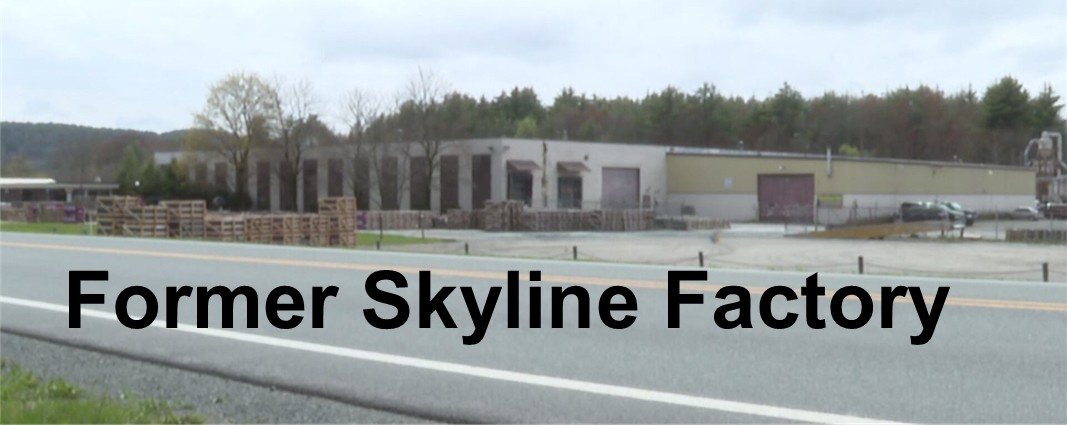
For years, I’ve driven past former modular and manufactured housing factories in the Northeast that had become little more than reminders of another era. Some still have faded company signs hanging on the front of the building. Others have broken windows, weeds growing through cracked parking lots, and loading docks that haven’t seen a module leave in years. Most people see abandoned industrial buildings and wonder what business might eventually move in. I see something different. I see factories that were once designed to solve America’s housing shortage, and I can’t help but wonder if their story is really over.
That was exactly my reaction when I read about the former Skyline factory in Fair Haven, Vermont. The factory closed in 2011, taking more than one hundred jobs with it and leaving another community searching for a new identity. Now, after a recent feasibility study concluded the facility could once again manufacture homes, the conversation has shifted from what was lost to what might still be possible.
What caught my attention wasn’t simply the study. It was the timing.
The passage of the 21st Century ROAD to Housing Act has everyone talking about manufactured housing, modular construction, transportation, and zoning. Those are certainly important discussions, but I believe there is another conversation that deserves just as much attention. Could this legislation prompt investors, developers, manufacturers, and entrepreneurs to view America’s closed housing factories in an entirely different way?
Looking Beyond Vermont
Fair Haven is almost certainly not unique. Throughout the United States, there are former modular and manufactured housing factories that closed due to recessions, ownership changes, labor shortages, transportation costs, poor management, or simply being in the wrong place at the wrong time. Some were highly successful operations before market conditions changed. Others never reached their potential before circumstances forced them to shut their doors.
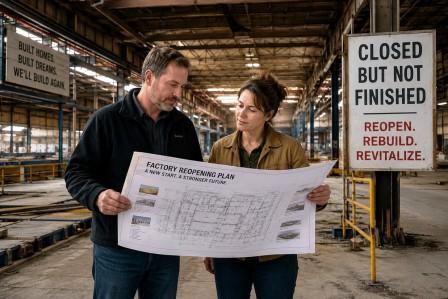
Many of those buildings are still standing today. They already have manufacturing space, loading docks, office areas, utility infrastructure, and in many cases overhead cranes that once moved thousands of walls, floors, and roof systems into place. Millions of dollars were invested in these facilities decades ago, and while time may have taken its toll, much of that infrastructure still exists. In an era when building a new manufacturing plant can cost tens of millions of dollars and take years to complete, reopening an existing facility may suddenly become a conversation worth having.
Could Yesterday’s Factories Solve Tomorrow’s Housing Needs?
Much of the industry’s attention has understandably focused on what today’s factories might do differently because of the ROAD to Housing Act. Existing manufacturers are evaluating new production methods, transportation systems, and opportunities that simply didn’t exist a few years ago. Yet very few people seem to be asking whether the biggest opportunity might actually be sitting behind locked gates in communities that once built homes for thousands of families every year.
As housing demand continues to outpace supply in many regions, these dormant facilities may represent an opportunity to bring production closer to growing markets without starting entirely from scratch. Investors looking at the economics of building new factories may discover that purchasing and modernizing an existing plant makes considerably more financial sense than pouring concrete on a vacant site.
Of course, none of this suggests reopening an old factory is easy.
A Building Doesn’t Make a Factory
Anyone who has spent time in this industry understands that a factory is far more than steel beams and concrete floors. The experienced production workers who once built homes there may have retired or found careers elsewhere. Equipment may need to be replaced. Supplier relationships have to be rebuilt. Management teams have to be assembled, financing secured, and customers lined up long before the first module leaves the building.
Those challenges are real, but they are not necessarily impossible. In fact, every successful startup factory faces many of the same obstacles. The difference is that these communities already have a building designed specifically for housing production. Instead of imagining what a factory should look like, much of the physical infrastructure is already waiting.
More Than an Investment Opportunity
Reopening even a handful of these factories would have an impact far beyond the companies operating them. Every housing plant supports transportation companies, component suppliers, material distributors, equipment dealers, local restaurants, hotels, retailers, and countless other businesses that benefit from manufacturing jobs returning to their community. The economic ripple effect often extends well beyond the factory walls.
Communities that watched their manufacturing base disappear would once again have an opportunity to rebuild not only employment but also local pride. While every closed facility won’t become the next housing success story, it only takes a few successful examples to encourage others to begin asking similar questions.
The Next Chapter May Already Be Waiting
Whether the former Skyline factory in Fair Haven ever produces another home remains uncertain. What is certain is that it has reminded the rest of us that America still possesses an inventory of purpose-built housing factories waiting for someone with enough vision to look beyond the weeds growing in the parking lot.
The 21st Century ROAD to Housing Act may ultimately be remembered for many reasons. One of them could be that it caused an entire industry to look backward before moving forward. Instead of asking where the next factory should be built, perhaps we should first ask where the last one closed.
Gary’s Observation

I’ve watched too many factory closings over the past forty years to count. Every one of them represented lost jobs, broken dreams, and communities wondering what would happen next. Most of us accepted those closures as permanent because the market at the time offered little reason to think otherwise.
Today, that equation may be changing. The ROAD to Housing Act doesn’t guarantee that these factories will reopen, nor should anyone suggest that it does. What it does offer is a reason to ask a question that wasn’t worth asking a few years ago: Have we been overlooking some of the best housing manufacturing assets in America simply because they were built yesterday instead of tomorrow? Sometimes the next great opportunity isn’t found by building something new. Sometimes it’s found by recognizing the value that has been quietly waiting all along.