






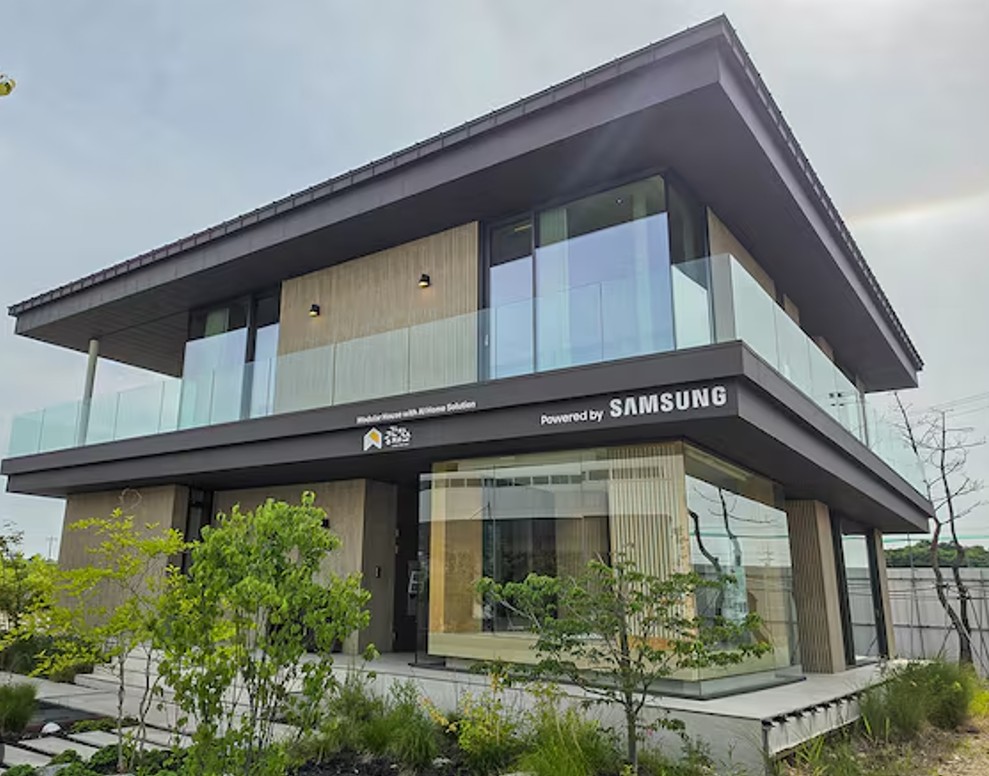
Samsung Electronics has identified Australia as one of the international markets it is considering for its AI Modular Home business. On the surface, that may look like another global technology company testing a new market. Look a little closer, however, and Australia appears to be one of the most logical places Samsung could take the concept next.
Australia has a serious housing shortage, an ambitious national construction target, a strained skilled-labor force and vast regions where conventional construction is slow and expensive. At the same time, the Australian Government is actively encouraging greater use of prefabricated and modular construction.
Samsung is not proposing to become a conventional Australian homebuilder. Its strategy is more interesting than that. The company is positioning its appliances, energy-management systems, artificial intelligence and SmartThings platform as part of a manufactured housing product rather than as items purchased and installed after a house is completed.
That strategy depends on having the right modular manufacturing partner. In South Korea, that partner is Space Factory.
Australia Needs More Than Another Housing Promise
Australia has committed to building 1.2 million well-located homes during the five years beginning July 1, 2024. That requires an average of approximately 240,000 homes annually. Current construction activity shows how difficult it will be to reach that goal.
The Australian Bureau of Statistics reported that 48,012 dwellings commenced during the March 2026 quarter on a seasonally adjusted basis, an 11.2 percent decline from the previous quarter. Only 43,816 dwellings were completed during the quarter. Those figures do not suggest a construction industry comfortably on track to deliver 1.2 million homes. They show an industry that needs additional capacity, improved productivity and construction methods capable of producing more homes with the workers already available.
That is one reason Australia makes sense for Samsung. The country does not simply need more builders doing more of what they have always done. It needs a different production model.
Factory-built housing lets site preparation and home production happen simultaneously. Weather disruptions can be reduced, materials can be controlled more carefully and workers can remain at permanent workstations instead of traveling from one scattered construction site to another.
The Australian Government has already acknowledged the opportunity. It committed funding toward a voluntary national certification process for offsite construction and said prefabricated and modular homes can be built up to 50 percent faster than conventionally constructed homes.
Speed alone will not solve Australia’s housing shortage, but the country cannot meet housing targets if it continues relying almost entirely on a construction process already operating near its labor and productivity limits.
Geography Makes Factory Production Even More Valuable
Australia’s geography gives modular construction another reason to matter. Housing demand is not limited to Sydney, Melbourne and Brisbane. Regional communities, mining areas, remote Indigenous communities, tourism markets, and locations recovering from fires, floods, or cyclones also need housing.
Delivering labor, materials and supervision to those sites can be costly and unpredictable. Every day that a specialized trade must remain at a remote project adds travel, accommodation and scheduling costs.
A factory can consolidate much of that labor in one controlled location. Completed modules can then be transported to prepared sites, where finishing work is reduced substantially.
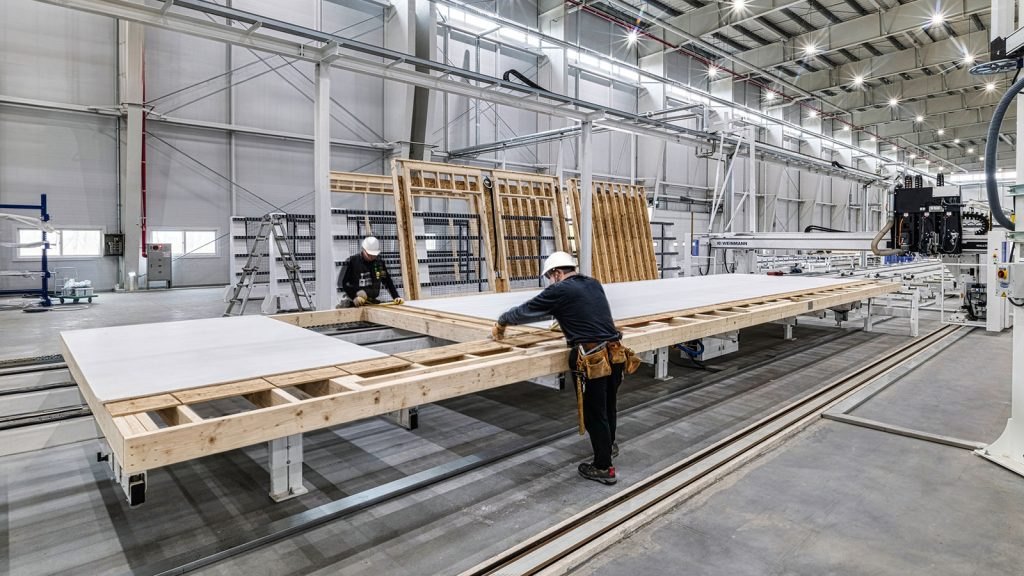
Australia’s distances will still create transportation challenges. Modular housing does not eliminate logistics, and factories must be located close enough to reliable demand to remain economical. However, producing 80 percent or more of a home in a factory can turn a remote construction project into a shorter installation and commissioning process.
That difference could be especially valuable for workforce housing, regional health facilities, student accommodations, smaller detached homes, retirement housing and disaster-recovery projects.

Australia Is Also a Logical Technology Market
Samsung’s interest is not limited to solving a construction problem. The company wants to create a platform for connected living.
Australia is a developed consumer market with broad familiarity with Samsung appliances, mobile devices and home electronics. It also has growing interest in rooftop solar, battery storage, heat pumps, electric vehicles and household energy management.
That creates an opening for a home in which the refrigerator, HVAC equipment, lighting, security cameras, door controls, energy monitoring and other devices are designed as one system before the home reaches the customer.
A conventionally built smart home often becomes a collection of unrelated products installed by different contractors at different times. The homeowner may still have to register devices, connect networks, download multiple applications and discover that some components do not communicate properly.
Samsung’s modular strategy reverses that sequence. The connected-home package is considered during design, installed during factory production and commissioned as part of the finished dwelling. The customer receives a functioning system instead of a box full of technology that still needs to be assembled digitally.
That could be particularly appealing in Australia, where energy costs, cooling demands and household resilience have become important purchasing considerations. SmartThings can give Samsung a central platform for monitoring appliances, HVAC, lighting, security, and energy use. Over time, that connection may also support maintenance notifications, software updates and additional services.
Samsung is therefore not looking at a home as a one-time appliance sale. It is looking at the home as a long-term digital environment.
What Space Factory Brings to the Partnership
Samsung’s technology may receive most of the public attention, but Space Factory is what makes the housing concept practical.
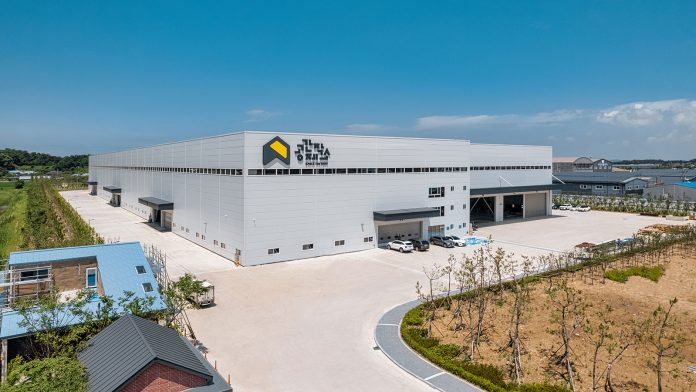
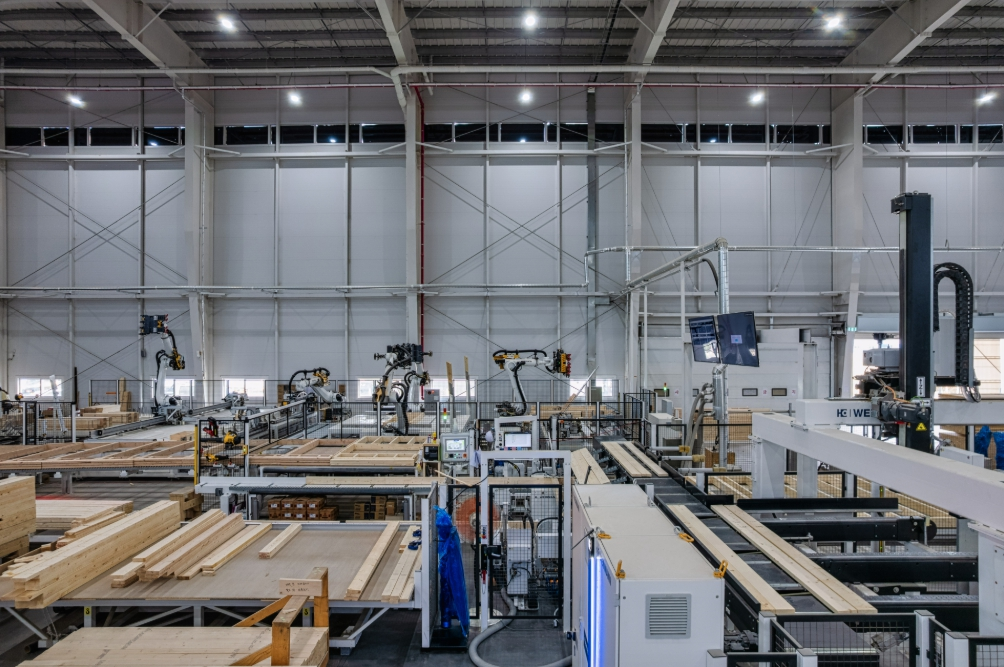
Space Factory is a South Korean timber modular manufacturer that treats the home as an engineered product. More than 80 percent of each house is reportedly completed in a controlled factory environment before the modules are transported for installation. Its operation combines AI-assisted design, automated production and repeatable manufacturing processes.
The company has stated a production capacity of approximately 1,700 homes annually. Reports from Korea describe a line capable of producing roughly one module per hour, with four modules combined to form a dwelling of about 66 square meters.
Those numbers matter, but Space Factory brings more than production speed.
It gives Samsung a place to integrate technology into the building from the start. Appliance dimensions, electrical requirements, communications infrastructure, HVAC systems, sensors, cameras, lighting and control devices can be coordinated through design and production instead of being added by separate trades after the structure is substantially complete.
Space Factory also brings a range of standardized housing sizes. Customers in Korea can choose configurations of approximately 33, 99 and 132 square meters. Standardization gives the factory repeatability while still allowing customers to select layouts, appliances and connected features suited to their needs.
Most importantly, Space Factory understands that successful modular construction requires coordination far beyond the factory floor. Design, engineering, purchasing, production, transportation, foundations, installation, utility connections and final commissioning must operate as one delivery system. A fast production line means little if the site isn’t ready or local contractors don’t know how to complete the home.
For Samsung, Space Factory is not merely a supplier of wooden boxes. It is the manufacturing bridge between Samsung’s technology and a completed, occupiable home.
More Than a Detached-House Experiment
The first Samsung AI Modular Homes are detached timber residences, but Samsung has already said it intends to extend the concept into buildings of four stories and above. Future applications could include apartments, offices, accommodations and other building types.
Samsung has also outlined a goal of supplying 10,000 AI modular homes within three years. That cannot be achieved by treating every house as a one-off custom project. It requires repeatable designs, dependable manufacturers, regional partners, and a digital platform that can adapt to different codes, climates, and customer expectations.
Australia offers potential demand across several of those building types. It has a shortage of detached housing, but it also needs apartments, build-to-rent projects, student residences, senior housing, workforce accommodations and homes for regional communities.
This is where choosing an Australian partner becomes critical. Space Factory can demonstrate the production system and the integration model, but shipping finished modules from Korea would probably not be the best long-term answer for a market as large and geographically dispersed as Australia.
A more likely path would involve local manufacturing, licensing, a joint venture or collaboration with an established Australian offsite producer. Samsung could bring the technology platform, Space Factory could contribute manufacturing knowledge and product-development experience, and the Australian partner could provide local code compliance, supply-chain relationships, site delivery and market access.
Samsung C&T, a separate Samsung company, has already participated in discussions about modular manufacturing opportunities in Western Australia. That does not mean the two initiatives are formally connected, but it shows that Australia is already on the broader Samsung organization’s radar as a market for industrialized construction.
The Questions Australia Should Be Asking
The arrival of a major global brand does not guarantee affordable housing. Australia will still have to address land availability, planning approvals, financing, infrastructure, transportation and the cost of establishing or expanding factories.
Questions also remain about data privacy, cybersecurity, technology support, and what happens when connected appliances or control platforms become obsolete. A home may last 50 years or longer, while consumer technology changes every few years. Samsung and its housing partners will have to show that systems can be repaired, replaced and upgraded without making the entire home dependent on one generation of products.
The biggest economic question will be whether the model lowers the total cost of delivering and occupying a home. Installing premium appliances and connected technology in a factory may reduce coordination and installation costs, but it does not automatically make the home affordable. The real test will be land-plus-home pricing, site costs, transportation, energy performance, maintenance and financing.
Those are not reasons to dismiss the idea. They are questions to answer during pilot projects before anyone announces a massive production target.
Gary’s Observation

Australia was not placed on Samsung’s expansion list by accident. It combines urgent housing demand, severe construction constraints, a large regional geography, government interest in offsite production and consumers already comfortable with Samsung’s technology.
Space Factory brings the manufacturing discipline Samsung needs to convert SmartThings from a collection of connected products into part of a completed housing system. It knows how to design for production, automate repeatable work, integrate systems before delivery and move a house from a digital model to an installed structure.
The real opportunity is not for Samsung to ship thousands of Korean homes to Australia. It is for Samsung and Space Factory to help an Australian manufacturer build a locally compliant, locally supplied and locally serviced version of the AI modular home.
If that happens, Australia will be more than Samsung’s next sales territory. It could become the proving ground for a new type of housing partnership—one in which the modular manufacturer builds the physical platform, the technology company supplies the digital nervous system and the buyer receives both as a single finished product.