





I have often wondered why a large tract builder can advertise a new home at a price an independent modular builder may struggle to match.
At first glance, that does not seem logical. The modular home is constructed inside a factory, protected from the weather, using organized production methods and workers who report to the same location every day. Materials are delivered to the factory, quality inspections occur throughout production, and the house may be substantially completed in days.
The tract builder, meanwhile, is coordinating dozens of subcontractors on an outdoor construction site while dealing with weather, theft, scheduling problems and all the other inefficiencies associated with conventional construction.
Based solely on that comparison, the modular builder should have the advantage.
Unfortunately, the comparison leaves out something important. A tract builder is not simply building individual houses. The company is operating a coordinated land-development, purchasing, sales, and construction system. An independent modular builder purchasing one home at a time from a factory and placing it on scattered lots is competing against that entire system.
That is a very different contest.
The Tract Builder Has Created a Factory Without Walls
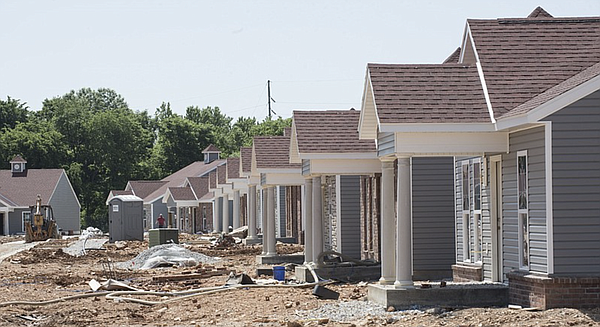
Most production builders do not manufacture their homes inside a traditional factory, but their subdivisions operate much like outdoor factories.
The house plans are standardized. Options are controlled. Materials arrive in predictable quantities. Trade contractors repeat the same work from one home to the next. Superintendents oversee several houses within a few streets of one another, and construction schedules are coordinated across the entire development.
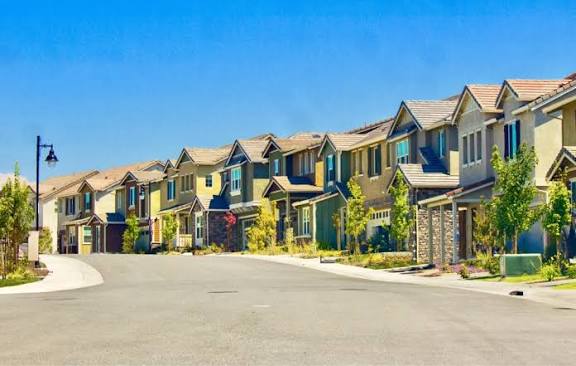
A framing crew can finish one house and move to the next lot without loading everything onto trucks and driving 40 miles. The concrete contractor may pour several foundations during the same visit. Electricians, plumbers, HVAC installers and drywall crews move through the community in a planned sequence.
Repetition improves speed, lowers labor costs and reduces mistakes. Crews know the plans because they may have already built the same house dozens of times.
The tract builder has essentially created an assembly line across a neighborhood.
An independent modular builder rarely has that advantage. One customer may want a ranch home on a rural lot. The next may want a two-story home in an established neighborhood. Another may have a steep property requiring a walkout basement. Every project brings different site conditions, local officials, subcontractors, utility companies and customer expectations.
The modular factory may be efficient, but everything around it is often a custom project.
Scattered Lots Destroy Geographic Efficiency
Geographic concentration may be one of the tract builder’s greatest advantages.
One superintendent can oversee 20 or more homes in a single development. Equipment, dumpsters, portable toilets, temporary utilities, and storage facilities can serve multiple houses. Materials can sometimes be delivered in larger quantities and distributed throughout the community.
The independent modular builder must reproduce many of those expenses on every lot.
Excavators, foundation crews, crane operators, finish carpenters and other trades must travel to each new location. Equipment must be transported, unloaded, used and removed. Deliveries must be coordinated for one house rather than an entire neighborhood.
Travel time may be included in every subcontractor’s price, even if it does not appear as a separate line item.
A problem that requires a superintendent or builder to make another trip to the jobsite adds more cost. Multiply those trips across several scattered projects, and a surprising amount of time is spent driving rather than managing construction.
The factory may produce the home in a controlled environment, but the independent builder’s business spans an uncontrolled geographic area.
The Tract Builder Controls the Ground
Large builders often develop their own communities or work closely with land developers who provide a predictable supply of finished lots.
That does not mean the land is inexpensive. Roads, water, sewer, utilities, grading, stormwater systems, engineering, approvals, and impact fees can add tremendous cost. However, those costs are planned across dozens or hundreds of homes.
More importantly, the tract builder controls what happens on the land.
The company prepares building pads for its standard plans. Utility locations are known. Streets are designed for construction traffic. Drainage is engineered for the entire community. Setbacks, elevations and house placements have already been studied.
The independent modular builder often becomes involved after a customer has purchased an individual lot. That lot may have poor soil, an abandoned foundation, unexpected rock, wetlands, an old well, undocumented utilities, restrictive covenants or access problems.

The customer may see a vacant piece of ground. The builder sees a collection of unanswered questions.
Even a good infill lot can be surrounded by mature trees, narrow streets, overhead power lines, parked cars and neighbors who are not particularly excited about cranes, delivery trucks and construction noise.
A modular home may require less time to erect, but it does not eliminate the complexity of preparing the site.
Purchasing Power Extends Beyond Lumber
Large tract builders purchase enormous quantities of windows, roofing, cabinets, flooring, appliances, plumbing fixtures and mechanical equipment. Their suppliers know that one successful relationship may produce hundreds or thousands of orders.
That creates negotiating power.
The modular factory also buys materials in bulk, one of modular construction’s traditional advantages. However, the independent builder must purchase everything that happens outside the factory.
That can include excavation, foundations, utility connections, garages, porches, decks, driveways, sidewalks, landscaping, crane services, and on-site completion work. Those purchases may be made one project at a time from local suppliers and subcontractors.
The tract builder can negotiate pricing across an entire community or region. The independent modular builder may negotiate for one foundation, one driveway, and one crane set.
The factory’s buying advantage can be reduced or even erased by the site-related work that follows.
Standardization Ends at the Factory Door
Modular construction is often promoted as a standardized process, but many independent modular builders let customers make extensive changes.
Moving a wall, changing a window, altering a kitchen, adding a porch, or redesigning a bathroom may not seem significant on its own. Collectively, those changes affect engineering, production drawings, material ordering, pricing and scheduling.
Tract builders understand the cost of uncontrolled choice. They usually limit customers to predetermined plans, elevations, colors and option packages. Buyers may be allowed to personalize the house, but they are rarely permitted to redesign it.
Independent modular builders sometimes try to offer factory efficiency and custom-home flexibility at the same time.
That is difficult to do profitably.
The factory must price and engineer the changes. The builder must explain them, document them, and make sure the factory’s interpretation matches the customer’s expectations. If something goes wrong, the builder stands between the homeowner and the manufacturer.
Tract builders sell a controlled product. Many modular builders sell a controlled product surrounded by a custom sales experience.
Transportation and Setting Are Not Free
The price quoted by a modular factory is not the home’s final cost.
Modules must be transported to the site. Escorts may be required. Permits must be secured. Review routes for low bridges, narrow roads, tight turns, and weight restrictions. Schedule a crane and set crew, and have the foundation ready when the modules arrive.
Weather can delay the set. A carrier can have a tire or mechanical problem. A crane may need to be repositioned because of soil conditions or overhead obstacles.
Once the home is set, button-up work, utility connections, exterior completion, interior marriage-line finishing, porches, garages, driveways, and final inspections remain.
None of this makes modular construction inefficient. It simply means factory production does not eliminate the jobsite.
The tract builder also has site costs, but those costs are repeated under controlled conditions throughout the same neighborhood. The independent modular builder must solve a new transportation, crane, and completion puzzle for almost every customer.
The Cost of Customer Acquisition Is Different
A tract builder may have a decorated model home, a sales center and signs directing prospects into the community. Customers visit because they are already interested in purchasing a home in that location.
The product, neighborhood, financing possibilities and anticipated completion date are presented as one package.
An independent modular builder usually has to sell several things separately. The customer must become comfortable with modular construction, select or purchase land, choose a house, secure financing, complete site engineering, and understand a process that may involve both a factory and a local builder.
The sales cycle can be long. Some prospects will spend months asking questions before deciding not to build.
Every hour spent educating a prospect who never signs a contract becomes part of the builder’s overhead. That overhead must eventually be recovered from the customers who do proceed.
The tract builder is primarily selling a house and lot. The modular builder may be selling the land solution, design, factory, transportation, foundation, setting process and finished home—all while correcting misconceptions about modular construction.
Financing Favors the Familiar
Production builders often have established relationships with lenders, mortgage companies and title providers. Some have affiliated financing operations that can help buyers move quickly through the process.
Independent modular builders often depend on construction-to-permanent financing. That means draws, inspections, appraisals and lender requirements must align with factory deposits and production schedules.
Factories usually require substantial payments before a home leaves the plant. Lenders may be reluctant to release money for a house that is not yet attached to the borrower’s land.
Experienced modular lenders understand this process. Many conventional lenders do not.
Financing delays can affect the factory schedule, construction schedule, and builder’s cash flow. The modular builder may be doing everything correctly and still face delays because a lender does not understand how factory-built construction works.
Taxes Are Not the Main Explanation
Large builders may benefit from sophisticated corporate structures, land accounting, depreciation, financing arrangements and tax planning. Those advantages can matter, but they are not the primary reason tract homes can appear less expensive.
The real advantage is operational.
Tract builders combine land control, standardized plans, limited options, concentrated supervision, repetitive trade work, volume purchasing and predictable scheduling. They spread development, marketing and management costs across many homes.
The independent modular builder attempts to deliver one home to one customer on one unique property.
The modular factory may be more efficient at constructing the house, but the tract builder may be more efficient at producing the entire finished-home transaction.
Where Modular Builders Can Compete
Independent modular builders should not try to defeat tract builders by pretending both businesses operate under the same conditions.
A modular builder’s strength may be serving buyers and properties the large production builders cannot or will not accommodate. That includes rural lots, replacement homes, difficult climates, established neighborhoods, family land and markets without large master-planned developments.
Modular builders can also compete through construction quality, weather protection, shorter onsite schedules, design flexibility and a more personal relationship with the customer.
However, they must explain those advantages clearly. Simply saying that modular construction is faster and more efficient is not enough, especially when the prospect sees a tract home advertised at a lower price.
Independent builders may also need to adopt more of the production builder’s discipline. That could mean offering fewer plans, controlling options, concentrating projects geographically, developing preferred foundation and site-work packages, building stronger trade partnerships and securing repeatable financing.
The modular home does not have to become a tract home, but the business surrounding it may need more standardization.
Gary’s Observation

For years, our industry has assumed factory efficiency should automatically let modular builders beat site builders on price. That assumption overlooks everything occurring before the modules enter production and after they leave the factory.
The tract builder’s greatest advantage may not be how the walls are constructed. It is the ability to control the land, product, labor, purchasing, schedule, and customer experience across an entire community.
Independent modular builders are not competing against one conventionally constructed house. They are competing against a production system that begins with land development and ends when the buyer receives the keys.
Until we recognize that difference, we will continue wondering why a highly efficient modular factory does not always produce the least expensive finished home.