






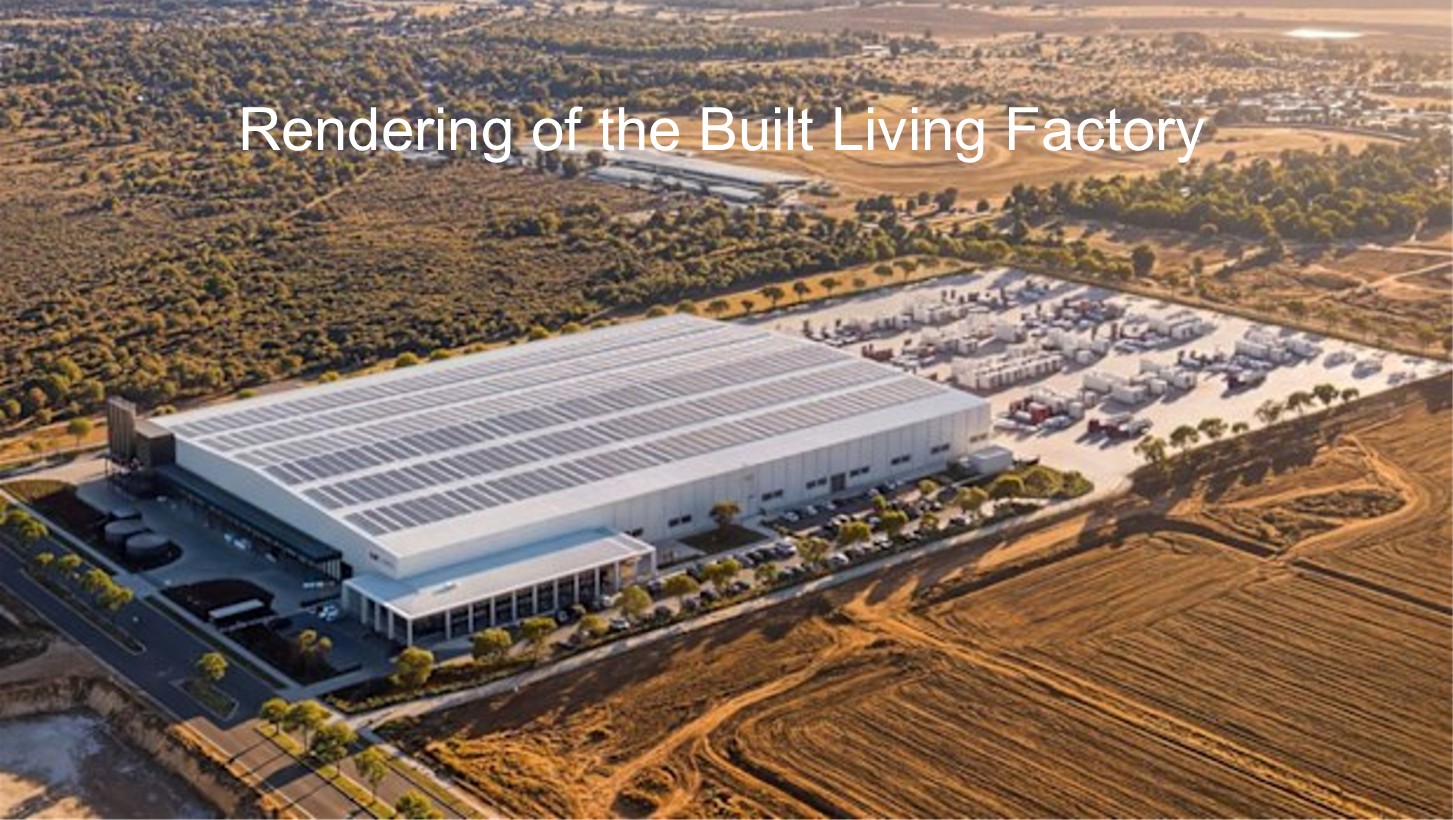
I sincerely wish Australia’s newest offsite construction venture the best. The country desperately needs more housing, construction productivity must improve, and factory-built components should be part of the solution.
However, if the history of large, heavily funded offsite construction factories has taught us anything, I would not hold my breath waiting for the promised results.
Australia’s National Reconstruction Fund has agreed to provide a US$86.4 million taxpayer-backed loan for a new manufacturing facility in Neerabup, a suburb of Perth. Wesfarmers, the owner of Bunnings, Kmart and Officeworks, will invest another US$72 million in equity, while the Western Australian government will provide land and a US$14.4 million grant.
The factory itself is expected to cost approximately US$158.4 million. Including the government grant, the broader funding package totals about US$172.8 million.
Those figures have been converted from Australian dollars at the rate of A$1.00 to US$0.72.
Built Living, a joint venture between Wesfarmers and Australian construction company Built, will operate the facility. Construction is scheduled to begin during the second half of 2026, and the factory is expected to produce components for more than 2,000 apartments annually.
According to the announcement, the manufacturing process could reduce construction times by as much as 50 percent and building costs by approximately 20 percent. Those are impressive numbers, but for now they are projections, not proven operating results.
This Is Not Really a Modular-Home Factory
The headlines describe the project as a modular housing factory, but that description may give readers the wrong impression.
The Neerabup facility will not manufacture complete volumetric apartments in the traditional modular sense. It is expected to produce precast concrete components, including walls, bathrooms and kitchens, which will then be transported to apartment developments and assembled by builders.
That distinction matters.
Producing components in a controlled factory can improve quality, reduce weather delays and move labor away from congested construction sites. However, the factory is still only one part of a much larger delivery system.
Site preparation, foundations, transportation, cranes, installation, utility connections, inspections, finishing work and coordination among trades must still be completed successfully. A factory may produce its portion faster, but that does not automatically mean the entire apartment project will be delivered 50 percent faster or cost 20 percent less.
The industry has heard similar claims many times.
Factory construction is almost always presented as faster, less expensive, safer and more predictable. In theory, it can be all those things. In practice, the savings often disappear when designs are changed, approvals are delayed, transportation becomes complicated, site work falls behind or the factory does not receive enough repeatable orders.
A factory does not create construction efficiency simply because it has production lines and expensive equipment.
US$158.4 Million Buys a Lot of Expectations
Whenever I read about an offsite factory costing more than US$150 million, I ask the same question: How many apartments must move through that facility every year simply to keep the lights on?
A factory of this size will carry enormous fixed costs.
It will require managers, engineers, production workers, quality-control personnel, maintenance crews, software systems, material-handling equipment, utilities, insurance and an extensive supply chain. It will need enough work to keep employees and equipment productive, not simply during its first year but year after year.
Producing components for more than 2,000 apartments annually sounds impressive. But that number is only meaningful if developers have projects approved, financed, designed and ready for production at the right time.
The factory cannot manufacture an optimistic press release.

It needs a continuous pipeline of real apartment projects with completed engineering, reliable financing and firm construction schedules. If projects are postponed because of interest rates, approval delays, elections, material costs or changing government priorities, the factory’s overhead will continue whether the production line is full or nearly empty.
This is where many offsite ventures run into trouble.
Management focuses on what the factory can produce at full capacity. Investors should ask what happens when it operates at 40, 50, or 60 percent capacity for an extended period.
Government Support Does Not Guarantee Market Demand
The Australian government clearly wants this factory to succeed.
The US$86.4 million loan is the National Reconstruction Fund’s first investment in housing. The fund itself was established with approximately US$10.8 billion, and it has reportedly committed more than US$1.65 billion across its investment portfolio.
National Reconstruction Fund officials have also indicated that they hope this project will encourage private investment in other advanced-manufacturing housing facilities throughout Australia.
That may happen. If this factory begins producing components efficiently, maintains quality and demonstrates real savings, private investors will certainly notice.
However, government participation can also create a false sense of security.
A government-backed loan can help construct a factory. It cannot guarantee that developers will standardize their apartment designs. It cannot eliminate local planning delays. It cannot force builders to change familiar construction practices. It cannot ensure that every project arrives at the production line on schedule.
Most importantly, it cannot manufacture enough demand to cover a factory’s overhead indefinitely.
Public officials often view factory construction as a capacity problem: Build a large facility, install advanced equipment, hire people and housing production will increase.
Experienced factory operators understand that the real problem is usually continuity.
The factory needs the right work, in the right sequence, with the right designs, materials and approvals. One large project followed by a three-month gap is not a sustainable production strategy.
If This Happened in the United States
If the US government announced a similar program offering loans, grants and land for new offsite housing factories, I suspect we would see new ventures popping up almost every day.
Developers, technology companies, contractors and entrepreneurs would quickly produce renderings of highly automated factories promising thousands of homes, dramatically shorter schedules and substantial cost savings.
The announcements would be impressive. The factory tours would be even more impressive.
I doubt many of those factories would remain successful for very long.
The United States has already watched heavily financed offsite startups spend hundreds of millions of dollars building factories, purchasing automation and hiring executives before proving that they had a sustainable pipeline of profitable projects.
Several discovered that creating a factory is much easier than creating a repeatable housing system.
The equipment may work perfectly while the business model fails. Automation cannot repair incomplete engineering, poorly written contracts, inconsistent demand or projects that lose money before reaching production.
Money can buy buildings, machinery and publicity. It cannot buy the operational discipline required to run a profitable offsite factory.
The People Behind This Venture Matter
This Australian project may have a better chance than some of the offsite startups we have watched fail.
Wesfarmers is not an inexperienced venture-capital group chasing the latest construction trend. It is a major company with significant purchasing power, supply-chain knowledge and financial resources. Built brings experience delivering large construction projects.
That combination should provide more stability than a startup led primarily by technology advocates who have never operated a factory or completed a major apartment development.
But even strong corporate parents cannot eliminate the fundamental risks.
Will apartment designs be standardized enough for efficient manufacturing? Will architects and developers design around the system instead of forcing the factory to accommodate endless variations? Will site contractors be prepared when components arrive? Will the factory’s projected savings survive transportation, installation and finishing costs?
And perhaps the most important question: Who has committed to purchasing the output?
A claimed annual capacity of more than 2,000 apartments is not the same as an order book containing 2,000 apartments every year.
Success Must Be Measured Beyond the Factory Door
The project’s success should not be measured by whether the factory opens, holds a ribbon-cutting ceremony or produces its first concrete wall.
Measure it by completed apartments.
Did the total project cost decline by 20 percent after including the factory, transportation, site assembly and finishing work? Were buildings delivered 50 percent faster from approval through occupancy, rather than simply manufactured faster? Did quality improve? Were defects and callbacks reduced? Did the factory operate profitably without requiring repeated government assistance?
Those results will determine whether this becomes a model for the future or another expensive lesson for the offsite construction industry.
Government officials are already discussing additional facilities in other Australian states. I would suggest waiting until this one has operated long enough to produce measurable results before repeating it across the country.
One successful factory can provide a useful blueprint. Several factories built simultaneously around the same unproven assumptions can multiply the risk.
Gary’s Observation

I want this factory to succeed. Australia needs housing, and the construction industry needs new ways to improve productivity.
But I have watched too many offsite factories begin with large investments, confident projections and promises of unprecedented efficiency. The announcements always emphasize capacity, technology and speed. They rarely explain who will keep the factory full, how project variations will be controlled or what happens when the expected pipeline is delayed.
US$158.4 million is enough money to build an extraordinary manufacturing facility. It is not enough to guarantee an extraordinary business.
The factory’s future will not be decided by the size of its government-backed loan, the reputation of its corporate investors or the sophistication of its production equipment. Something far less glamorous will decide it: whether management can secure a steady flow of repeatable, profitable projects and deliver them successfully year after year.
I wish Built Living the best.
But if history has anything to say about it, don’t hold your breath.