





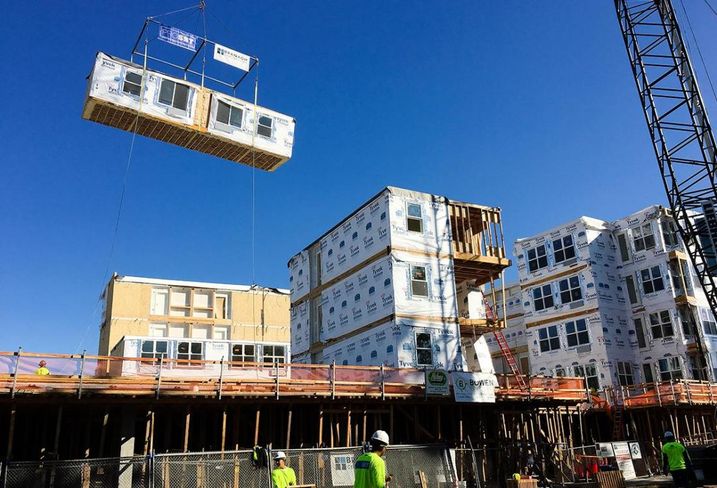
There is something satisfying about watching a completed module roll out of a factory. The production crew has done its work, another space opens on the line, and management can add one more box to the weekly production report. From inside the building, that looks like progress. But I believe the most important question comes immediately afterward: Where is that module going, and when?
If the answer is “out in the yard until somebody tells us the site is ready,” we need to reconsider what we are celebrating. That module contains purchased materials, paid labor, factory overhead, and a portion of the company’s working capital. Depending on the payment agreement, we may have already recovered some of those costs. Others may remain tied up until delivery, installation, or another milestone. Either way, a completed box waiting for its next move is inventory that still requires space, equipment, protection, and management.
I am not suggesting factories should never have modules waiting outside. A planned buffer can protect a set schedule and help absorb normal disruptions. What concerns me is the unplanned buildup of finished modules because production, transportation, and field operations are working from different versions of the schedule. We call it finished production because the factory work is complete, even though the business still has considerable work ahead.
A Busy Factory Can Feed a Stalled Project
Imagine a factory completing ten modules a week while its customers’ sites can receive and install only six. For a little while, the production report looks encouraging. The factory is hitting its target, workers are staying busy, and management may even congratulate the team for improving output. Meanwhile, four additional modules accumulate every week.
After four weeks, that mismatch has added sixteen modules to the yard. They may occupy carriers needed for upcoming production, require additional handling, or force employees to rearrange units so the next shipment can get out. None of those activities make the home more valuable to the customer. They are costs created by a schedule that rewards one part of the operation without accounting for what happens next.
This is where I think factory management needs a broader definition of productivity. How many boxes came off the line matters, but so does how many moved through delivery and installation as planned. A higher production number loses some of its shine when the yard fills faster than it empties.
The Carrier Is Part of the Production System
A carrier sitting under a module can become so familiar that everyone stops seeing it as an operating constraint. Yet when that carrier is unavailable for the next module, its importance becomes painfully clear. The factory may have workers, materials, and orders ready while the equipment needed to move finished work remains tied up outside.

Transportation decisions reach back into the plant. A module produced out of delivery sequence may need to be moved again. A delayed shipment may hold equipment longer than expected. A carrier sent to a site without a reliable unloading plan may remain there while the factory waits for its return.
Buying additional carriers can sometimes be the right decision. But before signing that purchase order, I would want to know whether the business needs more equipment or whether existing equipment spends too much time waiting. Additional carriers can give a poorly coordinated operation more room to accumulate the same problem.
“The Site Will Be Ready” Needs Evidence
One of the most expensive assumptions in modular construction may be that the site will be ready because its schedule says it will be ready. A date on a spreadsheet does not confirm foundation readiness, required inspections, truck access, crane setup space, or crew availability.
Check those conditions before they become a crisis. Who has verified that the delivery route and site entrance will accommodate the shipment? Can trucks arrive in the required sequence? Is there an appropriate place to stage them? Has the crane provider confirmed the lift plan and setup requirements? What remains unresolved that could prevent installation?
A crane reservation is one part of that readiness check. Its value depends on the modules, transportation, site, and crew being ready at the same time. If one piece slips, the consequences can travel backward through the entire operation, affecting equipment availability, yard space, and the next production run.
I would much rather hear an uncomfortable update early enough to adjust than receive another reassuring “we should be ready” that nobody has verified.
One Schedule Needs One Accountable Owner
Factories do not need another meeting where each department reports that its own work is on schedule while the overall project falls behind. They need a shared operating schedule that connects production sequence, yard capacity, carrier assignments, shipping dates, crane availability, and installation readiness. Someone must have the authority to resolve conflicts across those functions.
That does not mean one person makes every decision. It means someone owns the connections. When a site slips a week, the consequences should be visible immediately: which modules should move in the production sequence, which carriers will remain occupied, and which other deliveries might be affected.
I would also want management watching the age of finished inventory, the reasons modules are waiting, and the time carriers take to return to service. Pair those measures with factory output, installation progress, and contractual payment milestones. Together, they offer a much clearer picture than a weekly box count alone.
Sometimes the answer will be to change the production sequence. Sometimes it will be to address a transportation shortage or help a builder resolve a site issue. Occasionally, it may mean temporarily reducing output. That decision deserves careful consideration, but continuing to produce simply because the line can run is also a decision—with costs attached.
Gary’s Observation

I believe one of the biggest opportunities in offsite construction is sitting between the departments we already have. Production sees a completed module, transportation sees a load, the builder sees an approaching set date, and accounting sees an invoice milestone. Management has to see the entire journey and understand what happens when any part of it stops.
The goal is a dependable flow from materials entering the factory to modules reaching prepared sites and payments arriving as required by the contract. A module in the yard may represent necessary preparation, or it may represent a problem everyone has learned to walk around. Before celebrating another record production week, I would ask one more question: Are we moving projects forward, or simply moving our cash outside?