






I’ve never met a builder who enjoyed calling a subcontractor three times to find out whether “Thursday” meant this Thursday or some Thursday still under consideration. Yet that kind of conversation has become part of keeping a construction project moving. You can have approved plans, available financing, and materials sitting on the property, but somebody still has to install them.
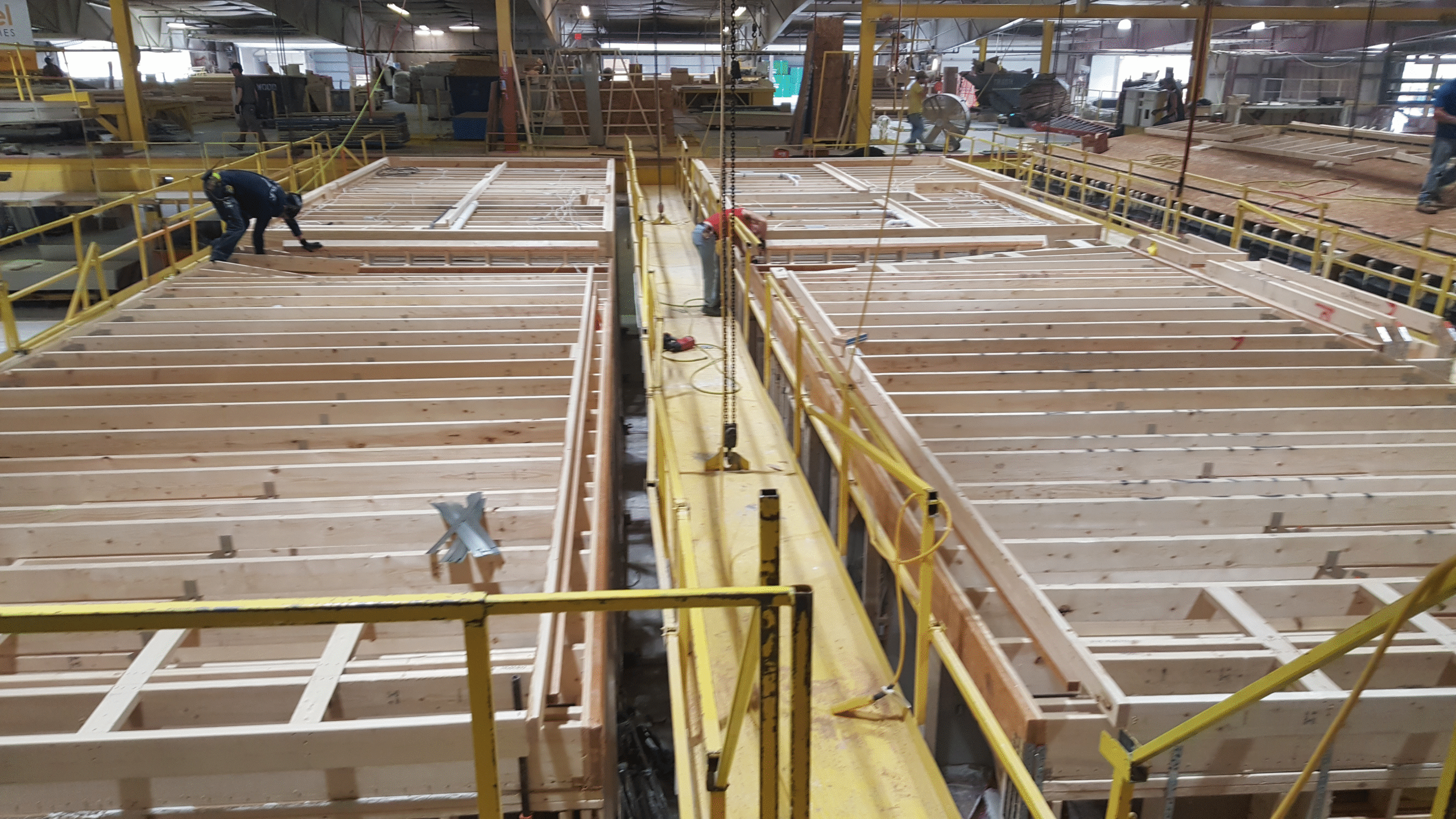
That is where modular construction offers something worth discussing beyond the familiar photograph of a crane lifting a house into place. Its real advantage begins long before the crane arrives: moving substantial portions of construction into a factory can reduce dependence on local field crews.
Two figures circulating in modular marketing suggest that about 81% of adopters prioritize speed to market and that projects can require up to 50% fewer subcontractors. Those numbers deserve qualification because their original research is unclear, and results vary by project. Still, they point toward an important business question: how much waiting can we remove from construction?
Two Places Working at Once
Much of modular’s schedule advantage comes from overlapping activities. While crews prepare the site and foundation, factory workers can build the modules. The project moves forward in two places instead of making the entire building wait for the foundation to be ready. The International Code Council identifies this simultaneous work as a major reason modular construction can shorten schedules.

For an apartment developer, earlier completion can mean earlier occupancy. For a builder, it can mean finishing a customer’s home and moving resources to the next project sooner. For the customer, it may mean fewer months paying for temporary housing while asking when moving day will finally arrive.
However, a fast factory does not automatically produce a fast project. If site preparation falls behind, completed modules may become expensive inventory with nowhere to go. The factory schedule and the field schedule must align.
Labor Relief Without the Fairy Tale
Modular construction does not make electricians, plumbers, carpenters, or finish workers unnecessary. It changes where much of their work happens and how it’s organized. Research discussed by the Federal Reserve Bank of Minneapolis confirms that modular techniques require less on-site labor than conventional construction.
That distinction matters. Fewer subcontractors onsite does not mean an equivalent reduction in total labor, payroll, or skill requirements. Much of the work has moved indoors, where a factory still needs capable people, effective supervision, and consistent quality control.
The opportunity is to use those people better. A well-run factory can organize tools, materials, instructions, and workstations around a repeatable process. Skilled employees can spend more time building and less time traveling between projects or discovering that another trade has not finished its work.
Meanwhile, the field still needs qualified crews for foundations, module installation, connections, and completion work. The Modular Building Institute specifically includes structural connections, building-system completion, and final site work in the onsite phase. Those responsibilities need names and dates attached to them before delivery day.
Gary’s Observation

I think Modular’s strongest sales argument is the practical value of having fewer opportunities for a project to sit still. That matters enormously when good tradespeople are hard to schedule, and every delay creates more phone calls, revised commitments, and disappointed customers.
But speed has to be earned through early decisions, complete information, reliable production, and a prepared site. Move confusion into a factory, and you have indoor confusion. Organize the work properly, however, and modular can give builders something they badly need: a more dependable way to finish with the workforce available.