






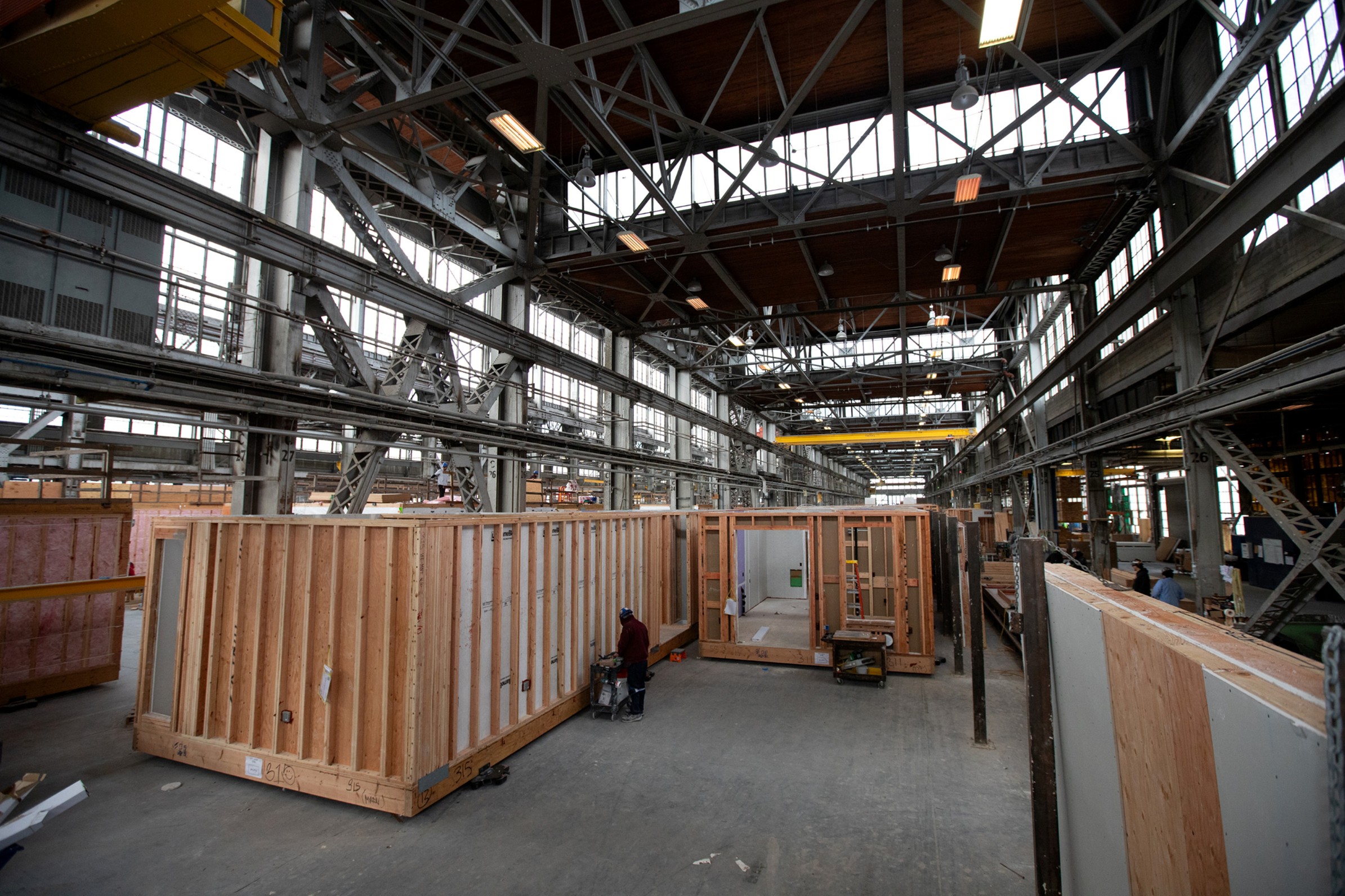
There is a phrase that can make a modular factory owner uncomfortable faster than almost anything else: “We’re still committed to the project. We just need a little more time.”
A little more time sounds reasonable when you’re sitting in a developer’s conference room looking at drawings. It sounds considerably different when you’re standing beside a production line that was supposed to start building those drawings next month. The developer can move a date on a spreadsheet. The factory has to figure out what to do with the people, materials, and overhead attached to it.
Some major developers are delaying projects, reconsidering later phases, or reducing their plans. That doesn’t mean construction is stopping. It does mean modular manufacturers need to look more carefully at the gap between a promising project and a firm production order.
Much unpaid work can hide in that gap.
The Project Can Make Sense and Still Not Start
Recent reporting offers a clear example overseas. British Land has paused the next phase of its Canada Water development in London amid slow apartment sales and increased costs. In the United States, weak buyer traffic and unsold inventory are also discouraging additional housing starts. These are different markets, but both show how hard it can be to justify committing to the next phase of construction.
At the same time, projects continue moving forward. Hines recently acquired a Fort Worth property planned for approximately 3,800 homes. The market hasn’t closed for business; developers are making decisions project by project, location by location.
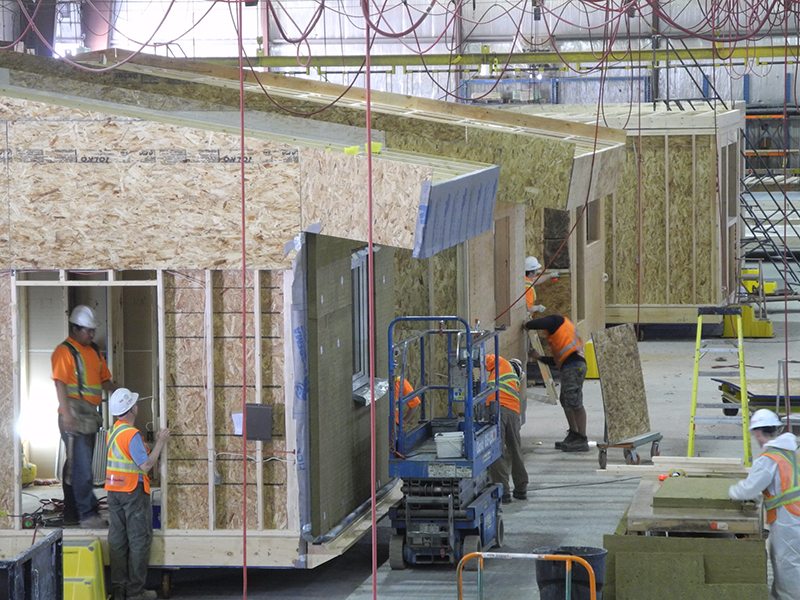
That distinction matters to modular construction. A developer may believe in the housing market and the modular approach and genuinely intend to build. None of those things guarantees that financing, approvals, and site work will come together when the factory needs them.
I think we sometimes confuse confidence in a project with readiness to start it. They may attend the same meetings, but they aren’t the same thing.
The Factory Has Its Own Clock
A modular factory depends on coordinated work moving through a building. Engineering releases drawings, purchasing orders materials, supervisors assign people, and production plans assume the next job will arrive when the current one leaves.

Consider a hypothetical factory expecting a sizable apartment project to begin in six weeks. Management has arranged staffing, spent time on engineering, and started coordinating material deliveries. Then the developer calls to say the financing needs another ninety days.
The modules haven’t entered production, but the disruption already has. Now the factory must find replacement work that fits its capabilities, can clear engineering quickly, and has a customer ready to proceed. That is a fairly demanding shopping list for something management needs immediately.
Even when another project is available, it may require different materials, different details, and a different labor balance. Filling a hole in the schedule takes considerably more than writing another customer’s name in the empty space.
A Big Pipeline Can Hide a Thin Schedule
I’m always interested when a factory says it has hundreds of units in its pipeline. My next question would be how many of those units have a realistic path to production.
There is nothing wrong with counting prospective work. Sales needs opportunities, and management needs to understand what might be coming. The trouble begins when preliminary discussions become the basis for hiring, equipment purchases, or promises about future factory utilization.
An interested developer, a project working through approvals, and a customer with financing and an authorized production release represent very different levels of certainty. Combining them into one impressive number makes the pipeline easier to promote and harder to manage.
The factory needs to know what each project is waiting for, who is responsible for resolving it, and when that resolution can reasonably happen. “They’re working on it” is an update, but it doesn’t provide much help with next month’s payroll.
Speed Only Helps When the Project Is Ready for It
Modular’s ability to shorten the construction schedule can be a real advantage. However, that advantage depends on decisions, financing, and site preparation keeping pace with manufacturing.
Building modules before a site can receive them can turn production progress into a storage problem. Depending on the contract and payment arrangements, the factory may have completed substantial work while still waiting for delivery, payment, or both. Meanwhile, the next customer expects a place on the line.
That is why discussions about modular speed should include the entire project. Who confirms foundation readiness? When will utilities and access be available? What happens if transportation or crane dates move? Who carries the cost when completed modules cannot leave?
Those questions belong in the early planning conversations. By the time modules sit outside waiting for somewhere to go, everyone cares much more about the answers.
Being Careful Can Strengthen the Relationship
None of this requires treating developers as adversaries. Their challenges are real, and a responsible developer may be making the right decision by postponing a project whose numbers no longer work.
The factory still needs to protect its own commitments. That means agreeing on measurable steps before reserving capacity, defining the scope of paid preconstruction work, and establishing how postponements will affect scheduling and costs.
A useful conversation might begin with: “We want this project to succeed. Before we commit our production schedule, let’s identify everything that still has to happen.”
That approach gives both sides something concrete to manage. It also allows the factory to help where it can—perhaps through design simplification, a more practical production sequence, or clearer pricing—without assuming responsibility for problems it cannot solve.
Gary’s Observation

A developer putting a project on hold doesn’t automatically mean the project is dead or modular has lost its appeal. Sometimes waiting is the sensible business decision. But the manufacturer deserves enough information to make its own sensible decision.
I would rather see a factory with a modest, well-supported production schedule than one celebrating an enormous pipeline it cannot confidently date. Optimism is useful in sales meetings. On the factory floor, people need approved work, available materials, and a clear understanding of what comes next.
The developer may be able to wait for better conditions. The factory needs to know how it will operate while everyone waits.