






There is a particular kind of frustration that comes from walking through a modular factory, seeing people working at every station, watching modules move toward the shipping door, and then discovering there still isn’t enough money left at the end of the month. The place looks productive. The schedule looks respectable. Somewhere between the sales contract and the last service call, however, the money seems to have found another place to live.
For those of us who remember balancing a checkbook at the kitchen table, this shouldn’t be a mysterious concept. More money has to come in than goes out. Yet put that same principle inside a factory with custom floor plans, salaried supervisors, material deposits, overtime, delivery delays, and a developer who keeps changing the bathroom layout, and suddenly everybody needs another spreadsheet.
Understanding breakeven is essential. The trouble begins when management treats it as a permanent production quota instead of a calculation built on assumptions that can change before the next Monday meeting.
“We Need Seventeen Modules” Is Only Half an Answer
Ask a factory owner how much production it takes to break even, and you may hear something like, “About seventeen modules a month.” That sounds useful until you ask which seventeen modules, at what selling price, how much labor, and who is responsible for transportation and site completion.
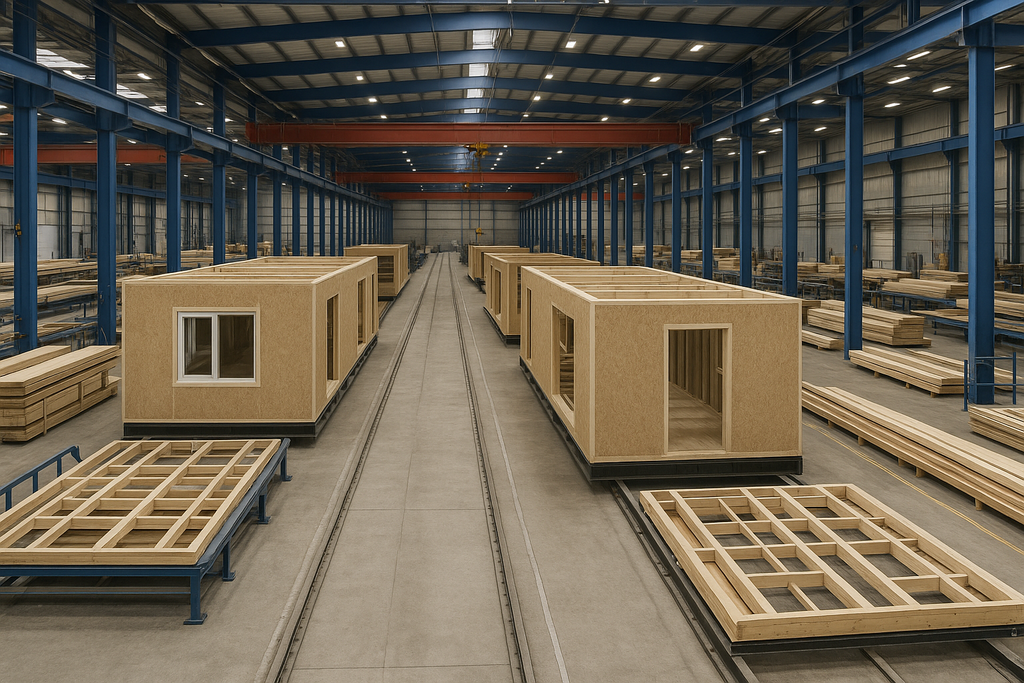
Seventeen relatively straightforward residential modules are not automatically the financial equivalent of seventeen heavily serviced commercial modules. Even two homes with similar square footage can consume very different amounts of engineering, purchasing, supervision, and production time. A module count is a starting point, but it needs a cost and product mix behind it.
Consider a simplified example. A factory has $500,000 in monthly fixed operating costs. Each module sells for $80,000 and carries $50,000 in variable costs, leaving $30,000 to contribute toward overhead and, eventually, profit.
The arithmetic is straightforward: $500,000 divided by $30,000 equals 16.67 modules. Under those assumptions, seventeen sold modules would generate $510,000 in contribution, leaving $10,000 after the fixed costs included in the model.
That is a thin cushion. An unpriced change, unexpected rework, or an additional expense could quickly consume it. Seventeen is the threshold in this example, not a comfortable business plan.
Get the Costs Into the Right Buckets
Before trusting that calculation, management needs to agree on what belongs in it. Calling every production expense variable and every office expense fixed may make the spreadsheet easier to build, but it won’t necessarily make the answer useful.
A factory that keeps its core production crew employed during a slow month still has that payroll obligation. Utilities may include both a base charge and a portion that increases with activity. Adding a second shift can require another supervisor, more maintenance coverage, and additional support costs that arrive in a lump rather than neatly increasing with each module.

The practical question is what each cost will do over the planned period. What remains payable if production drops? What increases with another job? What jumps when the factory adds capacity?
Get those answers straight with the person responsible for the books, then use them consistently. Labor cannot sit in monthly overhead and also be deducted in full as a variable cost per module. A calculation that counts the same expense twice can be just as misleading as one that leaves it out.
A Full Schedule Can Hide a Bad Sales Mix
One of the easiest ways to get into trouble is to assume every order helps the factory equally. A large contract looks impressive on the production board, especially after a few nervous weeks of wondering where the next sale will come from.
But revenue alone doesn’t tell management what that contract contributes. A project can consume engineering time, occupy critical stations, require unfamiliar materials, and generate enough exceptions to keep three managers busy before the first floor is framed.

The factory needs to understand both the contribution from each type of work and the scarce production capacity it consumes. When a particular station limits output, contribution per hour at that station can be more revealing than contribution per module.
That doesn’t mean every complicated project should be rejected. It means complexity needs a price, a realistic schedule, and an owner. Otherwise, the factory can fill its calendar with work that prevents it from accepting better work.
More Volume Won’t Rescue Every Pricing Mistake
Let’s return to the example. Suppose competitive pressure pushes the selling price down from $80,000 to $75,000 while variable costs remain at $50,000. Contribution falls to $25,000, and the factory now needs twenty modules to cover the same $500,000 in fixed costs.
Now suppose the price remains $80,000, but variable costs rise to $55,000. The result is the same: twenty modules. If both happen together, contribution drops to $20,000, and breakeven rises to twenty-five.

Those numbers are hypothetical, but the management problem is familiar. If the factory can reliably complete only twenty modules a month with its current crew and equipment, a twenty-five-module breakeven requirement exposes a problem that a pep talk won’t solve.
Management has to address pricing, costs, product mix, or productive capacity. Simply telling sales to bring in more orders may add obligations the factory cannot profitably fulfill.
Stop Confusing Activity With Capacity
A crew can work hard all week without producing the amount of completed work management expected. Missing materials, drawing questions, inspection corrections, and repeated trips back into the same module can consume hours while everyone appears busy.
This is why labor utilization by itself can be misleading. Keeping people occupied is different from moving acceptable work through the operation. The useful questions concern where modules stop, why they stop, and how many labor hours are spent completing work correctly versus correcting it later.
Before buying more equipment or expanding the building, examine the constraint that actually limits output. If modules keep waiting for approved drawings, another framing table won’t release them. If one station repeatedly becomes overloaded by a particular design, averaging production across the entire plant may hide the issue.
Cross-training can help, provided the receiving station has ready work, materials, and clear instructions. Moving a worker from one stalled area to another is a personnel transfer, not a productivity improvement.
The Cheapest Missing Part Can Become Expensive
Material shortages don’t have to involve the most expensive item in the module. A missing fitting or unavailable electrical component can prevent testing, inspection, enclosure, or shipment, depending on where it enters the process.
The resulting cost may include interrupted work, extra handling, overtime, and delayed billing. Those expenses belong somewhere in the factory’s understanding of what a job actually costs, even if the original estimate had no line labeled “three days of aggravation.”
Inventory decisions should reflect that exposure. Carrying selected critical materials may make sense when their absence stops the line. Filling the warehouse with everything purchasing worries about creates a different problem by tying up cash.
The same discipline applies to design and code requirements. Resolve the project’s requirements before production release, and control revisions afterward. Software can support that process, but somebody still has to decide which drawing is approved and make sure the floor is building from it.
An ADU Is Not Automatically a Slow-Season Cure
When orders soften, somebody inevitably suggests filling the gaps with ADUs, panels, components, or work for another manufacturer. There may be a good business opportunity there, but a smaller product does not automatically mean a simpler or more profitable one.
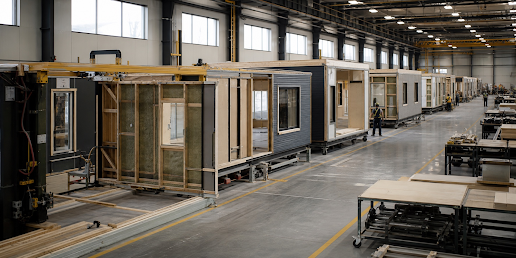
A new product can bring new engineering, purchasing, training, marketing, and service obligations. If it requires different fixtures or disrupts established work, its contribution needs to account for those consequences.
Accepting work below the usual target margin can sometimes help cover existing fixed costs when capacity would otherwise sit idle. That decision requires a clear understanding of incremental costs, available capacity, and the possibility of displacing better orders. It becomes dangerous when temporary pricing quietly becomes the factory’s permanent business model.
The Shipping Door Isn’t Always the Financial Finish Line
A module can leave production and continue generating costs. Storage, transport rescheduling, weather protection, damage repairs, and factory-supported site corrections can eat into the expected contribution margin.
Who pays depends on the contract and the circumstances. That makes scope clarity essential: who is responsible for site readiness, delayed delivery, crane rescheduling, and correcting problems discovered during set and finish?
A factory should track its own obligations through completion, including reasonable allowances for the costs it retains. Celebrating a module’s departure while ignoring the bills that follow it gives management an incomplete picture of the job.
Breaking Even and Having Cash Are Different Problems
A factory can show an operating profit and still struggle to fund payroll. Materials may need to be paid for before customer funds arrive, while completed work can wait on inspections, documentation, or payment approvals.
The breakeven model therefore needs a companion cash forecast. Depreciation can be an expense without a current cash payment, while loan principal payments consume cash without being an operating expense. Equipment purchases and money tied up in inventory create additional differences.
Management should know both how much contribution the business needs and when usable cash will arrive. A profitable job with a poorly structured payment schedule can place considerable strain on the factory financing it.
Gary’s Observation

I have never been impressed by a factory owner telling me the plant is running flat out without also knowing what that effort is producing financially. I respect the work. I respect the people doing it. But everybody working harder cannot make up indefinitely for jobs that were priced wrong, released too early, or allowed to change without recovering the cost.
The weekly management discussion should connect expected contribution, remaining costs, production constraints, and cash needs. When the assumptions change, the breakeven calculation needs to change with them. Waiting until the accountant closes the month means the factory may already be repeating the same mistake on the next job.
Those of us who have been around long enough have heard “we’ll make it up on volume” more times than we care to remember. Sometimes additional volume does help spread overhead. Sometimes it just gives a factory more opportunities to lose money before anyone admits the original price was wrong.
Breakeven tells you where the losses are supposed to stop. The job of management is to build enough room above that line for an ordinary bad week without turning it into a financial emergency.