





In a landmark initiative, Rory Rubin, founder and CEO of S.I. Container Builds, has announced a partnership with the Housing Opportunity Development Corporation and Shelter Inc. to establish a much-needed facility for young survivors of human trafficking. This facility, which will be located in Palatine, Illinois, is a testament to the power of collaboration, modular construction, and the use of sustainable materials in building solutions for urgent social issues.
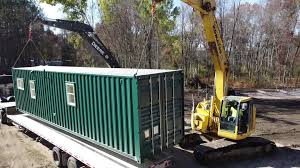
Rubin emphasizes that the project was inspired by the pressing need for a safe, secure, and supportive environment where young girls rescued from trafficking can find refuge and receive critical support. “The project came about because of the severity of the problem with human trafficking. There is no facility to house young girls once they are found and removed from the streets,” says Rubin. “This is the first of its kind in the state of Illinois and the first in modular construction.”
The project highlights the versatility and promise of modular construction—particularly with shipping containers—as a fast, affordable, and sustainable solution. This is not just about building a facility; it’s about fostering a space where hope can be restored. Rubin’s company, known for repurposing shipping containers into durable and functional spaces, found an ideal partner in Housing Opportunity Development Corp, which provided the development expertise, and Shelter Inc., which will run therapeutic and educational programming within the facility.
Shelter Inc.’s involvement brings a holistic approach to the program. With a mission to support and protect vulnerable children, Shelter Inc. is a non-profit with a strong history in trauma-informed care and education. As Rubin notes, Shelter Inc. will operate “the educational and therapeutic programming for the girls until they can find a suitable home.” This unique model ensures that each girl receives personalized care in a secure and supportive environment.
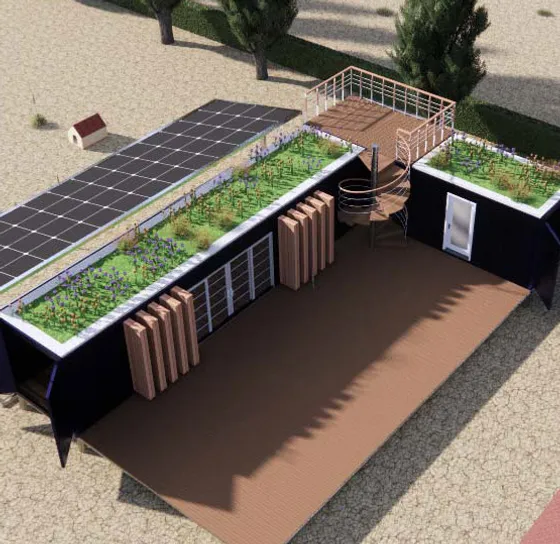
The choice to use modular construction methods offers unique benefits for this project. Shipping containers are inherently durable, resistant to extreme weather, and cost-effective—qualities that make them ideal for a project of this nature. Their adaptability allows for rapid assembly and modular scalability, essential for addressing the urgency of the situation. Rubin highlights the sustainability and flexibility of this approach, noting that “the community of Palatine, IL, has been so open and appreciates the sustainability of utilizing the shipping containers, and they know everything will be built to their code.”

Community involvement and acceptance have played a crucial role in bringing this project to life. Palatine’s residents have shown strong support, recognizing the project’s commitment to sustainability, community safety, and code compliance. By upholding local building standards, S.I. Container Builds ensures that the facility not only meets but exceeds safety and quality requirements.
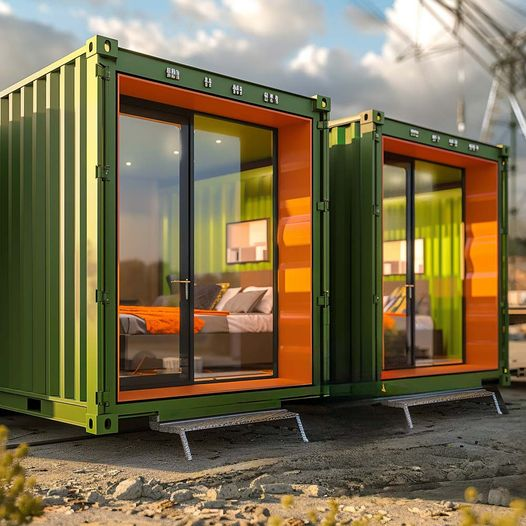
For S.I. Container Builds, this project represents more than a business venture; it embodies their core mission to create positive change in communities through responsible building practices. Rubin reflects, “We are grateful that we have the opportunity to ‘do good’ in another community as this is truly one of our core principles.” The partnership has highlighted the importance of innovative construction solutions and the impact they can have when directed towards social causes.
As the project progresses, it has already garnered attention and praise. The modular construction industry, often associated with commercial and residential projects, is showing its potential in the realm of social impact. The adaptability of modular designs, combined with the cost-effectiveness of repurposing materials like shipping containers, paves the way for future projects that address urgent community needs, from emergency housing to rehabilitation facilities.
This initiative is setting a precedent for similar projects across the nation. By addressing both the immediate and long-term needs of survivors, this facility aims to be a blueprint for future efforts. The innovative design not only provides temporary shelter but also cultivates an environment of growth, recovery, and eventual independence for its residents.
The success of this project could inspire other non-profits and municipalities to explore modular and sustainable solutions for social infrastructure. It exemplifies how partnerships between private sector innovators and non-profits can create powerful solutions to deeply rooted societal issues. Rubin and her team’s work with Housing Opportunity Development Corp. and Shelter Inc. is a shining example of how creativity, compassion, and commitment can combine to meet community needs in ways that are both sustainable and effective.
To learn more about this transformative project and its development, read the full article at the Daily Herald.
.

CLICK HERE to read the latest edition

Contact Gary Fleisher