






Across continents and cultures—from the skyscrapers of Shenzhen to the streets of San Francisco—governments, developers, and citizens alike are wrestling with a deceptively simple question: Where can people afford to live?
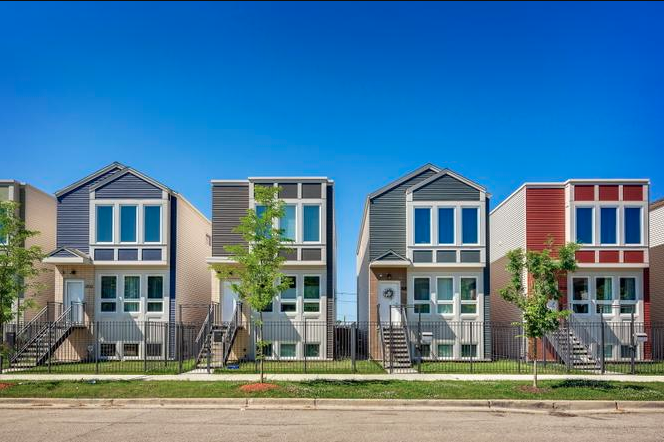
The term “affordable housing” has become a global buzzword and a political hot potato. But scratch the surface, and you’ll find that the real story behind the world’s affordable housing shortfall is more complex, nuanced, and urgent than most realize. This is not merely a construction crisis. It’s a crisis of definition, politics, economics, geography, and social perception—all colliding at once.
This investigation dives into the tangled web of causes contributing to the worldwide housing shortfall and why even the term “affordable” may be doing more harm than good.
When “Affordable” Means a Dozen Different Things
In the United States, affordable housing typically means paying no more than 30% of household income toward rent or mortgage. But even this definition is fuzzy—30% of what income? Gross or net? Is it based on local Area Median Income (AMI) or national standards? And what about cities where the cost of living is detached from average earnings?
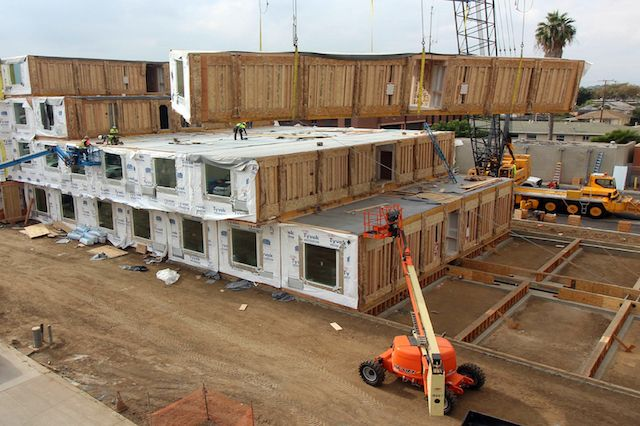
In Vietnam, “affordable” might mean workforce housing developed by the state or private firms for factory workers. In China, it once referred to government-issued “unit housing,” but now includes a growing (and largely unregulated) rental market.
What’s clear is that there is no global standard—and the term often gets weaponized. Developers use it to brand slightly-discounted luxury apartments. Politicians toss it around to score points. Local homeowners hear it and assume “low income housing” or worse, and fight to keep it out of their neighborhoods.
The confusion creates hesitation, opposition, and missed opportunities—especially when housing policies depend on clarity and buy-in to succeed.
Urban Migration Is Outpacing Every Housing Plan
Over half the world’s population now lives in cities—a number that’s rising fast. People move to cities in search of jobs, healthcare, education, and opportunity. But the pace of urban migration has outstripped the ability of governments and developers to build homes at the same speed.
In countries like Vietnam, rapid industrialization has drawn millions into cities like Ho Chi Minh, yet construction hasn’t caught up, pushing up rents and forcing workers into informal settlements or distant commutes. In China, major urban centers have absorbed massive rural migration, but housing efforts focused too much on market-rate units—igniting a real estate bubble while ignoring true affordability.
Meanwhile, megacities in the U.S. like Los Angeles, New York, and Seattle are seeing record homelessness alongside million-dollar median home prices.

The result is predictable: growing slums in the Global South, and rising tent cities in the Global North—each a symptom of runaway urbanization left unplanned.
Construction Costs Are Spiraling—Even for the Simple Stuff
It now costs more than ever to build even a modest home. The culprits? A cocktail of inflation, labor shortages, outdated regulations, and underused innovation.

Materials like steel, lumber, and concrete saw double-digit cost increases in recent years, while skilled tradespeople are in short supply nearly everywhere. Add to that permitting delays, environmental reviews, zoning hearings, and it can take years to break ground.
In the U.S., many cities only allow single-family homes on most residential land, making dense or modular developments nearly impossible. In parts of Asia, land scarcity and bureaucratic delays cripple supply before a single nail is driven.
Despite promising tools like offsite construction, 3D printing, and prefabricated modules, adoption remains sluggish. The irony? We have the technology to build faster and cheaper—but political inertia, regulatory resistance, and industry fragmentation are keeping it on the sidelines.
Governments Talk Big, Act Small, and Fear the Backlash
There’s no shortage of speeches or policy papers about affordable housing. But real action is rare—largely because of politics.
Governments often spread housing responsibility across multiple departments with little coordination. Funding is fragmented. Land is tied up in bureaucratic red tape. And perhaps most damning: no one wants to be the politician who says “affordable housing” and watches local homeowners go ballistic.

In China, a flood of capital built thousands of vacant “ghost cities” with little consideration for working-class housing needs. In Vietnam, progress is being made, but not fast enough to meet worker demand.
In the U.S., public housing has been underfunded for decades, with tax-credit programs unable to match the need. Even well-meaning state efforts are blocked by local “Not In My Backyard” resistance, often from wealthy or politically connected neighborhoods.
Politicians know affordable housing is needed—but also know it can cost them elections. So they delay, deflect, or outsource the problem.
Developers See Risk Without Reward
At the end of the day, housing gets built when developers believe there’s money in it. And right now, that belief doesn’t extend to affordability.
Luxury condos and high-end rentals offer much higher profit margins, especially in booming cities. Affordable housing, in contrast, often requires navigating complex subsidy systems, community resistance, and razor-thin returns. Even if a developer wants to help, the math often says “don’t.”
In countries with corruption or weak land policy enforcement, affordable housing initiatives can be exploited or quietly shelved. In more stable markets, the public-private partnership model has seen mixed results.
Without incentives, streamlined regulations, and lower-risk financing tools, the private sector won’t touch affordability at scale—and governments can’t build enough on their own.
Culture, Demographics, and NIMBYism Are Making It Worse
Around the world, cultural expectations of housing are changing fast, and that’s adding pressure.
In much of Asia, traditional multi-generational living arrangements are declining. Families that once shared homes now want separate units—multiplying housing demand. In the West, rising divorce rates, longer life expectancy, and more single-person households are having a similar effect.

Meanwhile, even well-intentioned communities resist change. In the U.S., NIMBYism is deeply embedded: residents fear affordable housing will bring crime, lower property values, or alter neighborhood character. These fears stall projects, change zoning outcomes, and delay approvals for years.
It’s not just a policy problem—it’s a societal one.
A Crisis of Courage and Coordination
We often ask why the world has an affordable housing crisis. The better question may be: why aren’t we solving it, even when we can?
We know the tools that work—offsite construction, ADUs, zoning reform, tax incentives, public-private partnerships, and digital permitting systems. But no one stakeholder can fix this alone.
The shortfall is not just about price. It’s about competing priorities, failed leadership, public perception, and fragmented execution. It’s about a word—affordable—that means everything and nothing at the same time.
Until we agree on what affordable housing really is—and who it’s for—we’ll keep spinning our wheels, globally.
.
Gary Fleisher, The Modcoach, writes about the modular and offsite construction industry at Modular Home Source.
.

CLICK HERE to read the latest edition

Contact Gary Fleisher