


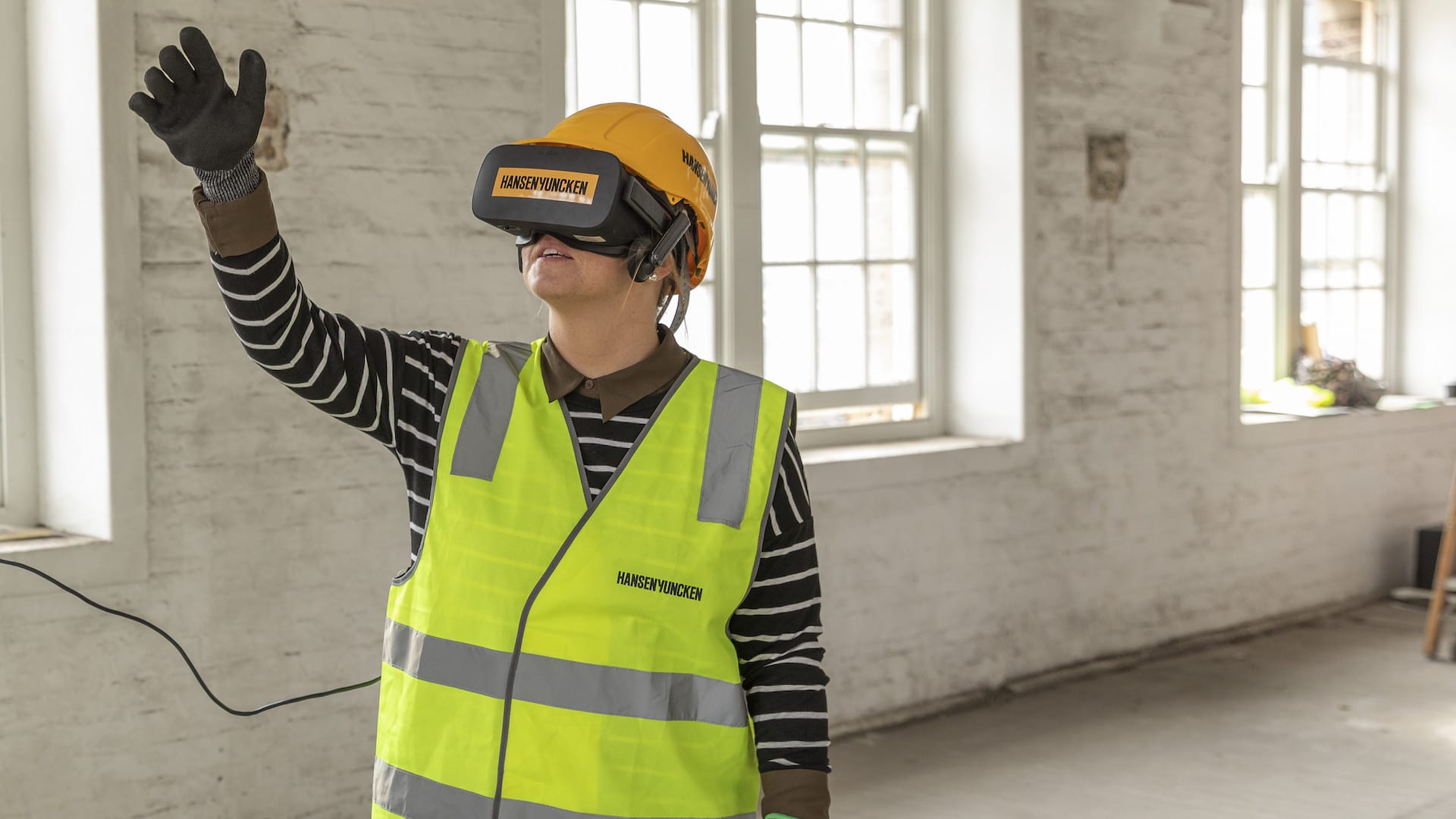
In the world of modular, offsite, and component construction, innovation often starts with raised eyebrows—and ends with raised standards.
If you spend enough time talking to the people who dream up the next breakthrough in components or process improvements, you’ll notice something fascinating—some of the most powerful ideas in our industry didn’t start with applause. They started with laughter, skepticism, or someone muttering, “That’ll never work.” But in the modular and offsite worlds, that’s often the first sign you’re on to something big.

As Albert Einstein once said, “If at first the idea is not absurd, then there is no hope for it.” Most of the innovators I’ve met probably haven’t heard that quote before. But they’ve lived it. They’ve embodied it. And they’ve bet everything on it.
Because in this industry, absurd ideas are often just unpolished brilliance waiting for the right moment—or the right person—to believe in them.
The Factory Floor as a Think Tank
Unlike some industries where creativity wears a suit and sits in a boardroom, in the modular and offsite world, our great thinkers often wear work boots and flannel shirts. Their inspiration isn’t drawn from theory but from necessity.
I’ve seen framers sketch modular wall layout improvements on the back of a shipping label. I’ve watched CNC programmers improvise code to turn a jammed machine into a precision tool. I’ve heard plant managers say, “What if we cut it before we glue it?” and instantly save six figures a year in wasted materials.
These aren’t just technicians. They’re contemporary thinkers in the most practical sense of the word—solving problems no one else knew existed, or dared to tackle, with solutions that feel a little absurd until they’re not.
The “Ridiculous” That Redefines Us
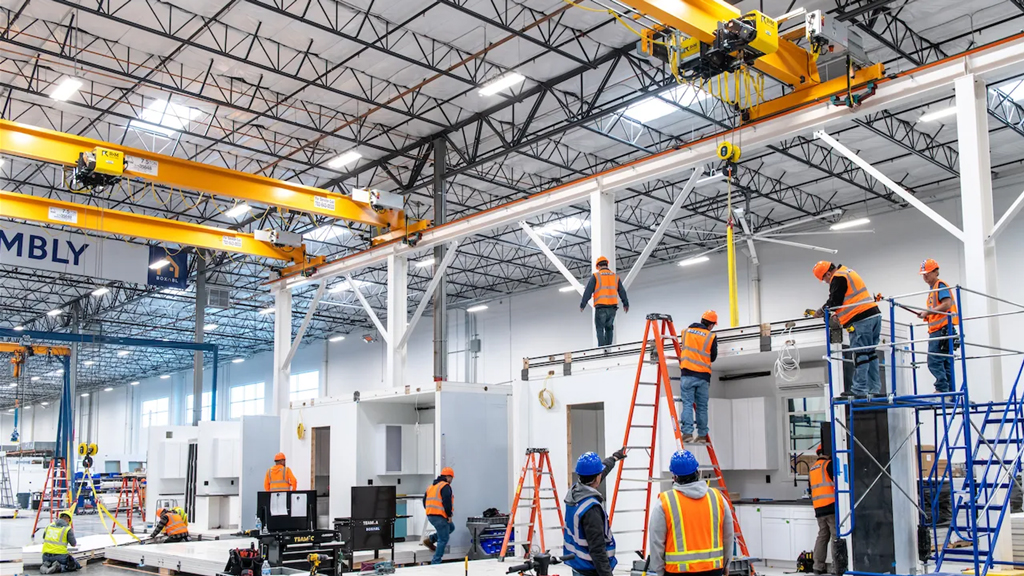
Some of the best-known ideas in offsite construction were once met with eye-rolls.
Shipping container homes? Too industrial. Now they house families and pop up as affordable housing solutions from Miami to Maui.
Factory-built high-rises? Impossible. Now there are modular towers in Brooklyn and London that defy expectations—and the skyline.
AI-powered saws and robot nailers on framing lines? That’s Jetsons-level thinking. Yet here we are, with startups and major factories using them to increase speed and precision, while reducing repetitive injuries and material waste.

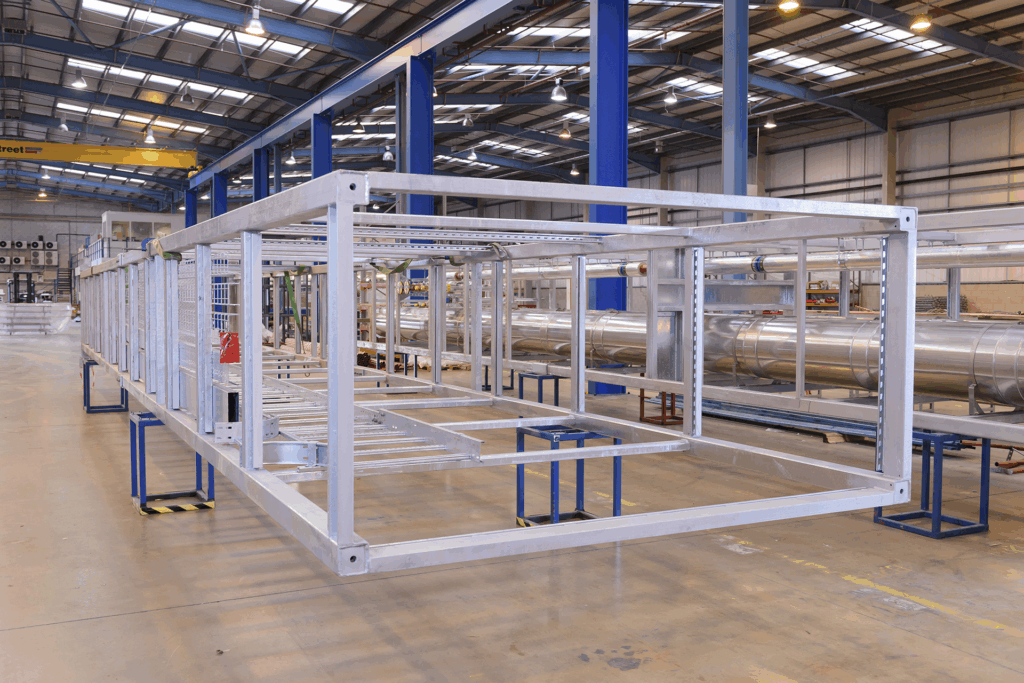
Even something as ubiquitous as the floor cassette was once considered silly—until it made every builder’s life easier.
It’s a pattern: today’s outlandish idea is tomorrow’s industry standard. But only if someone dares to run with it.
The Idea Whisperers
Behind each of these “absurd” ideas is a person who refused to let practicality kill imagination.

I’ve met factory owners who mortgaged their homes to prototype a new type of modular unit. I’ve talked with software engineers who left big tech jobs to build better BIM platforms for small component shops. I’ve even interviewed welders who created their own framing jigs out of scrap steel just to shave a few minutes off each build cycle.
None of them started with the certainty that it would work. What they started with was a question: “What if?”
They may not have quoted Einstein. But they lived it. They embodied it. And they kept tinkering—sometimes in garages, sometimes in labs, and often on the fly in factories full of noise, pressure, and deadlines.
A Culture That Embraces Crazy
What sets this industry apart isn’t just the willingness to tolerate strange ideas. It’s the readiness to build them, test them, and—if they fail—try again.
There’s a quiet humility in this work. Not every bold idea pans out. Some die quietly on a whiteboard. Others cost real money. But no one here seems to mind too much. Because every failed concept still teaches us something. It sharpens the next idea. It warns the next founder. It fuels the next breakthrough.
And once in a while, it turns a “that’ll never work” into a multi-million dollar innovation.
The best part? No one here seems surprised when it does.
So Keep Watching the Outliers
If you’re new to offsite or modular construction and someone pitches you an idea that sounds ridiculous—don’t tune it out.
Watch what happens next. Ask them why. Follow them down the rabbit hole of “What if.” You might just be witnessing the very beginning of your next big competitive advantage. Or the next wave that changes the industry again.
Because in this field, the line between absurd and genius is pencil-thin, and we sharpen it every time we dare to believe in something others dismiss.
Einstein wasn’t a modular guy.
But he understood something we often forget: progress doesn’t begin with certainty. It begins with curiosity, discomfort, and the willingness to be wrong for a while.
So the next time you hear an idea that makes you raise your eyebrows—pause. Don’t rush to judgment. That oddball concept just might be the seed of the next big thing.
And if you’re the one with that crazy idea? Keep going. You’ve got company
.
With over 9,000 published articles on modular and offsite construction, Gary Fleisher remains one of the most trusted voices in the industry.
.

CLICK HERE to read the latest edition

Contact Gary Fleisher