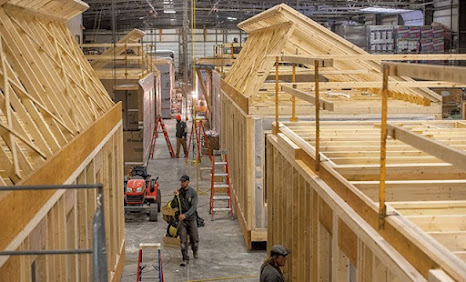
Switching from traditional home building to modular construction can offer numerous benefits.

.
Here are my 100 reasons why a traditional home builder might consider making the transition to modular construction methods:
- Faster Construction Time: Modular homes are generally completed in about half the time of traditional builds.
- Cost-Efficiency: Reduced labor and time mean lower overall building costs.
- Quality Control: Factory setting allows for better quality management.
- Less Waste: More efficient material usage and recycling opportunities.
- Predictability: Easier project timing and scheduling.
- Reduced Labor Costs: Fewer labor hours required per project.
- Weather Delays Minimized: Building components are constructed indoors.
- Energy Efficiency: Tighter construction for improved thermal performance.
- Modern Technology Integration: Easier integration of modern building technologies.
- Consistency: Uniform quality due to controlled construction conditions.
- Safety: Safer construction environment in a controlled factory setting.
- Scalability: Easier to scale operations up or down based on demand.
- Mobility: Ability to serve wider geographic areas.
- Customization: Wide range of design options and flexibility.
- Stronger Structures: Modular buildings can be designed to be extremely sturdy.
- Reduced Site Disruption: Less on-site activity and disruption.
- Environmental Impact: Lower environmental footprint.
- Innovative Designs: Opportunity to offer cutting-edge design options.
- Versatility: Modules can be used to construct various types of buildings.
- Reduced Risk of Theft: Less risk of on-site theft as materials are secured in a factory.
- Lower Financing Costs: Faster construction leads to shorter financing periods.
- Efficient Use of Materials: Bulk purchasing and storage reduce costs.
- Streamlined Process: Fewer delays due to a streamlined production process.
- Improved Cash Flow: Quicker turnaround from start to completion and sale.
- Market Differentiation: Stand out in the market with modern building practices.
- Compliance: Easier to meet building codes and standards.
- Resilience: Modular homes can be designed to be disaster-resistant.
- Higher ROI: Potential for a higher return on investment due to efficiencies.
- Ease of Expansion: Modular components can be designed for easy future expansion.
- Year-Round Construction: Seasonal weather less disruptive to building schedules.
- Labor Availability: Less dependency on skilled labor availability on-site.
- Noise Reduction: Less noise pollution at the construction site.
- Economic Incentives: Potential access to green building incentives.
- Adaptability: Ability to quickly adapt to changing market demands.
- Reduction in Errors: Fewer human errors due to machine precision in factories.
- Aging in Place Features: Easier incorporation of designs for accessibility.
- Control Over Timelines: Better control over project timelines.
- Control Over Budgets: More predictable project budgeting.
- Minimal On-Site Traffic: Reduced traffic congestion at construction sites.
- Lower Maintenance Costs: New materials and methods can lower maintenance needs.
- Historic Preservation: Less invasive building methods can preserve historical sites.
- Improved Acoustic Insulation: Factory conditions allow for better insulation installation.
- Improved Thermal Insulation: Tight construction enhances energy conservation.
- Reduced Carbon Footprint: Efficient processes lead to less carbon output.
- Brand Image: Associating with innovation and sustainability improves brand image.
- Worker Comfort: Factory settings can be more comfortable for workers.
- Easier Multisite Management: Manage multiple projects more efficiently.
- Use of Prefabricated Utilities: Integration of pre-made electrical and plumbing systems.
- Modular Retrofitting: Facilitates the upgrading of existing structures.
- Job Site Safety: Generally, fewer accidents and injuries on site.
- Higher Material Quality: Controlled environment prevents material exposure and degradation.
- Customer Satisfaction: Faster turnover can lead to higher customer satisfaction.
- Less Dependency on Weather: Reduce delays and material damage from weather conditions.
- Reputation as a Leader: Being seen as a leader in adopting new technologies.
- Long-term Durability: Well-constructed modules can offer superior durability.
- Fire Resistance: Materials used can be chosen for better fire resistance.
- Better Soundproofing: Construction techniques that enhance soundproofing.
- Availability of Financing Options: Modular construction may attract specific financing benefits.
- Global Trends: Keeping up with global shifts towards modular construction.
- Competitive Edge: Gaining a competitive edge by offering quicker build times.
- Attracting Younger Customers: Appealing to younger demographics looking for innovative housing solutions.
- Reduction in Vandalism: Reduced risk of vandalism at quicker, more controlled sites.
- Higher Insulation Standards: Ability to meet higher insulation standards more easily.
- Flexibility in Design: Modular construction allows for diverse architectural designs.
- Sustainable Building Practices: Promotes the use of sustainable practices and materials.
- Reduced Transportation Costs: Building materials are transported in bulk to the factory.
- Increased Profit Margins: Potential for higher margins due to efficiency gains.
- Support for Remote Locations: Easier to build in remote locations with modular units.
- Ease of Compliance with Regulations: Pre-approved designs streamline regulatory compliance.
- Access to New Markets: Opportunity to enter markets where traditional construction is less viable.
- Potential for Automation: High potential for automation in the production process.
- Reduction of Onsite Mistakes: Fewer construction errors due to controlled factory settings.
- Use in Disaster Recovery: Quick deployment of modular units in disaster-stricken areas.
- Enhanced Project Management: More precise project management and tracking.
- Flexibility for Clients: Clients can choose from a wider range of options more easily.
- Reduction in Project Overheads: Fewer overheads due to reduced site needs.
- Space Efficiency: Efficient use of space through precise engineering.
- Quick Response to Market Changes: Ability to quickly adjust to housing market changes.
- Investment in Future Growth: Investment in modular technology is seen as future-proofing.
- Appeal to Eco-conscious Consumers: Attracting consumers who prioritize environmental sustainability.
- Opportunities for Reuse and Relocation: Modular units can be relocated or reused in different configurations.
- Partnership Opportunities: Opportunities for partnerships with other modular construction firms.
- Enhanced Thermal Performance: Improved methods for ensuring thermal regulation.
- Minimal Disruption During Expansion: Expansions or modifications cause minimal disruption.
- Use of High-tech Tools: Integration of high-tech manufacturing and design tools.
- Potential for Higher Building Standards: Ability to meet or exceed stringent building standards.
- Ease of Adding Custom Features: Custom features can be easily integrated into designs.
- Opportunity for Rapid Prototyping: Fast prototyping of new designs and concepts.
- Building Code Advantages: Modular units often pre-designed to meet existing codes.
- Scalable Solutions: Offers scalable solutions for various housing needs.
- Access to Specialized Skills: Centralized production attracts specialized skills.
- Tax Incentives: Possible tax incentives for manufacturing in certain regions.
- Better for Urban Construction: Suited for urban areas where space and time are at a premium.
- Ability to Leverage Local Resources: Can leverage local manufacturing facilities.
- Improvement in Overall Efficiency: Overall increase in operational efficiency.
- Reduced Site Preparation Time: Less time needed for site preparation with pre-built modules.
- Support for Sustainable Growth: Supports the sustainable growth of cities and communities.
- Enhanced Load Bearing: Engineered to provide superior load-bearing capacities.
- Multi-use Applications: Flexibility for residential, commercial, or mixed-use developments.
- Ability to Adapt to Industry Changes: Quick adaptation to changes in construction technology and market demands.
Adopting modular construction techniques offers a strategic advantage in today’s competitive market, appealing to both builders and clients with its efficient, cost-effective, and innovative solutions.
.

CLICK HERE TO READ THE APRIL ISSUE
.

Gary Fleisher is a renowned blogger and commentator on construction and housing trends, known for his insightful analysis of the industry.