



Sixty years ago, I learned to drive in a way that would probably give today’s parents heart palpitations. One instructor. Three students. One car. Ten minutes of wheel time each. My driving instructor, Mr. Corbett, sat rigidly in the passenger seat like a man whose life insurance premiums were being recalculated in real time.
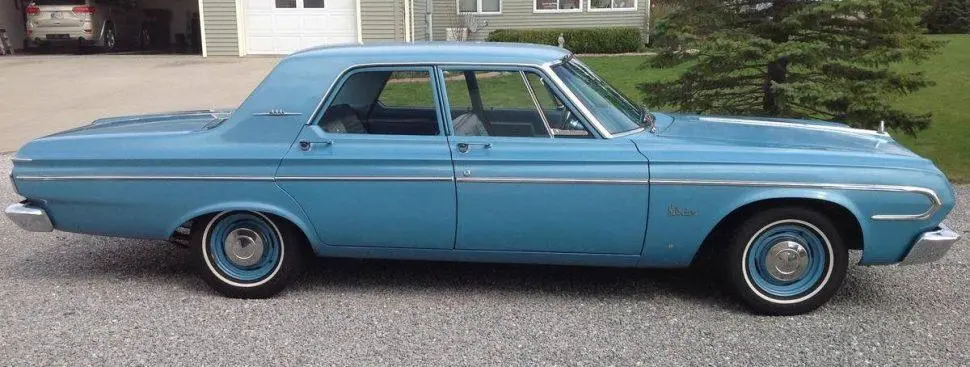
1964 Plymouth Belvedere – my driver’s education car. Check out the hood ornament!
Every time it was my turn behind the wheel, I’d grip it too tightly, stare straight over the hood ornament, and try not to breathe. And every time—without fail—Mr. Corbett would say the same thing in the same calm-but-deadly serious voice:
“Stop looking at the end of the hood. Look up.”
At sixteen, I thought he was just correcting bad teenage driving habits. Sixty years later, I realize he was teaching something far more important. He was teaching long-range thinking.
Because when you stare at the hood, all you see is what’s about to happen in the next second. When you look up, you see what’s coming—and you have time to react.
That lesson has never been more relevant than it is today in the offsite and modular construction industry.
Hood-Watching Is Not Planning
Let’s be honest. Most offsite factories, builders, and suppliers are not “planning” anymore. They’re reacting.
A code change pops up? React.
A labor shortage hits? React.
A lender tightens requirements? React.
A developer delays a project? React.
None of this is planning. It’s driving at highway speed while staring at the hood and hoping the road stays straight.

Short-range thinking dominates our industry. Weekly production numbers. This month’s cash flow. This quarter’s backlog. Next delivery. Next inspection. Next crisis. There’s rarely time—or patience—for looking further ahead.
And yet, we’re shocked when change blindsides us.
The truth is uncomfortable: if you didn’t see it coming, you probably weren’t looking far enough down the road.
The Myth of “Long-Range” Planning
I once read that Chinese empires planned in 500-year cycles. Whether that number is exactly right doesn’t really matter—the mindset does. They built systems assuming generations would inherit the consequences of today’s decisions.
Contrast that with modern business planning.
Today, “long-range” planning is often defined as 18 to 24 months. Anything beyond that is labeled unrealistic, speculative, or “nice to think about but impossible to predict.”
Even worse, short-range planning has nearly disappeared altogether. What we call short-range planning is usually just reacting to something that already happened.
That’s not foresight. That’s damage control.


In offsite construction, this mindset is particularly dangerous because everything we do has long tails. Factories take years to design, fund, staff, and stabilize. Technology investments take years to pay back. Cultural change inside a factory doesn’t happen in a quarter—it happens over leadership cycles.
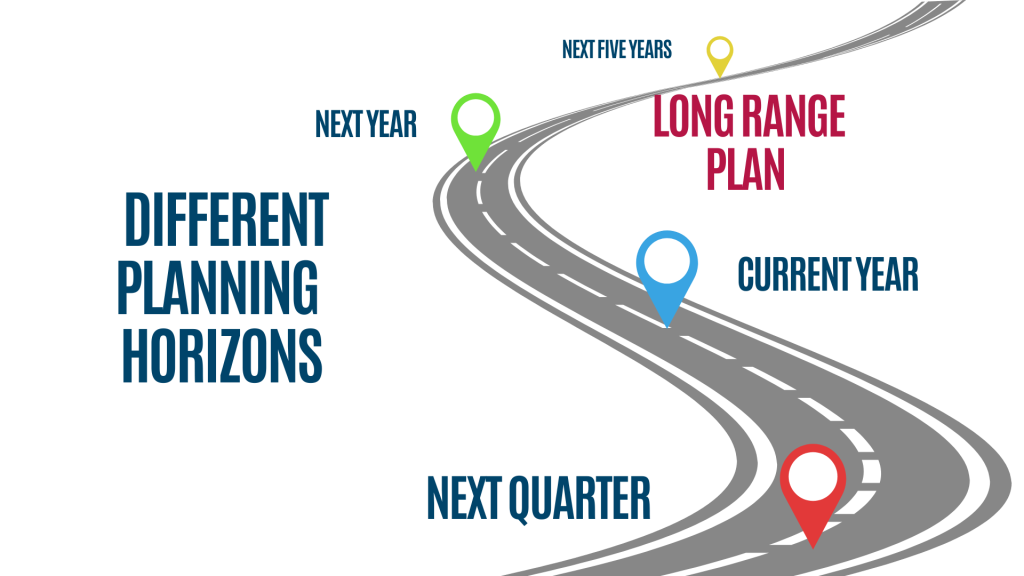
You cannot build a long-cycle industry using short-cycle thinking.
Why Offsite Is Especially Vulnerable
Offsite construction loves efficiency, precision, and repeatability. Those are strengths—but they can become blinders.
Factories are designed to run smoothly when conditions stay predictable. But the world outside the factory walls is anything but predictable right now. Housing demand swings wildly. Interest rates jump. Zoning rules change mid-project. Labor expectations shift. Technology advances faster than training programs.
When leadership keeps its eyes on the hood, all of those changes feel sudden and unfair.
When leadership looks up, they feel inevitable.
The factories that struggle the most are usually not poorly run. They’re well-run—for yesterday’s conditions.
Looking Up Means Asking Better Questions
Looking further down the road doesn’t mean predicting the future perfectly. It means asking questions early enough that the answers still matter.
What happens to our business model if labor availability drops another 20 percent?
What if inspection processes become partially automated?
What if younger workers refuse five-day factory schedules?
What if developers demand faster customization, not less?
What if capital becomes cheaper—or more expensive—for the next decade?
None of those questions requires crystal balls. They require perspective.
When you look up while driving, you’re not trying to see every pothole—you’re watching the flow of traffic. You’re anticipating patterns. You’re buying yourself reaction time.
That’s what strategic vision does for a factory.
Accidents Are Sudden. Change Is Not.
Mr. Corbett had another lesson embedded in his warning. Change doesn’t happen instantly—unless you’re in an accident.
In business, most “accidents” are really slow-motion collisions. We see them coming years in advance but convince ourselves they’ll miss us.

The factory that runs out of cash didn’t suddenly lose money.
The startup that collapses didn’t suddenly miscalculate.
The company that can’t attract talent didn’t suddenly become unattractive.
Those were visible curves in the road. Someone just kept staring at the hood.
Leadership Sets the Line of Sight
Here’s the uncomfortable part: the distance an organization looks ahead is determined almost entirely by leadership.
If owners and executives only talk about this quarter, everyone else will too.
If managers are rewarded only for short-term output, that’s what they’ll chase.
If innovation is always postponed because “now isn’t the right time,” it never becomes the right time.
Looking up is not a spreadsheet exercise. It’s a leadership behavior.
It shows up in what questions are asked at meetings.
In what investments are delayed—or protected.
In whether people are allowed to think beyond next week’s production schedule.
When leaders look up, permission is granted for others to do the same.
A Better Way to Drive the Industry Forward
Offsite construction doesn’t need more panic responses. It needs better visibility.
We need factories that plan for people they haven’t hired yet.
Systems that anticipate regulations not yet written.
Business models flexible enough to adapt without starting over.
That doesn’t mean abandoning near-term realities. You still have to watch the road immediately in front of you. But you cannot let that be the only thing you see.
Driving requires balance: awareness of what’s right ahead and anticipation of what’s coming next.
So does building an industry.
Mr. Corbett Was Right
Sixty years later, I can still hear that voice.
“Stop looking at the end of the hood. Look up.”
It turns out he wasn’t just trying to keep three nervous teenagers alive. He was teaching a principle that applies just as much to factories, investors, managers, and innovators as it does to drivers.
If we want offsite construction to evolve instead of react, to lead instead of follow, to survive instead of stall—we need to lift our eyes.
Because the road ahead isn’t hidden.
We just have to look far enough to see it.
.
With more than 10,000 published articles on modular and offsite construction, Gary Fleisher remains one of the most trusted voices in the industry.
.
CLICK HERE to read the latest edition

Contact Gary Fleisher