





Imagine off-site produced housing as a room full of Kindergarten children on the first day of school. Each child has their own personality and it’s the teacher’s job to begin bringing them together to learn. It’s a job very few of us could handle.

How is that like the off-site construction industry, you ask?
Unlike each small child on that first day of school meeting each other for probably the first time and wanting to make friends, our industry is composed of unique types of building methods and designs led by people that don’t want to make friends with the other kids.
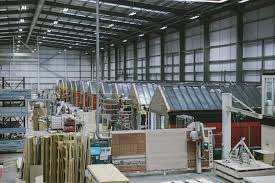
Each group thinks they have the magic sauce to make housing faster, cheaper, better, greener and more sustainable. Concrete housing people have no idea what goes on behind the scenes at a modular housing factory. The wall and panel producers look at 3D concrete printed home operations like there’s something wrong with those people.

Each different type of construction holds its own industry conferences, webinars and annual meetings. The only common theme is the term “housing.”
Even the term “Housing” is a screwed-up mess. In its simplest form, housing is a single residential living unit that provides shelter.
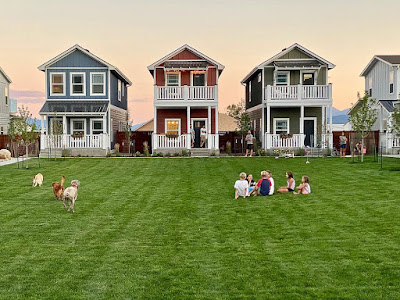
But even that term has been torn apart by the off-site construction industry. Each part of our industry serves several masters. The first master is the discipline each builds to. The second master is how each type of off-site factory addresses the first discipline.
This is where Kindergarten comes back into the picture.
Just like each child wants the teacher to recognize them, each type of off-site construction is fighting for its place at the builders’ and developers’ table. The shipping container people try to show how converting their boxes into affordable housing complexes is a better option than the wood-based modular units trying to achieve the same thing.
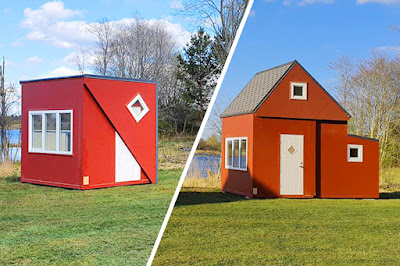
Even the Tiny House people are vying for a bigger piece of the housing pie by showing how communities of their homes are the answer for both the affordable and homeless needs. Add in the ADU crowd, the 3D printed home people and the myriad of other types of ways to build a home and suddenly it really does look like a bunch of 6-year-olds screaming and running around. Even at this age, children with similar personalities begin forming groups of two or more doing their own thing while watching what the other small groups are doing. These groups tend to be fluid with some kids moving from group to group until they find one that fits them.

Continuing this analogy, let’s take a look at the new kids none of the others even knew existed until the first day of school.

Those are the kids that come from more affluent families. They have the best lunch boxes, the latest iPhone, the coolest earbuds and have never known how other children grew up.
These are our industry’s money-laden startups that have an idea of how to do housing better than others that have been doing it for 50 years.
Today’s off-site startups have a real vision of what they can do for housing. They bring in Architects, and marketing consultants, hire production people and buy all the latest automated equipment. In order to do all this, they are using millions of dollars of investment money given to them by people that are sometimes more motivated with helping provide affordable housing than learning how the off-site industry actually works.
Now let’s really put a knife into the heart of all this…
Imagine that teacher trying to do that during COVID-19 online with children they’ve never met in real-time. And what interactions could possibly occur between the students each sitting at their tiny table at home interacting with their computer?
That’s the way the off-site industry has been for decades. Each not only competes for all the homes and projects out there but also with each other no matter how they build it.

There is another problem that needs to be addressed…rapidly rising building material costs. We’ve all seen the webinars, read the news, and listened to the experts explain why it is happening but the one thing our industry, the entire off-site industry, hasn’t done is to have met and discussed what our options are as a combined force.

The skilled labor shortage is another topic not discussed as a collective.
But how will all these inter-discipline off-site discussions occur if Association members of each of the different types of off-site won’t even talk about it with each other, let alone ‘everyone’ in off-site coming together for the betterment of all?
What is needed to begin bringing us all together is a strong leader, one respected by all that has the time and patience to work with all the kids that make up the off-site construction industry.
Our industry needs a good Kindergarten teacher!

Related Articles:
Four Unique Labor Problems Facing Offsite Construction
Misperceptions Of The Modular Construction Industry


Gary Fleisher is the Editor in Chief of Modular Home Source and Offsite Builder. Email at [email protected]
To learn more about the Offsite Construction Industry, sign up for your free monthly issue of Offsite Builder, the Construction Magazine for Builders and Developers