





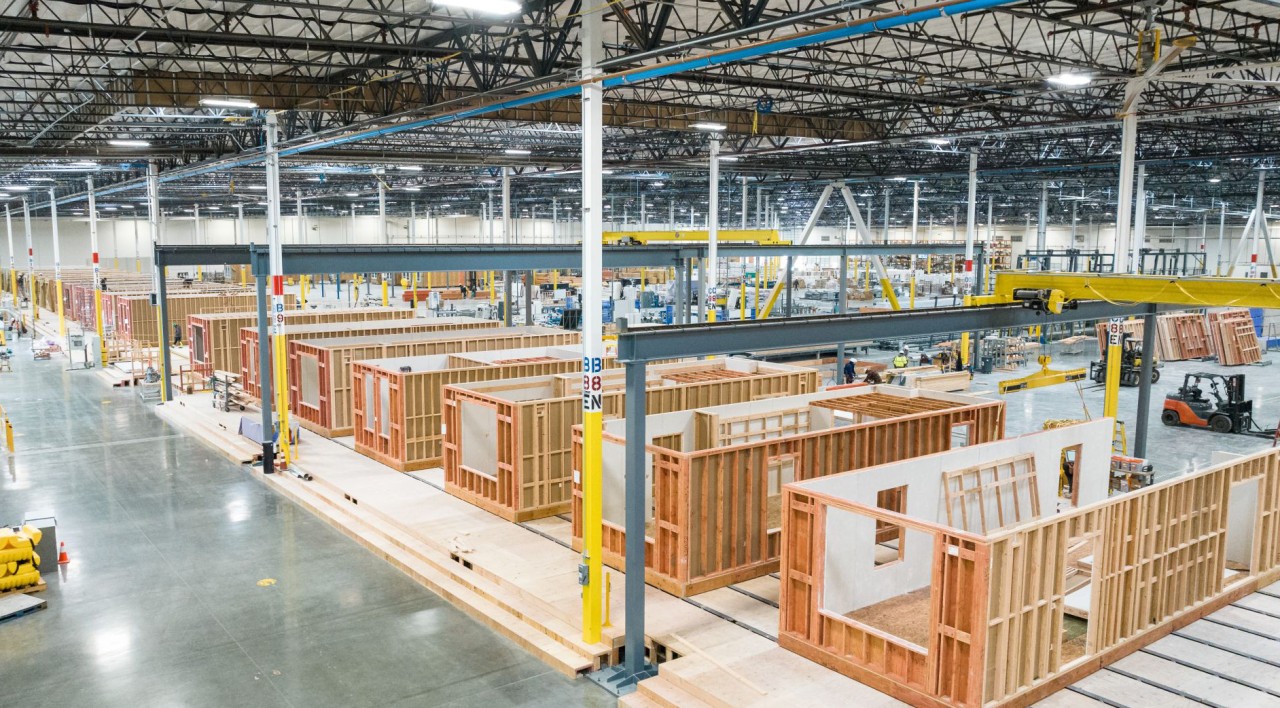
Every few years, the modular industry announces a project that is going to change everything. I have learned to be careful with that phrase. A large contract can attract attention, but the real test comes when the factory begins producing, the trucks start arriving, and the set crews have to keep pace.
The project announced for Joint Base San Antonio–Fort Sam Houston still deserves attention. The Department of the Air Force has selected Layton Construction and Gensler to lead the replacement of housing at its Medical Education and Training Campus. Volumetric Building Companies, or VBC, will manufacture the modules for five dormitory buildings designed to house 6,000 military medical trainees. According to Gensler’s announcement, each building will cover approximately 400,000 square feet, and the modules are planned to leave the factory about 95% complete.
VBC CEO Vaughan Buckley told Built Offsite that the program will include approximately 3,000 living units. Gensler describes it as the largest single multifamily modular project in U.S. history. That is a striking description, although I would pay even closer attention to the operating plan behind it. A project of this size can demonstrate what happens when the owner, architect, contractor, and manufacturer commit to a building system early enough to design around it.
The Decision Was Made Before Production
One detail in the announcement matters as much as the number of rooms: Gensler says the building components are being standardized and engineered before foundations are poured. That gives VBC and its suppliers a chance to plan production around repeatable units while site work proceeds in parallel.
Too many modular projects reach a factory after the major design decisions have already been made. The manufacturer is then expected to find savings in a building that was conceived for field construction. Module sizes, mechanical layouts, corridors, structural connections, and transportation requirements have to be worked around after the fact. At that stage, the factory may be able to build the project, but much of the opportunity for efficient production has already been lost.
Dormitory rooms are particularly suited to repetition. Once the design and quality requirements are settled, the same manufacturing process can be used for many units. Repetition should help crews improve their work, suppliers plan deliveries, and inspectors catch problems before they are reproduced throughout the project. The word should is important. Repeatability magnifies a good decision, and it can magnify a bad one just as quickly.

Gensler says modules could be installed at a rate of up to 20 bedrooms per crane per day. That is a planned installation capability, not a result the team has achieved on this project. Maintaining that pace will require completed foundations, trucks arriving in the right sequence, dependable crane access, available set crews, and modules that need little corrective work once they reach Texas.
The Factory Will Be Only One Part of the Test
The Department of the Air Force is targeting completion within 24 months. It anticipates a construction timeline approximately 70% shorter than previously planned and an overall project cost reduction of about 20%. Those figures are projections attached to the selected delivery approach. We will need to see the finished buildings, final schedule, and actual costs before treating them as proven savings.
Even so, the government’s willingness to organize a program of this scale around offsite manufacturing is significant. This is housing for people training to become medics, respiratory therapists, pharmacy technicians, dental assistants, and other health professionals. The customer needs thousands of rooms, consistent quality, and a reliable completion date. That kind of demand gives a manufacturer something many modular factories spend years trying to secure: a substantial, defined production program.
It also brings substantial pressure. VBC must coordinate manufacturing across its operation and American component suppliers. Buckley has said the work will require additional production lines, second shifts, and further factory expansion. Each of those steps introduces its own management challenge. Adding capacity is easier to announce than to balance with trained employees, material flow, quality control, and a changing construction schedule.
Then there is the yard. If the factory produces modules faster than the site can receive them, finished inventory will accumulate. If the factory falls behind, cranes and site crews may wait. This program will test whether design, purchasing, production, transportation, and installation can function as one schedule rather than a series of separate accomplishments.
A Big Award Is the Beginning of the Story
I understand Buckley’s excitement. VBC has spent years building its capabilities, and being named the manufacturing partner on a program this large is an achievement. It is also encouraging to see Layton and Gensler place the factory at the center of the delivery plan instead of treating modular construction as a late substitution.
I would resist declaring a victory for the entire industry just yet. The selection builds confidence in the team and the approach. Delivery will tell us whether the approach works at this scale. The questions worth following are practical ones: How quickly can production reach a steady pace? How many modules will require rework? Will component suppliers keep up? How long will completed units wait before shipment? And will the promised schedule and cost advantages survive contact with the jobsite?
Those answers will be more useful to factory owners and general managers than any record-setting headline. If the project succeeds, it could give other large institutional owners a detailed example of how to procure and deliver housing through modular construction. If it encounters difficulties, the industry should study those just as carefully.
Gary’s Observation

I have seen enough modular announcements to know that the largest project isn’t automatically the most instructive. What makes the San Antonio program worth watching is the decision to bring manufacturing into the project early and organize a large, repeatable housing need around it.
VBC has been given an extraordinary opportunity, and an extraordinary responsibility. Thousands of future military medical professionals need dependable housing. The industry needs to show that factory production can deliver quality at scale while the contractor and site team keep pace.
The announcement has earned our attention. The way these five buildings move from drawings to factory floors to completed dormitories will earn our judgment.