




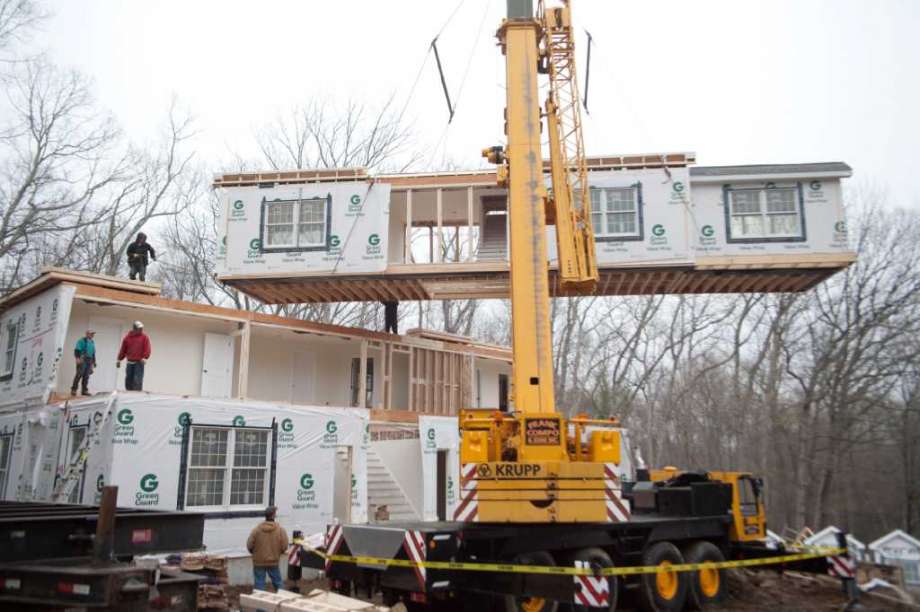
The Senate’s 21st Century ROAD to Housing Act may signal a long-overdue shift in how Washington views manufactured and factory-built housing.
For decades, anyone involved in manufactured or offsite housing has heard the same thing from Washington: “We need more affordable housing.”
But just as quickly, the conversation would run headfirst into a maze of zoning rules, financing barriers, and restrictive federal programs that made building that housing far more difficult than it should be.
On March 12, 2026, the U.S. Senate took a step—perhaps a small one, but an important one—in the right direction. By a vote of 89–10, the Senate passed the 21st Century ROAD to Housing Act, a bipartisan housing package aimed at increasing housing supply, lowering construction costs, and modernizing several federal housing programs.
What caught my attention was something that rarely happens in Washington: the legislation actually begins loosening some of the restrictions that have quietly held back manufactured and factory-built housing for years.
Manufactured Housing Finally Gets a Seat at the Table
One of the most notable provisions in the bill involves support for manufactured housing communities and rehabilitation efforts.
The legislation includes funding through the PRICE program, designed to help preserve and improve manufactured housing communities. These homes already represent one of the most affordable forms of housing in America, yet the communities themselves often struggle to obtain financing for infrastructure improvements, upgrades, or redevelopment.
At the same time, the bill raises the public welfare investment (PWI) cap to 20%, which could make it easier for banks and financial institutions to invest in affordable housing initiatives—including manufactured housing projects.
For years, industry leaders have argued that the federal government treated manufactured housing as a niche product rather than a core solution to the housing shortage. This bill begins to shift that thinking.
Pattern Books and Pre-Approved Housing Designs
Another interesting feature of the legislation is the creation of grants for “pattern-book” homes—essentially pre-approved home designs that communities can adopt to accelerate housing development.

If this idea sounds familiar to those in the modular, panelized, and manufactured housing world, it should. Offsite builders have been talking about standardized, repeatable designs for decades as a way to reduce costs and speed construction.
By encouraging pre-approved designs, Washington may finally be acknowledging something the offsite industry has long understood:
Standardization reduces friction.
And when friction is reduced, housing can be built faster.
Infrastructure for Housing, Not Just Housing
The bill also establishes an Innovation Fund for housing-related infrastructure, specifically targeting things like water and sewer systems.
This may sound like a minor detail, but anyone who has tried to build a new manufactured housing community—or even place homes on land—knows that infrastructure is often the real bottleneck.
If communities cannot afford to expand water or sewer capacity, housing projects stall before they even begin.
By pairing housing production with infrastructure investment, the legislation acknowledges that housing shortages are often infrastructure shortages in disguise.
More Flexibility for Local Communities
Another key change allows communities to dedicate up to 20% of Community Development Block Grant (CDBG) funds toward new housing construction.
Historically, these funds have been used primarily for neighborhood improvements and redevelopment projects. Allowing a portion to directly support housing production could give cities and towns more flexibility to address shortages.
The bill also expands eligibility within the HOME Investment Partnerships Program, raising income thresholds so more families can qualify for assistance.
Together, these changes represent a modest but meaningful shift toward letting local communities experiment with solutions rather than forcing them into rigid federal frameworks.
The Political Reality
The legislation was spearheaded by Senate Banking Committee Chair Tim Scott (R-SC) and Ranking Member Elizabeth Warren (D-MA)—a pairing that rarely agrees on much of anything.
That the bill passed 89–10 suggests something else may be happening:
Washington is beginning to realize that the housing shortage has become too large to ignore.
Still, the bill now moves to the House, where its future is less certain. Even with bipartisan support, housing legislation has a way of getting tangled in broader political battles.
Modcoach Observation
For years, the offsite and manufactured housing industries have been quietly telling policymakers something very simple:
You can’t solve the housing shortage while simultaneously regulating affordable housing out of existence.
This bill doesn’t fix everything—not even close. But it does something important. It begins to loosen some of the restrictive policies and funding rules that have limited manufactured housing and factory-built solutions for decades.
If Washington truly wants to make housing more affordable, it will eventually have to do something even more radical.
It will have to trust the industries that already know how to build housing efficiently.

Gary Fleisher—known throughout the industry as The Modcoach—has been immersed in offsite and modular construction for over three decades. Beyond writing, he advises companies across the offsite ecosystem, offering practical marketing insight and strategic guidance grounded in real-world factory, builder, and market experience.