

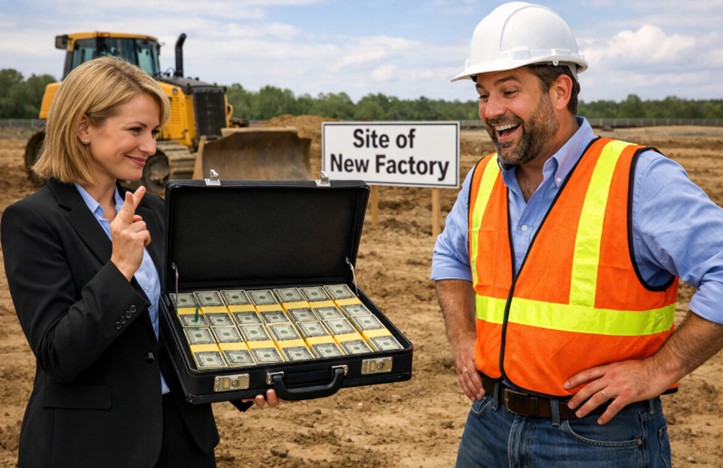
“Ten million dollars just doesn’t go very far anymore.“
I was reminded of that while writing about a new residential development near me, where home prices start in the low $1 millions. Not luxury estates—just new homes. Nicely designed, well located, and already out of reach for many families.
Then, just last week, I saw an SUV I didn’t recognize. It turned out to be a Brabus—essentially a heavily modified Mercedes. Base price? Around $600,000. Some versions sell for over $1 million.
That’s one vehicle.

Around the same time, I came across the cost to build a new convenience store. Not a mega destination—just a modern neighborhood store. The number was close to $4 million.
And if you’ve ever been to a Buc-ee’s convenience store, you know they’re in a league of their own. Some locations reportedly cost as much as $90 million to build and 150 gas pumps. One store. One site.
So when someone tells me they’re raising $10 million to start a modular home factory or a panelized plant, I don’t think, “That’s ambitious.”
I think, “That’s the starting line.”
Why $10 Million Is Only the Beginning
In today’s offsite construction world, $10 million doesn’t buy stability—it buys entry.
By the time you account for land or long-term leases, buildings, utilities, cranes, production equipment, software, certifications, initial staffing, training, insurance, and all the things that don’t show up neatly in the pitch deck, that first round of capital disappears faster than expected.
What usually follows is another raise.
Sometimes it’s framed as “growth capital.”
Sometimes as a “bridge.”
More often, it’s simply survival money.
That second ask is rarely small. Another $10 million. Sometimes $20–30 million. And by then, the conversation has shifted from vision to cash flow.
The Cash Flow Reality Most Startups Underestimate
Factories don’t fail because modular or panelized construction doesn’t work. They fail because reaching consistent, predictable production takes longer—and costs more—than anyone planned.
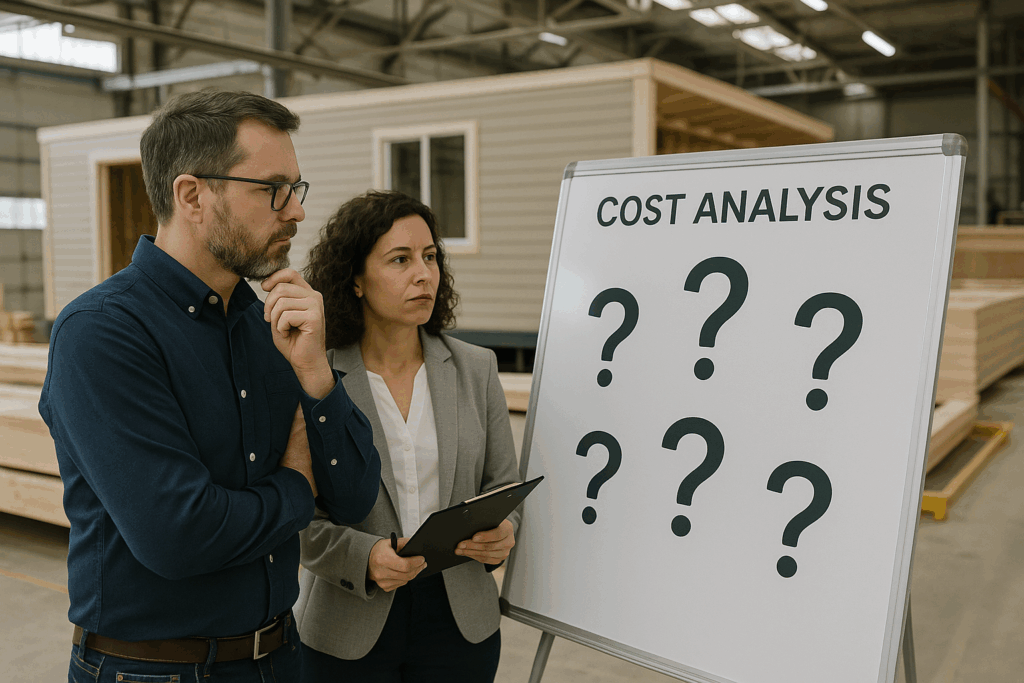
Payroll doesn’t pause for learning curves.
Debt service doesn’t care about process optimization.
Vendors don’t accept future volume as payment.
If owners and managers don’t deeply understand cash flow—daily, weekly, monthly—they’ll always be reacting. And reacting usually means going back to investors.
Again.
When Break-Even Starts to Feel Unreachable
At some point, many startups stop asking, “When do we scale?” and start asking, “Will we ever break even?”
That’s when morale slips, decisions slow down, and innovation quietly freezes. Not because the idea was bad—but because the financial runway was misunderstood.
Offsite construction can absolutely be profitable. But profitability in manufacturing isn’t delayed—it’s earned slowly, deliberately, and painfully.
The Uncomfortable Truth
If $10 million sounds like “a lot of money” to start a factory, that’s a warning sign.
Offsite construction is capital-intensive, cash-hungry, and unforgiving of optimism that isn’t backed by discipline. Owners who don’t fully understand cash flow will always be searching for more investment—because the math never stops coming due.
In a world where a single SUV can cost more than a house once did, we need to stop pretending that factories are immune to modern economics.
They aren’t.
And gravity always collects its due.
.
With more than 10,000 published articles on modular and offsite construction, Gary Fleisher remains one of the most trusted voices in the industry.
.
CLICK HERE to read the latest edition

Contact Gary Fleisher