
Every so often, a small project in a small town makes a big statement about where housing is headed. That’s exactly what happened in Athens, Georgia, where Habitat for Humanity quietly installed the city’s first factory-built home in a traditional single-family neighborhood. It didn’t come wrapped in a ribbon-cutting ceremony, and it didn’t arrive with the kind of hype that usually surrounds “innovative housing solutions.” It simply showed up on a truck—two modules built by Impact Housing in Baxley, Georgia—and changed the local conversation.
And honestly, this one project says more about the future of affordable housing than most of the large-scale plans we hear about from policymakers, developers, or think-tank consultants.
What made this home different?
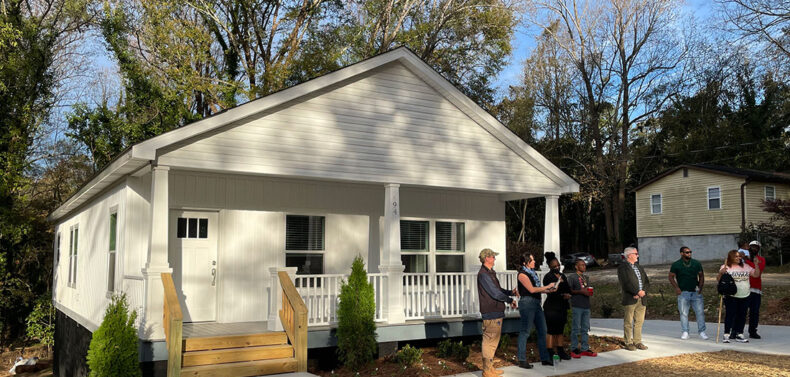
The Athens Habitat team purchased a 1,200-sq-ft, three-bedroom, two-bath modular home from Impact Housing and had it set on a foundation in a quiet neighborhood just minutes from downtown. The home didn’t look futuristic. It didn’t look like a tech experiment. It looked exactly like what people in Athens recognize as a normal, attractive single-family home.
That’s the point.
Factory-built doesn’t mean strange. In this case, it meant stronger, faster, and just as affordable as a traditionally built home.
Impact Housing built the modules in their controlled-environment plant in Baxley, shipped them roughly 200 miles, and had the home installed in far less time than the typical stick-built Habitat project. And the cost? Roughly the same as building it onsite—with none of the unpredictability that comes from weather delays, material theft, or the shortage of volunteers and skilled labor.
The impact on the build timeline
A traditional Habitat home in Athens typically takes close to four months from start to finish. This one? Right around two and a half months.
Most of that time savings came from the modular approach:
- The house was built indoors while the site was being prepared.
- There was no downtime waiting for subcontractors.
- Inspections were completed at the factory, not just in the field.
- Weather didn’t slow anything down.
And when the home arrived, it was set in place in a matter of hours, not weeks.
For families on the waiting list—and for Habitat volunteers who want to see their efforts turn into real homes faster—that speed matters.
Built to be stronger than site-built
A little-known truth about modular housing is that the homes aren’t just equal to site-built standards—they’re often built above code. And this Habitat home was no exception.

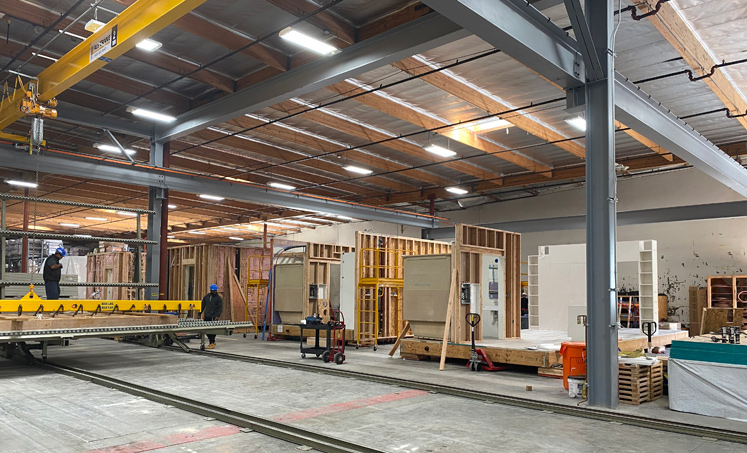
To survive highway transport and crane lifting, the Impact Housing modules were constructed with additional durability and structural reinforcement. The modules have to withstand forces far more intense than what most homes ever experience once they’re sitting on their foundations.
This isn’t a compromise. It’s an upgrade that happens as a by-product of factory construction.
A neighborhood sees what’s possible
Perhaps the most telling part of the Athens project was the reaction from the surrounding community. The home didn’t disrupt the character of the neighborhood. It didn’t look out of place. It didn’t trigger a wave of resistance or worry about property values.
In fact, it blended in so seamlessly that most people driving by would never guess it was built in a factory.
And that may be the biggest milestone of all.
Why this matters for the future of affordable housing
Everyone in the construction and housing world knows the big problems:
- Building costs keep rising
- Skilled labor keeps shrinking
- Zoning slows everything down
- Weather delays add months
- Interest rates are hammering financing
- Families who once could afford a starter home now can’t
Meanwhile, the need for affordable housing hasn’t eased—it’s grown.
A project like the one in Athens doesn’t solve the housing crisis, but it demonstrates the path forward:
- Homes can be built faster
- Homes can be built stronger
- Homes can look traditional
- Homes can cost the same or less
- Homes can slip quietly into existing neighborhoods without disruption
Modular isn’t the future. It’s the present.
Impact Housing’s role
Impact Housing, based in Baxley, Georgia, has been steadily building a reputation as a manufacturer that understands affordability, speed, and quality aren’t opposing forces—they’re complementary ones. Their involvement in this Habitat project is a perfect example of how a modular factory can partner with nonprofits, cities, and developers to move the needle on workforce housing and entry-level ownership.
It wasn’t a flashy pilot program. It wasn’t a “test house.” It was simply a family home built smarter.
A small step with big implications
Habitat for Humanity has used modular and panelized systems before, but Athens’ first factory-built home is a reminder that the industry no longer needs to justify itself or “prove” modular works.
Modular already works.
Now the question is: Who’s next?
Because if Impact Housing can do it for Habitat, they can do it for developers, cities, school districts, workforce housing programs, and the countless families sitting on waitlists hoping for a home they can afford.
This home may look like a small project in a single Georgia neighborhood, but it carries a much larger message:
When you build smarter, you build faster. When you build faster, you house more people. And when you house more people, communities thrive.
From an article in the Flagpole.
.
With over 9,000 published articles on modular and offsite construction, Gary Fleisher remains one of the most trusted voices in the industry.
.
CLICK HERE to read the latest edition

Contact Gary Fleisher