





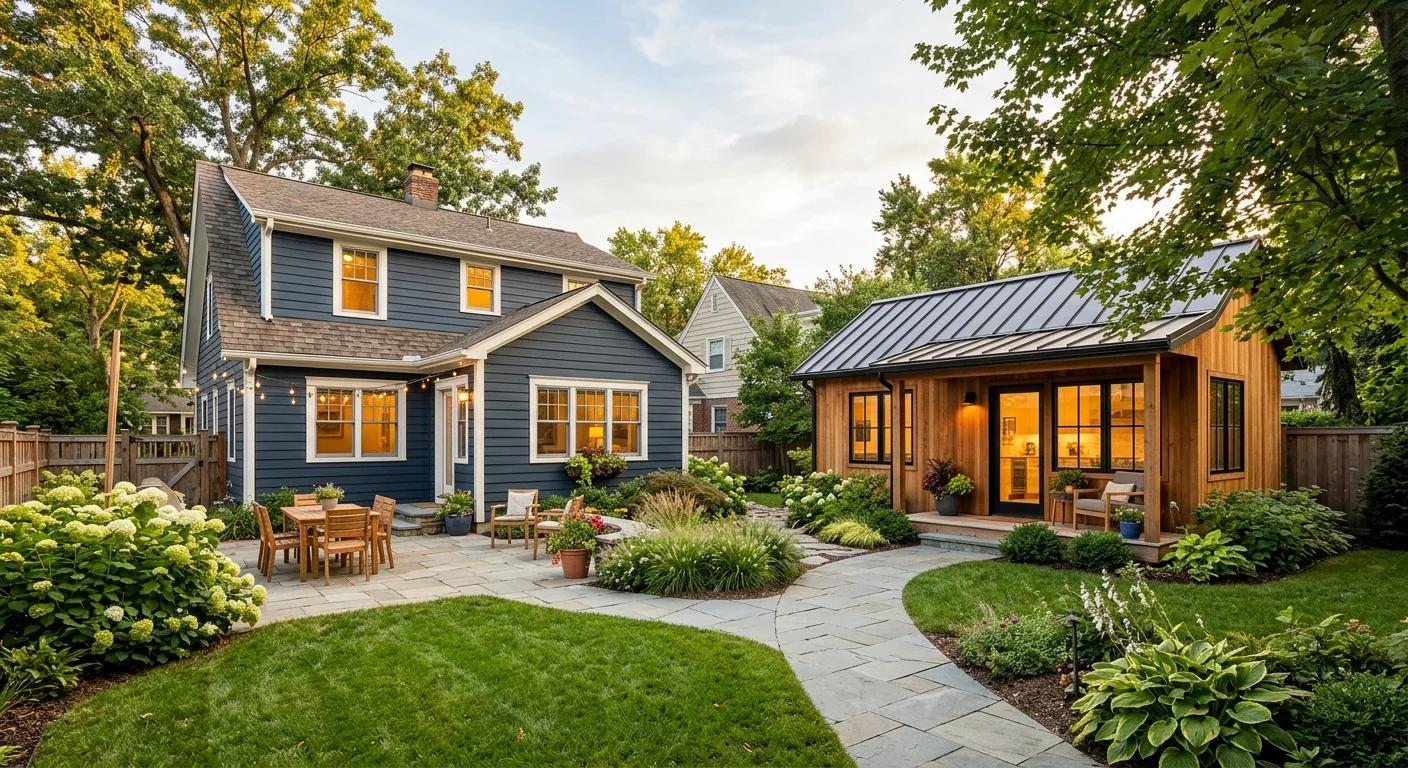
There’s something happening in backyards across America—and it’s not just new patios or outdoor kitchens. Developers and homeowners alike are turning their attention to single- and two-story Accessory Dwelling Units (ADUs), and the momentum is building faster than many in the construction industry expected.
For years, ADUs were treated as niche solutions—“granny flats,” garage apartments, or backyard cottages. Today, they’re becoming a serious part of the housing conversation, and increasingly, a strategic one.
From Afterthought to Asset Class
The numbers tell a story that’s hard to ignore. The global ADU market is already valued at roughly $19.6 billion and is projected to more than double to over $43 billion by 2034.
That’s not just growth—that’s a shift in how housing is being delivered and consumed.
In the U.S., the trend has been building for over a decade. A Freddie Mac study found approximately 1.4 million properties with ADUs, with construction increasing by about 8.6% annually—and accelerating sharply in recent years.
California alone saw ADU production jump from about 3,000 units in 2018 to 23,000 in 2023.
When something grows that quickly in one state, it’s rarely contained there for long.
Why 1- and 2-Story ADUs Are Leading the Charge
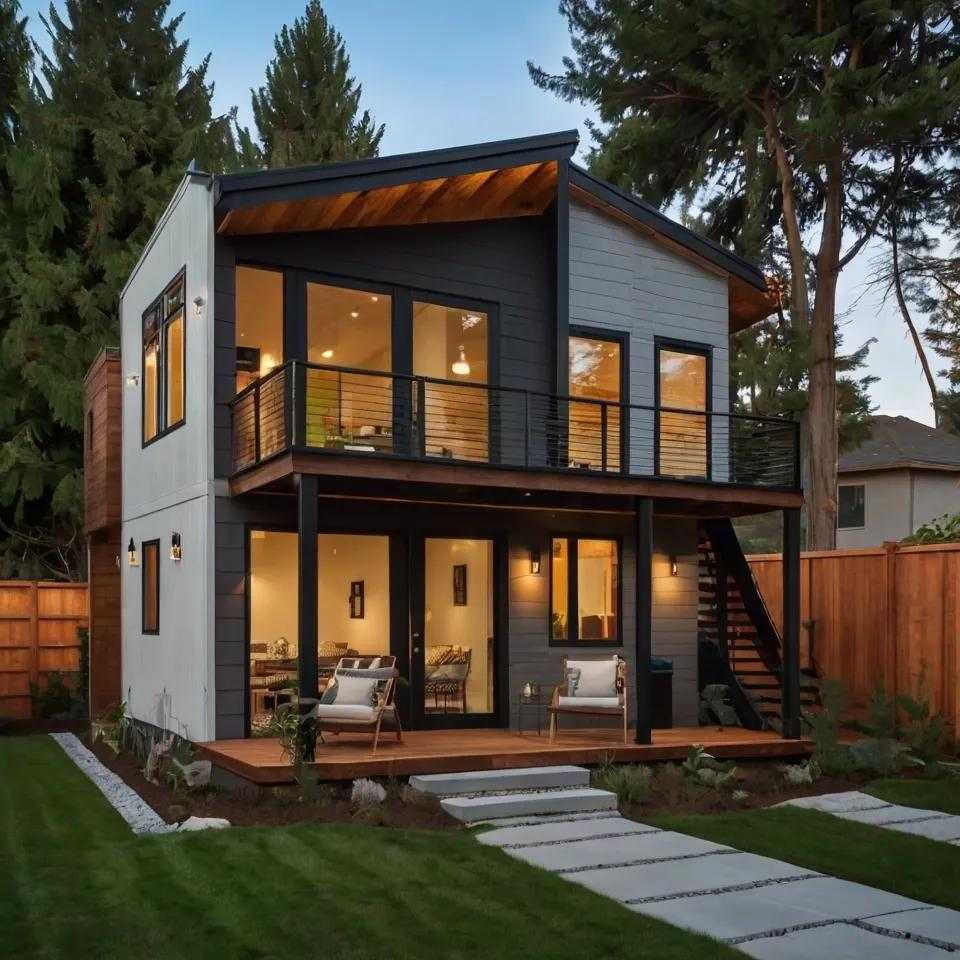
Not all ADUs are created equal. What’s driving today’s interest is a move beyond tiny, single-room structures toward more livable, versatile units—often one- and two-story designs.
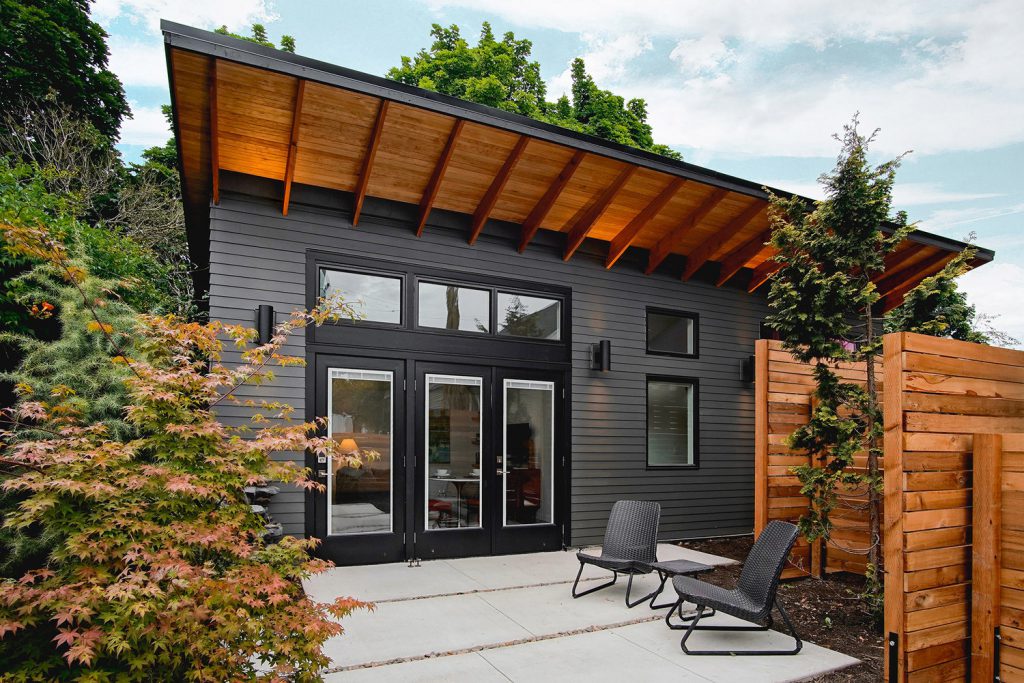
Single-story ADUs remain popular for aging-in-place solutions and ease of access. But two-story ADUs are gaining traction for a simple reason: they maximize usable square footage without increasing the building footprint.
That matters in urban and suburban lots where space is tight, zoning is restrictive, and every square foot counts.
Developers see it as density without disruption. Homeowners see it as flexibility without relocation.


The Economics Are Hard to Ignore
Let’s talk about money—because that’s what’s really fueling this trend.

In some markets, ADUs can generate between $1,500 and $4,000 per month in rental income depending on size and location.
That turns a backyard into a revenue stream.
At the same time, properties with ADUs are appreciating faster than those without them. In California, homes with ADUs have seen stronger annual value growth compared to traditional single-family homes.
For homeowners, that’s a rare combination: increased income potential and increased property value.
For developers, it’s even more compelling. ADUs offer a way to add units without the cost, time, and political resistance of large-scale developments.
Policy Is Finally Catching Up
For decades, zoning laws were the biggest barrier to ADU adoption. Most residential land in the U.S. was restricted to single-family homes, making additional units either illegal or difficult to approve.
That’s changing.
States and municipalities are rewriting the rules—streamlining approvals, reducing fees, and even offering incentives to encourage ADU construction.
California led the way, and now states like Texas and Florida are beginning to follow.
When regulation shifts, markets tend to follow quickly.
A Solution to Multiple Problems—At Once
What makes ADUs particularly interesting is that they solve multiple problems at once.
They address affordability by creating smaller, lower-cost housing options. They support multigenerational living by allowing families to stay together without sacrificing independence. They offer income opportunities in an era where homeowners are looking for ways to offset rising costs.
And perhaps most importantly, they do all of this without requiring new land.
That’s a powerful combination in a country facing a housing shortage estimated in the millions.

Developers Are Paying Attention
Developers are no longer dismissing ADUs as small-scale or insignificant. Instead, they’re starting to see them as scalable.
Not in the traditional sense of building hundreds of units on a single site—but in replicating a model across thousands of properties.
One lot at a time.
Two-story ADUs, in particular, are becoming attractive because they align with this mindset. They provide density, design flexibility, and higher returns per parcel without triggering the same resistance as larger developments.
It’s a quieter kind of scale—but potentially just as impactful.
The Modcoach Observation

For decades, we’ve talked about solving the housing crisis with bigger ideas—larger developments, more land, more financing, more everything.
And yet, one of the fastest-growing solutions is happening quietly in backyards, one unit at a time.
Single- and two-story ADUs aren’t flashy. They don’t make headlines the way massive projects do. But they’re doing something far more important—they’re working.
And if developers and offsite manufacturers don’t start taking them seriously as a primary product line instead of a side offering, someone else will.