





Colorado lawmakers just backed away from two controversial housing bills that would have dramatically changed how single-family neighborhoods could be developed across the state. The proposals would have allowed smaller lot sizes and easier splitting of residential lots into two separate homes. After fierce opposition from local governments and neighborhood groups, the bills died in the Colorado Senate.

Now comes the bigger question. Do you agree with the people of Colorado who fought to stop these proposals, or do you believe states need to step in when local zoning makes housing unaffordable for average families? That debate is no longer limited to Colorado. It is becoming a national argument that could eventually affect nearly every growing state in the country.
The Fight Over Smaller Lots
One proposal, House Bill 1114, would have prevented many local governments from requiring single-family lots larger than 2,000 square feet. Another bill, House Bill 1308, would have allowed homeowners and developers to split existing lots into two buildable parcels.

Housing advocates argued the bills could create more affordable starter homes and help younger families enter markets where prices have exploded over the past decade. Opponents saw something completely different. They saw state government overriding local control, increasing density in established neighborhoods, straining water supplies, creating traffic congestion, and permanently changing the character of communities people intentionally chose to live in.
Both sides make valid arguments, which is exactly why this issue has become so emotional.
The Affordable Housing Argument
There is no denying that housing affordability has become a crisis in many states. The cost of land, labor, materials, permits, financing, and infrastructure has pushed the traditional single-family home further out of reach for middle-class buyers. Housing advocates argue that zoning restrictions only make the problem worse by forcing builders to construct larger homes on larger lots.
Their argument is fairly straightforward. If local governments require large lots for every home, the cost of the land alone can eliminate affordable housing possibilities before construction even begins. Builders then respond the only way they know how. They build larger, more expensive homes to recover those costs and maintain profitability.

Supporters of the Colorado bills believed smaller homes on smaller lots could create attainable housing without requiring massive apartment projects or high-rise developments. To many younger buyers, townhomes, duplexes, ADUs, and compact cottage-style developments may be preferable to being permanently priced out of homeownership altogether.
The Neighborhood Argument
Many Colorado residents pushed back hard against the bills because they felt their communities were being redesigned without local input. Some neighborhoods had already voted locally to limit density increases and preserve single-family zoning. Residents argued they paid premiums specifically to live in lower-density communities with quieter streets, more parking, and larger yards.
To them, statewide zoning mandates feel like government stepping into local communities and saying local voters no longer matter. That frustration becomes even stronger when residents fear the changes could permanently alter the feel of their neighborhoods.
Once zoning changes happen, they rarely get reversed. A neighborhood that slowly transitions from quarter-acre lots to compact infill housing may never feel the same again to long-time residents. Whether that change is progress or decline depends entirely on who you ask, and that is what makes this issue so divisive.
Why Offsite Construction Should Pay Attention
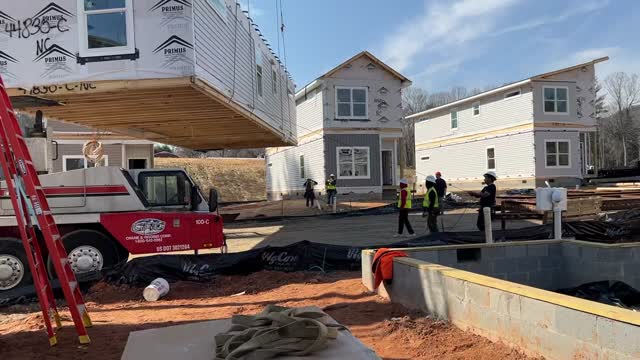
This debate matters far more to the offsite and modular construction industry than many people realize. Smaller lots and increased density create enormous opportunities for producers of modular, panelized, ADU, and cottage-style housing. Factories are often better equipped than site builders to efficiently produce compact, attainable homes at scale.
If states continue to push higher-density housing solutions, factories could see major opportunities in smaller-footprint homes, duplexes, infill housing, and rapid neighborhood redevelopment. On the other hand, if local communities continue resisting density increases, the market may remain heavily focused on larger suburban homes and more traditional development patterns.
This is not just a political debate. It is also a debate between business and housing industries that could shape where offsite construction grows over the next decade.
So, Who Should Decide?
That may be the real question behind all of this. Should states force zoning changes when housing becomes unaffordable, or should local communities retain the right to shape their own neighborhoods even if that limits housing supply?
There probably is not a perfect answer. Too much local control can freeze housing growth and price younger generations out of ownership. Too much state control can create resentment and destroy the sense of community many neighborhoods spent decades building and protecting.
Colorado lawmakers stepped back from forcing the issue this time, but this debate is far from over. States across the country are wrestling with many of the same questions as they try to balance affordability, growth, infrastructure, and neighborhood identity.
Modcoach Observation

What makes this issue so fascinating is that almost everyone involved believes they are protecting the future. Housing advocates believe they are protecting affordability for the next generation, while neighborhood groups believe they are protecting the communities they worked their whole lives to afford living in. Builders want opportunities to build, cities worry about infrastructure, and states worry about growing housing shortages.
Somewhere in the middle of all of this are families simply trying to find a home they can afford without sacrificing the lifestyle they want. That is why these debates become so heated. Everyone involved feels they have something important to lose.
So I’ll ask the question directly. Do you agree with the people of Colorado, or do you think states should step in and force communities to allow smaller lots and higher-density housing?