





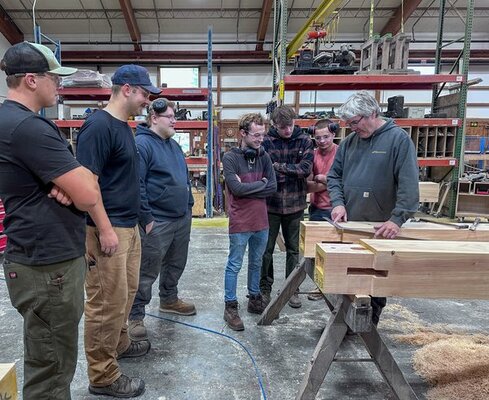
There was a time when someone could walk into a modular factory or construction company with little more than a willingness to work hard and, within a few years, become a skilled carpenter, set crew member, production supervisor, or even a plant manager. Those days are fading fast.
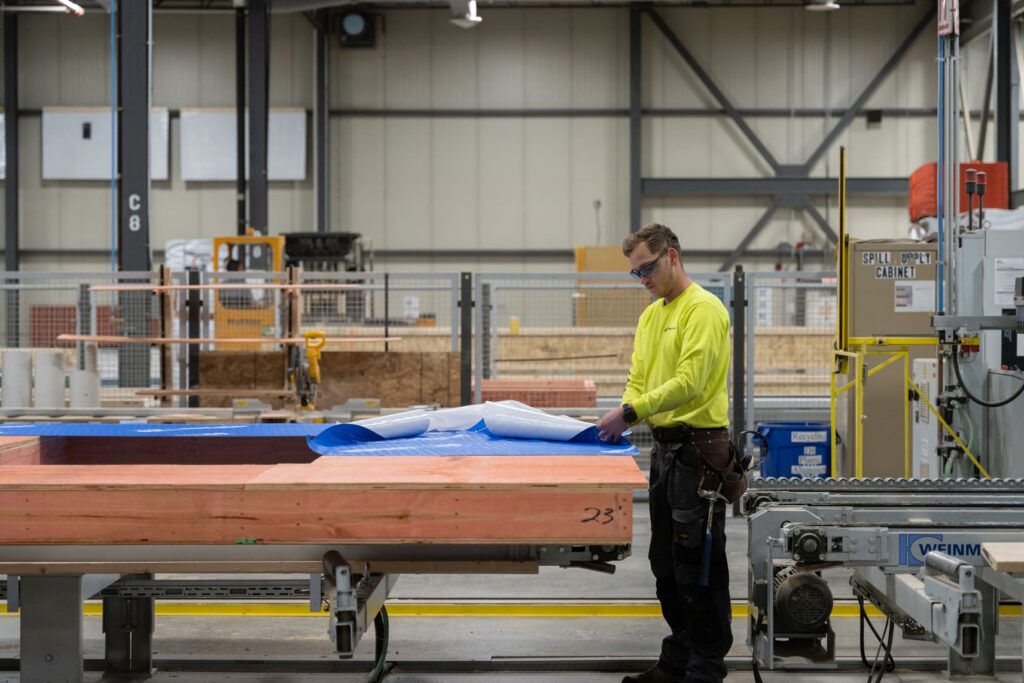
Today’s offsite construction industry is becoming something entirely different. Modern modular and offsite factories are no longer simply warehouses filled with nail guns and sawdust. Many are evolving into highly technical production facilities that use precision manufacturing, advanced software, robotics, automation, engineered materials, and increasingly sophisticated, energy-efficient building systems. Yet one problem continues to haunt almost every factory owner and General Manager I talk with.
Where will the next generation of skilled workers come from?
That’s why I think what Bensonwood is doing deserves serious attention from every offsite and modular company in North America.
More Than Just Another Summer Program
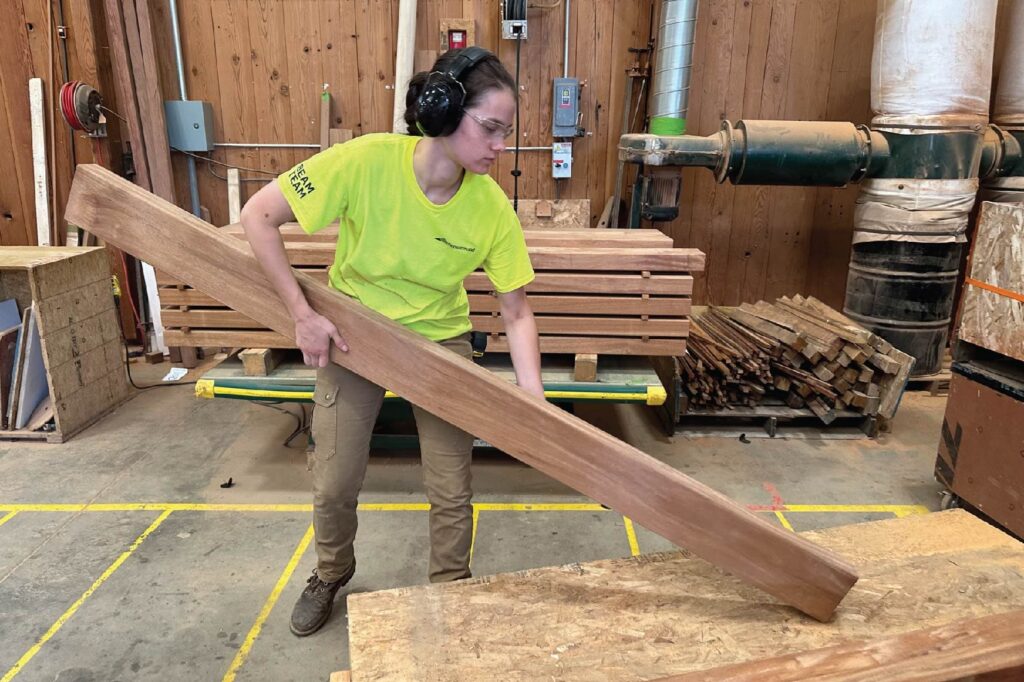
Bensonwood is launching its Summer 2026 Pre-Apprenticeship Program in carpentry and offsite construction, a four-week immersive experience beginning in July 2026. The program was developed through a planning grant with ApprenticeshipNH and is designed for recent trades graduates and individuals with some construction experience.
At first glance, it might sound like a simple summer training initiative. It’s much bigger than that.
Participants will work directly alongside experienced craftspeople in Bensonwood’s climate-controlled production facilities while learning traditional carpentry skills alongside modern offsite construction techniques. The curriculum focuses on tools, materials, sustainable construction practices, prefabrication systems, and the methods behind high-performance, energy-efficient buildings.
More importantly, it creates a direct pathway toward full-time employment.
That last part matters more than many people realize.
The Industry Keeps Complaining About Labor Shortages
Every conference, webinar, factory tour, and roundtable discussion eventually circles back to the same topic. Not enough skilled labor. Not enough younger workers. Not enough people are entering the trades. Not enough employees understand both construction and technology.
But very few companies are actually building structured systems to solve the problem.
Most factories still hire reactively instead of strategically. Someone quits, retires, or production ramps up unexpectedly, and suddenly, management scrambles to fill positions. The new employee often receives fragmented training from whoever happens to be standing nearby that day.
Sometimes they succeed. Sometimes they don’t.
In many factories, valuable tribal knowledge exists only inside the heads of older supervisors nearing retirement age. When those people leave, decades of production wisdom often walk out the door with them.
Programs like Bensonwood’s suggest a different approach entirely.
Offsite Construction Is Becoming a Different Kind of Career
Younger workers today are looking for more than a paycheck. They want career pathways, mentorship, technology, sustainability, personal growth, flexibility, and work environments that feel modern rather than outdated.
Ironically, offsite construction already offers many of those advantages.

Climate-controlled factories. Advanced software systems. Precision manufacturing. Cleaner working environments. Repeatable processes. High-tech equipment. Team collaboration. Sustainable building practices. Predictable schedules compared to traditional site-built construction.
The problem is that many factories still market themselves like it’s 1985.
Meanwhile, Bensonwood appears to be positioning offsite construction as something much closer to advanced manufacturing, mixed with craftsmanship and sustainability. That’s a message younger generations may actually respond to.
Why Pre-Apprenticeship May Work Better Than Traditional Hiring
Traditional hiring often assumes workers already possess the skills needed for the job. Pre-apprenticeship programs flip that thinking on its head.
Instead of searching endlessly for “perfect” employees that may not exist, companies create systems that develop the exact type of workers they need.
That changes everything.
A structured pre-apprenticeship program allows factories to teach their culture, production methods, quality expectations, safety procedures, software systems, and workflow processes from the beginning. It also allows management to observe attitude, adaptability, teamwork, reliability, and curiosity before making long-term hiring decisions.
In many ways, the four-week program becomes an extended interview for both sides.
The participant evaluates the company.
The company evaluates the participant.
And both gain a much clearer understanding of whether the relationship has long-term potential.
Smaller Factories Could Adapt This Too
Some factory owners reading this may immediately think, “That’s easy for Bensonwood to do. They’re larger and more established.”
Maybe. But the core idea itself is scalable.
Not every offsite factory needs a massive formal apprenticeship division. A smaller factory could partner with local trade schools, community colleges, workforce development agencies, or state apprenticeship programs. Even a two-week structured onboarding and skills development program would be far ahead of what many companies currently provide.
Imagine if modular factories across the country began creating regional training pipelines instead of competing endlessly for the same shrinking labor pool.
Imagine if high school students toured clean, organized offsite facilities instead of assuming construction careers only involve muddy job sites and backbreaking labor.
Imagine if younger workers saw modular factories as advanced production careers rather than temporary jobs.
That shift alone could reshape the industry over the next decade.
The Sustainability Connection Matters Too
Bensonwood’s emphasis on sustainable building and energy-efficient construction is another smart move.
Younger generations increasingly care about environmental impact, building performance, waste reduction, and responsible resource use. Offsite construction already has enormous advantages in many of those areas, including material efficiency, quality control, reduced site waste, and precision engineering.
Factories that connect their mission to sustainability may find recruiting becomes easier than for companies still relying on outdated messaging centered only around hourly wages.
The industry often forgets that younger workers want purpose as much as employment.
The Real Question Is This
The biggest question may not be whether Bensonwood’s program succeeds.
The bigger question is why more offsite and modular companies are not already doing something similar.
For years, factories have complained about labor shortages while simultaneously expecting the education system, trade schools, or “someone else” to solve the problem for them. Meanwhile, the complexity of offsite construction continues to increase every year.
At some point, workforce development has to become part of the business model itself.
Not as charity.
Not as public relations.
But as a survival strategy.
Modcoach Observation

I believe the offsite industry is approaching a crossroads. Factories can continue fighting over the same limited pool of experienced workers while watching retirements slowly drain knowledge from the industry, or they can begin building systems that create the next generation of skilled employees themselves.
What Bensonwood is attempting may look like a small four-week summer program on the surface. But it could represent something much larger. It may be an early glimpse into how tomorrow’s successful modular and offsite factories will recruit, train, mentor, and retain talent in an industry rapidly evolving into a blend of construction, manufacturing, sustainability, and technology.
The factories that figure this out first may not just solve their labor shortages.
They may build the strongest companies of the next generation.