





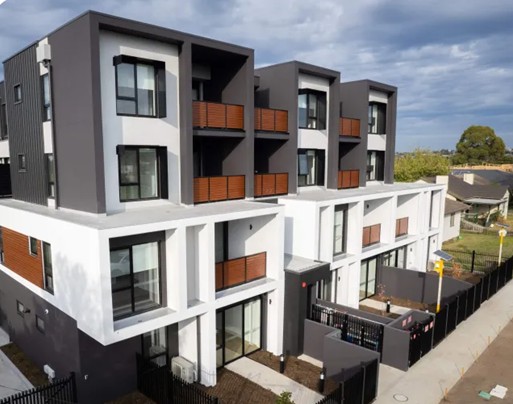
A nation with fewer people than California is taking housing seriously.
Australia has a population of about 27 million people, roughly two-thirds that of California. Yet while many American states continue debating housing shortages, affordability crises, zoning barriers, labor shortages, and construction costs, Australia has decided to attack the problem from multiple directions at once.
The Australian Government has committed approximately $47 billion toward rebuilding its housing system, increasing supply, and improving affordability. Whether every dollar delivers the intended results remains to be seen, but one thing is already clear: they are treating housing as a national priority rather than a collection of disconnected local problems.
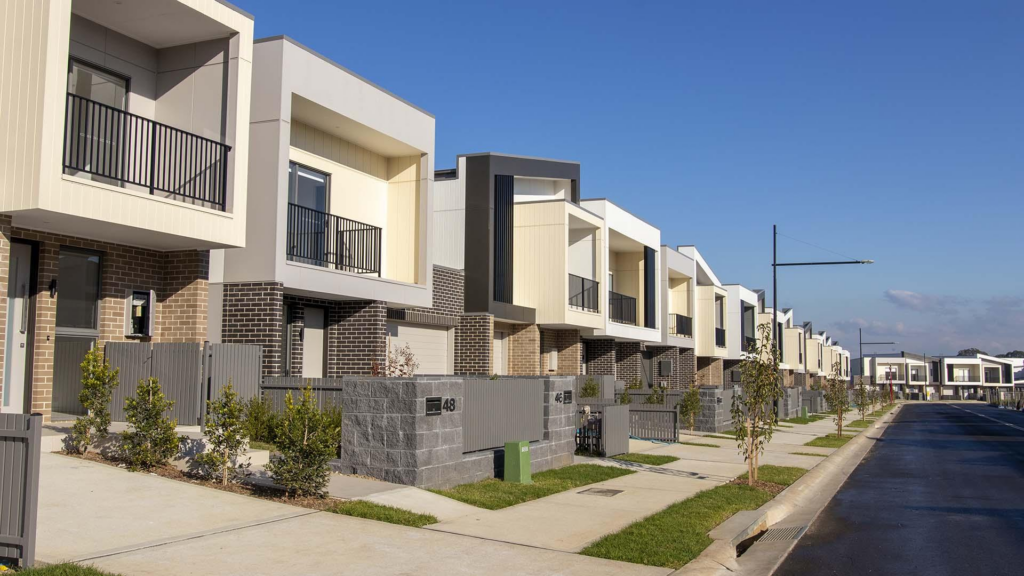
As someone who spends every day writing about housing, modular construction, and offsite manufacturing, I cannot help but wonder why similar large-scale efforts remain so rare in the United States.
A National Plan Instead of Individual Solutions
One of the most interesting aspects of Australia’s approach is that it recognizes there is no single cause of a housing shortage.
Too often, housing discussions focus on one issue. Some blame regulations. Others point to labor shortages, financing challenges, land costs, or local opposition. Australia appears to acknowledge that all those factors contribute to the problem and therefore require multiple solutions working together.
Its Housing Australia Future Fund alone represents a $10 billion investment designed to build 20,000 new social homes and another 20,000 affordable homes over five years. While critics may argue that 40,000 homes will not solve the entire problem, the program establishes a long-term mechanism dedicated specifically to increasing supply.
That is a very different approach from waiting for market conditions to somehow correct themselves.
The Ambitious 1.2 Million Home Goal
Perhaps the most eye-catching component of the strategy is the National Housing Accord.
Australia has brought together federal, state, and local governments, along with institutional investors and the construction industry, under a common target of delivering 1.2 million new homes.
Think about that for a moment.
Most housing initiatives focus on announcing goals. Australia’s program is attempting to align the organizations that are actually responsible for achieving those goals.
Whether they reach the full 1.2 million homes is almost secondary to the fact that everyone involved is now working toward the same objective.

In the United States, we often see federal agencies, state governments, local jurisdictions, developers, lenders, utilities, and builders operating under different priorities and timelines. The result is frequently a slower, more fragmented process.
Solving Problems Before Construction Begins
One lesson offsite construction professionals understand better than most is that homes cannot be built without infrastructure.
Roads, water, sewer systems, utilities, and planning approvals often delay projects long before a shovel touches the ground.
Australia’s Housing Support Program dedicates $1.5 billion specifically to helping local governments fund those enabling improvements.
That may not sound as exciting as ribbon-cutting ceremonies and housing announcements, but infrastructure is often where good intentions go to die.
Many projects are delayed because nobody wants them built, but because the supporting systems are not ready when construction begins.
Australia appears to understand that housing starts with infrastructure.
Helping the Most Vulnerable
Another part of the program focuses on crisis and transitional housing.
Through an expanded National Housing Infrastructure Facility, Australia is investing additional resources into housing for women and children escaping domestic violence as well as young people facing housing insecurity.
Housing discussions frequently center on ownership and affordability, but there is also a significant population simply looking for safety and stability.
Programs addressing those needs may not generate headlines like large housing developments, but they often provide the greatest social impact.
Making Homeownership Easier
One of the more innovative programs is called Help to Buy.
Under this shared-equity model, the government can contribute up to 40 percent of the purchase price for eligible low- and middle-income buyers. The homeowner purchases a smaller share initially, reducing the mortgage burden and making ownership possible for people who otherwise might remain renters.
Some Americans will immediately view this as government overreach.
Others will see it as a practical response to a reality where housing prices have outpaced wage growth in many markets.
Regardless of where someone falls politically, the program is attempting to address a challenge that exists in virtually every developed nation.
Where Offsite Construction Fits In
This is where modular, panelized, volumetric, and other offsite construction methods enter the conversation.
Building 1.2 million homes is not simply a financing challenge. It is also a production challenge.
Traditional construction alone may struggle to achieve the speed, consistency, labor efficiency, and scalability required to reach numbers of that magnitude. Offsite manufacturing enables faster home delivery while improving quality control and reducing weather-related delays.
If Australia is serious about achieving its housing targets, it would not be surprising to see increasing reliance on factory-built solutions as part of the overall strategy.
The same lesson applies to the United States.
No matter how much money governments allocate, the homes still need to be designed, manufactured, transported, installed, and occupied.
Modcoach Observation

Australia’s housing strategy may succeed, fail, or land somewhere in between. But what impresses me is not the dollar amount. It is the recognition that housing is an ecosystem.
The government is not focusing solely on financing, infrastructure, affordability, social housing, or homeownership. It is attempting to address all of them simultaneously.
Meanwhile, in the United States, we continue to search for a single silver bullet to solve the housing crisis.
There probably isn’t one.
What Australia seems to understand is something the offsite industry has known for years: housing shortages are rarely caused by a single problem, which means they will never be solved by a single solution.