




Every year, more site-built builders take their first tour through a modular factory. They leave impressed. The precision, organization, and speed of the production line make many of them wonder why they didn’t make the switch years ago.
Then reality sets in.
Some become successful modular builders almost immediately. Others become frustrated after their first few projects and quietly return to conventional construction. The difference usually isn’t the factory they chose or the homes they built. It’s what they expected modular construction to be.
If you’re a builder considering making the move from site-built to modular, it’s worth asking one simple question: What am I really getting into?
The answer may surprise you.
Looking for Predictability
Most site builders have spent years battling one problem after another. Rain delays a framing crew. A plumber doesn’t show up. Windows arrive two weeks late. An inspector can’t get to the jobsite until next Tuesday. Every delay pushes the completion date farther away and increases carrying costs.
Naturally, builders look at modular construction and see a chance to regain control of the schedule.
They’re not wrong.
One of modular construction’s biggest advantages is that site work and home construction happen simultaneously. While the foundation is being poured, the home is already taking shape inside the factory. Instead of waiting for one phase to finish before starting another, multiple parts of the project move forward together.
That doesn’t necessarily cut construction time in half, but it often saves weeks or even months. More importantly, the schedule becomes far more predictable because weather has much less impact on the factory portion of the project.
Hoping Labor Problems Will Disappear
Finding skilled workers has become one of the biggest challenges facing the residential construction industry. Builders struggling to hire framers, carpenters, and other trades often assume modular construction solves the labor shortage.
It helps, but it doesn’t eliminate it.
Instead of managing framing crews, you’ll spend more time coordinating transportation companies, crane operators, experienced set crews, finish carpenters, drywall technicians, and utility contractors. The labor doesn’t disappear—it shifts to different specialists.
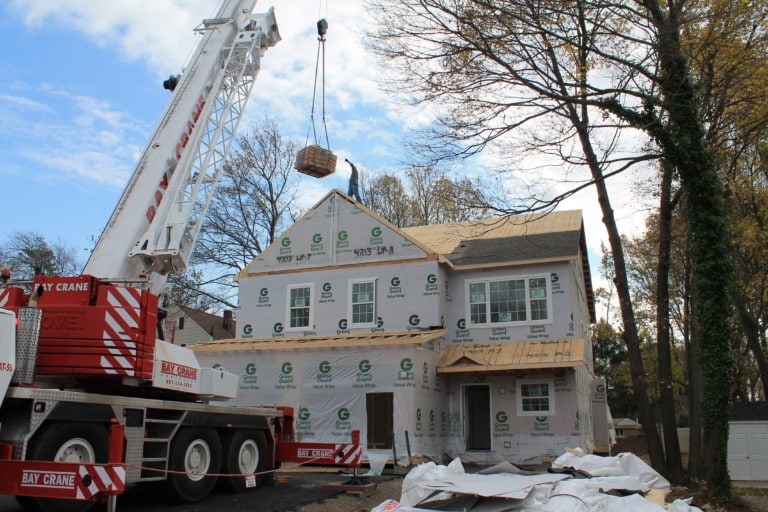
In fact, one of the most overlooked pieces of a successful modular project is the set crew. An experienced crew can place modules accurately and efficiently, allowing finish work to begin almost immediately. An inexperienced crew can turn delivery day into an expensive lesson.
Expecting Lower Costs
Perhaps the biggest misconception is that modular construction automatically produces a less expensive house.
Sometimes it does.

Sometimes it doesn’t.
The factory itself may reduce material waste, improve purchasing efficiency, and increase productivity, but transportation, crane costs, setup costs, and site conditions all factor into the equation.
The real financial benefit often comes somewhere else.
Projects that finish sooner generally reduce construction loan interest, lower carrying costs, shorten customer wait times, and allow builders to move on to the next project faster. Those indirect savings frequently become more valuable than simply reducing the cost of building the house itself.
Better Quality Through Consistency
Ask almost anyone who has toured a quality modular factory what impressed them most, and you’ll hear the same answers.
Everything is organized. Materials stay dry. Trades work in a controlled environment. Quality inspections occur throughout production rather than only after the home is completed.
Factory construction creates consistency that’s difficult to duplicate outdoors, especially during months of bad weather. Every station along the production line follows established procedures, allowing problems to be identified before they become expensive callbacks.
That doesn’t mean every factory produces the same quality. Builders still need to choose manufacturing partners carefully, but factory-built construction generally offers a level of consistency that many site-built operations struggle to match.
The House Isn’t Finished When It Arrives
This surprises many first-time modular builders.
The modules arrive looking remarkably complete, but the project is far from finished.
Marriage walls must be completed. Roof sections may need to be installed or finished. Mechanical systems require final connections. Interior drywall repairs, trim, flooring touch-ups, siding, decks, porches, garages, and landscaping all remain.
Depending on the home and the factory, 80 to 95 percent of the construction may already be complete. The remaining work, however, still demands careful scheduling and experienced trades.
The homeowner doesn’t judge the project’s quality by how well the factory built the modules. They judge the finished home.
Your Job Changes More Than You Think
Many successful site builders are exceptional problem solvers. They’re used to arriving on the jobsite each morning and figuring out how to deal with whatever happened yesterday.
Modular construction rewards a different skill.
Instead of solving problems during construction, you’ll spend far more time preventing them before production even begins.
Measurements must be exact. Foundation dimensions have to match perfectly. Utility locations need to be correct. Transportation routes require planning. Crane placement, delivery timing, and site accessibility all become critical long before the modules leave the factory.
The better you plan, the smoother everything else becomes.
Builders who enjoy organization often thrive in modular construction. Builders who rely on improvisation sometimes struggle during the transition.
You’re Not Buying a House
Perhaps the most important adjustment is understanding the relationship between builder and factory.
Many newcomers think they’re simply purchasing a completed house. In reality, they’re entering a manufacturing partnership.
The factory manufactures an outstanding portion of the home, but the builder still owns the customer relationship, site preparation, scheduling, permitting, utility coordination, transportation planning, final completion, warranty service, and overall customer satisfaction.
When those responsibilities work together, modular construction becomes an incredibly efficient building system.
When communication breaks down, even the best-built modules can’t prevent problems.
Success Requires a New Mindset
Builders who make the smoothest transition into modular construction usually don’t try to duplicate the way they’ve always operated. Instead, they redesign their workflow around the strengths of factory-built housing.
They communicate earlier. They plan further ahead. They develop relationships with transportation companies, set crews, and factory personnel.
Most importantly, they recognize that modular construction isn’t simply another way to frame a house. It’s an entirely different production system that rewards preparation, coordination, and teamwork.
For builders willing to embrace those changes, the rewards can be substantial. Faster project completion, more predictable schedules, improved quality, and happier customers become realistic goals rather than marketing promises.
Gary’s Observation

I’ve met dozens of builders who walked into a modular factory expecting to discover the answer to every problem they’d ever experienced in site-built construction. Most walked out impressed. The successful ones came back with a different attitude. They stopped asking, “How can the factory make my job easier?” and started asking, “How do I become a better partner to the factory?”
That’s when everything changed.
The modular industry doesn’t simply build houses differently. It requires builders to think differently. Those who make that mental shift often wonder why they waited so long to get started. Those who don’t usually conclude that modular didn’t work for them, when in reality they never gave modular a chance to work as designed.