

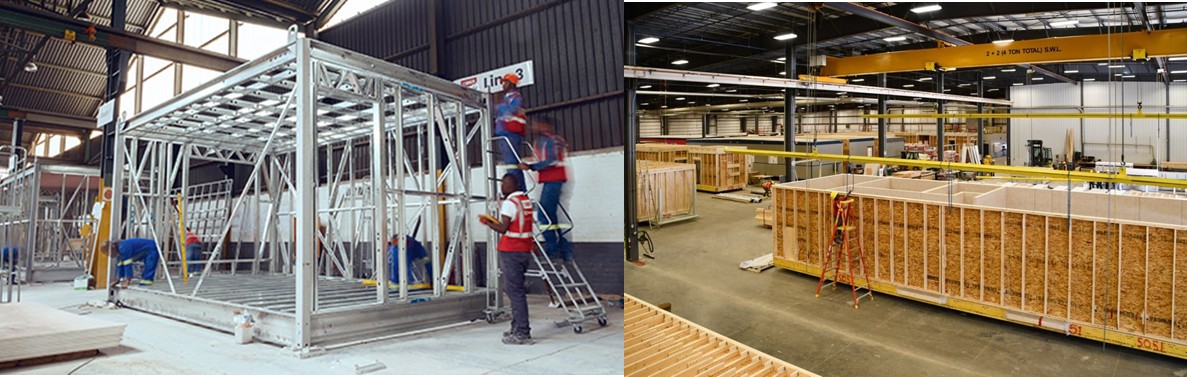
Ask a light gauge steel manufacturer and a wood-framed modular builder which material is better, and you might want to postpone lunch. One will talk about precision and noncombustible framing. The other will point to familiar tools, experienced workers, and easier adjustments.
Both have legitimate arguments. But for the person responsible for keeping a factory running, the question is more practical: Which system helps us deliver the buildings our customers want at a price that leaves us a profit?
Precision Still Needs Good Planning
Light gauge steel offers dimensional consistency without the moisture-related shrinking, twisting, and warping associated with wood. For factories producing repetitive designs, that predictability can reduce adjustments and help assembly move more smoothly.
However, precise manufacturing still requires accurate information. Send the wrong dimensions to the equipment, and you can produce the same mistake beautifully and repeatedly. Steel won’t resolve an unapproved change or tell purchasing that engineering revised the plans. Those remain management’s responsibilities.
Familiarity Has Value
Wood framing doesn’t always generate the excitement of computer-controlled steel equipment, but familiarity has real business value. Workers understand the tools, suppliers know the products, and builders generally know what to expect when the modules arrive.
Wood also allows practical adjustments within approved engineering requirements. That flexibility can save time, but it can also encourage sloppy planning. “The crew will figure it out” becomes an expensive operating philosophy when the crew spends every afternoon correcting something that should have been settled before production.
Look Beyond the Sales Claims
Steel’s noncombustibility is a meaningful advantage, but a steel-framed building isn’t automatically fireproof. Fire performance depends on the complete assembly, including protective materials, connections, and penetrations. Steel also loses strength at elevated temperatures, making proper design essential.
Durability deserves similar care. Termites don’t eat steel, but steel requires appropriate corrosion protection. Wood needs protection from prolonged moisture, decay, and insects. Neither material compensates for a leaking building envelope, and neither eliminates the need for good workmanship.
If someone promises lower insurance premiums or maintenance costs, ask for evidence specific to the project. Savings belong in the budget after they have been substantiated.
Compare Finished Walls, Not Individual Studs
Steel conducts heat much more readily than wood, making thermal bridging an important design consideration. Proper insulation and thermal detailing need to be part of the steel framing discussion from the beginning.
Wood has an advantage in that particular comparison, but a poorly insulated or badly sealed wood wall can still disappoint. The useful comparison is between complete assemblies meeting the same requirements, including the materials and labor needed to build them correctly.
The same thinking applies to transportation. Steel’s strength-to-weight characteristics do not automatically produce cheaper deliveries. Finished module weight, dimensions, route restrictions, and lifting requirements determine whether an advantage becomes an actual saving.
Follow the Money Through the Factory
The framing purchase order tells only part of the story. A lower material price can disappear into sorting, waste, corrections, and slow assembly. A more expensive system can justify itself through improved production—or fail to deliver because the factory never reaches the volume needed to support it.
Switching systems also carries costs. Equipment, training, engineering, fastening methods, and coordination with other trades all deserve attention. Staying with wood avoids some transition costs, but it doesn’t excuse ignoring opportunities to improve.
Before declaring a winner, follow a representative project from design through installation. Count labor hours, material waste, corrections, and field problems. That will tell you more than a supplier’s best-case comparison.
Remember What the Customer Is Buying
Most buyers want a comfortable, durable building delivered at an acceptable price. They may appreciate the framing system’s advantages, but our enthusiasm for a material needs to translate into something valuable to them.
Environmental claims also require a complete comparison. Responsible sourcing, manufacturing impacts, material quantities, and service life all matter. “Wood is renewable” and “steel is recyclable” begin the discussion; neither statement settles it.
Gary’s Observation

I don’t believe every wood-framed factory needs to switch to steel, and I don’t believe experience with wood is a reason to dismiss steel. Both can be sound choices, and an engineered combination may make sense for certain projects.
What concerns me is choosing a material before understanding the business required to use it successfully. New equipment cannot supply missing customers, complete unfinished designs, or get departments talking to each other.
Understand your market, your buildings, and your workforce first. Then prove the economics on the production line, because neither a steel stud nor a two-by-four has ever made payroll by itself.