


There is something satisfying about watching a finished module leave a factory. All those drawings, purchase orders, production meetings, and occasionally colorful conversations have finally become a building. The windows are installed, the walls are finished, and somebody has probably just wiped the fingerprints off the front door.
Then all that hard work heads down the highway. Suddenly, the equipment beneath the building becomes a key part of the story. That is where Viking Carrier deserves some attention.
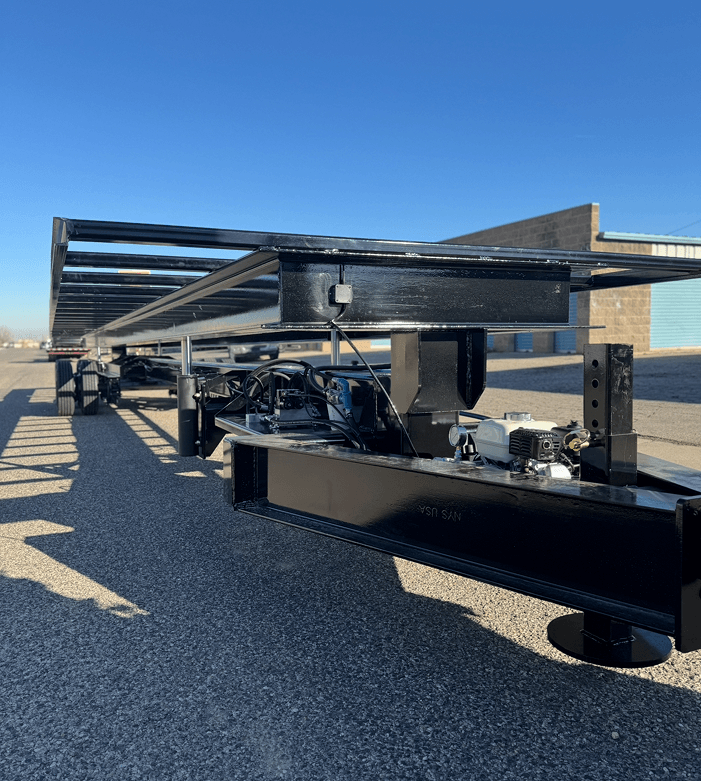
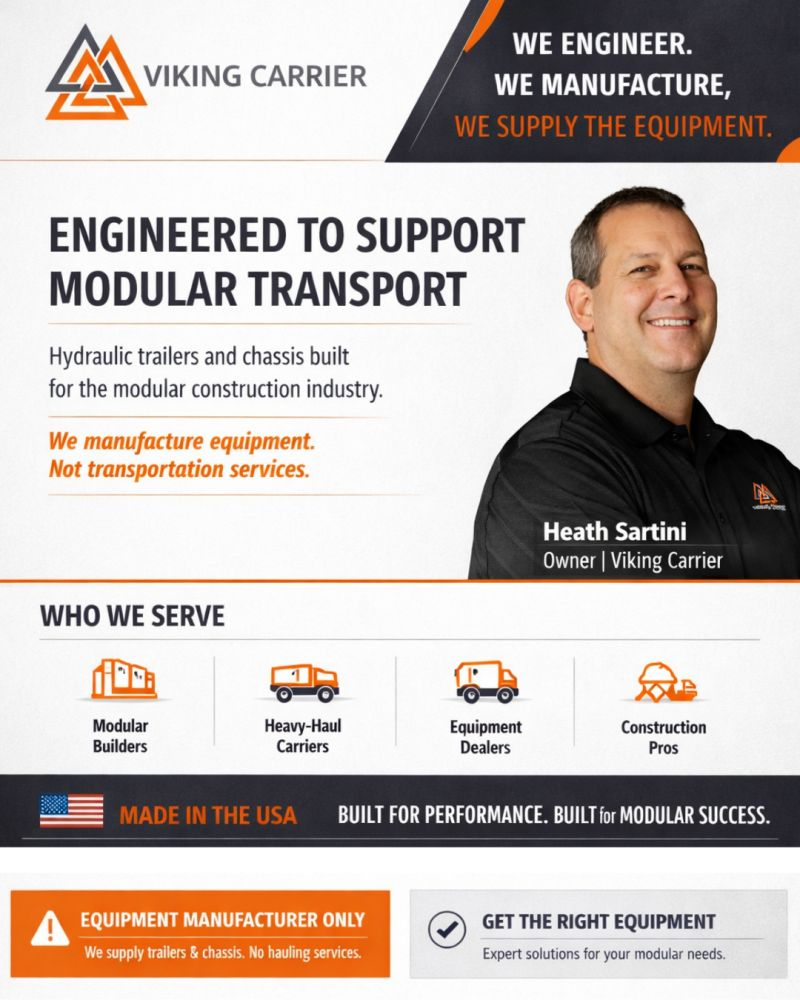
The company manufactures hydraulic modular trailers and chassis designed for moving large structures. It supplies equipment that factories and transportation companies use; those customers and their transport partners handle the hauling. Viking describes itself as a family-run, American manufacturer serving customers across the United States and Canada.
For an industry that puts tremendous effort into improving what happens inside the factory, Viking focuses on what happens after the doors open.
A Building Deserves a Thoughtful Ride
A finished module carries more than lumber, steel, drywall, and cabinets. It carries the work of everyone who helped build it, along with the expectations of the customer waiting at the other end.
That makes transportation equipment part of the quality conversation. A factory can check every cabinet door before shipment, but it also needs to consider how the structure will be supported and handled from the production line to the foundation.
Viking’s approach centers on hydraulic control. Its equipment lets operators adjust height and manage the load, with the company listing up to 16 inches of hydraulic lift travel. Its product lines include fifth-wheel and pintle hitch configurations, along with extendable equipment for long modules. These features provide flexibility when handling structures and dealing with changes in grade and clearance.
Anyone who has looked at a jobsite entrance and thought, “That looked easier on the drawing,” can appreciate why adjustability deserves a place in the discussion.
The Numbers Have a Purpose
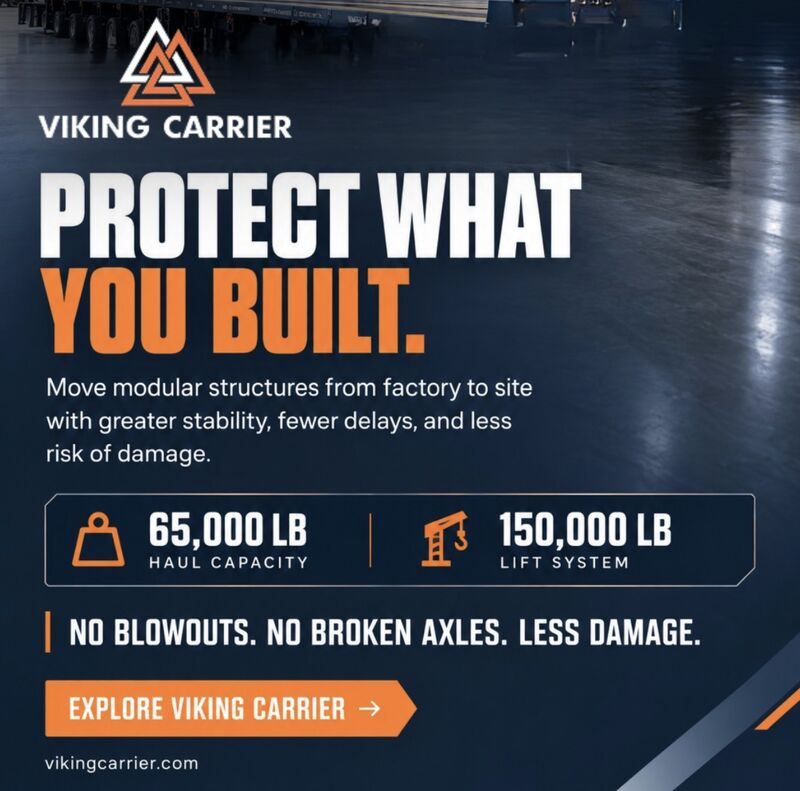
According to Viking’s published specifications, its trailers offer hauling capacities ranging from 60,000 to 110,000 pounds, with hydraulic lifting capacity up to 150,000 pounds. Those are different ratings, and matching the equipment to the actual load remains essential. The company also lists stretch trailers reaching up to 76 feet and outriggers available up to 16 feet wide.
Those numbers help a factory or transporter begin a practical conversation. How long is the module? What does it weigh? Where does it need support? What will loading and unloading involve?
I like that kind of conversation because it moves transportation planning into the project early. Finding the right equipment before a module is finished is much better than discovering a mismatch while everyone waits for it to leave.
Remember the Equipment Underneath
Hydraulics may draw attention, but tires, suspension, and brakes also have important jobs. Viking lists steel-belted radial tires, tire inflation systems, air brakes, and reinforced steel frames among its equipment features.
For a business evaluating transport equipment, those details belong alongside the purchase price. Maintenance requirements, compatibility with existing operations, operator training, and the loads being moved all deserve consideration. The useful question is how well the equipment fits the work it will actually perform.
Viking offers purchase, lease, and custom-build options, giving companies different ways to explore the right fit. A factory with steady shipping volume may have different needs from a transporter preparing for a particular project.
Gary’s Observation

I enjoy seeing companies tackle the practical parts of offsite construction. People pay plenty of attention to beautiful renderings and finished buildings. The equipment that moves those buildings deserves a little spotlight, too.
Viking’s focus is a useful reminder that our product’s journey continues beyond the factory door. Better planning for that journey gives the factory, transporter, builder, and customer something to work toward together.
After all, we put too much effort into building a good module to treat its ride to the jobsite as an afterthought.
Learn more at Viking Carrier.