





Almost every job in offsite construction has a part nobody particularly enjoys. Writing another sales follow-up. Turning meeting notes into something readable. Staring at a blank screen while trying to explain why your factory’s homes deserve a second look.
These tasks need doing, but they rarely get our best thinking. They get whatever energy is left after the production meeting, the supplier problem, and the phone call about a module that should have shipped yesterday.
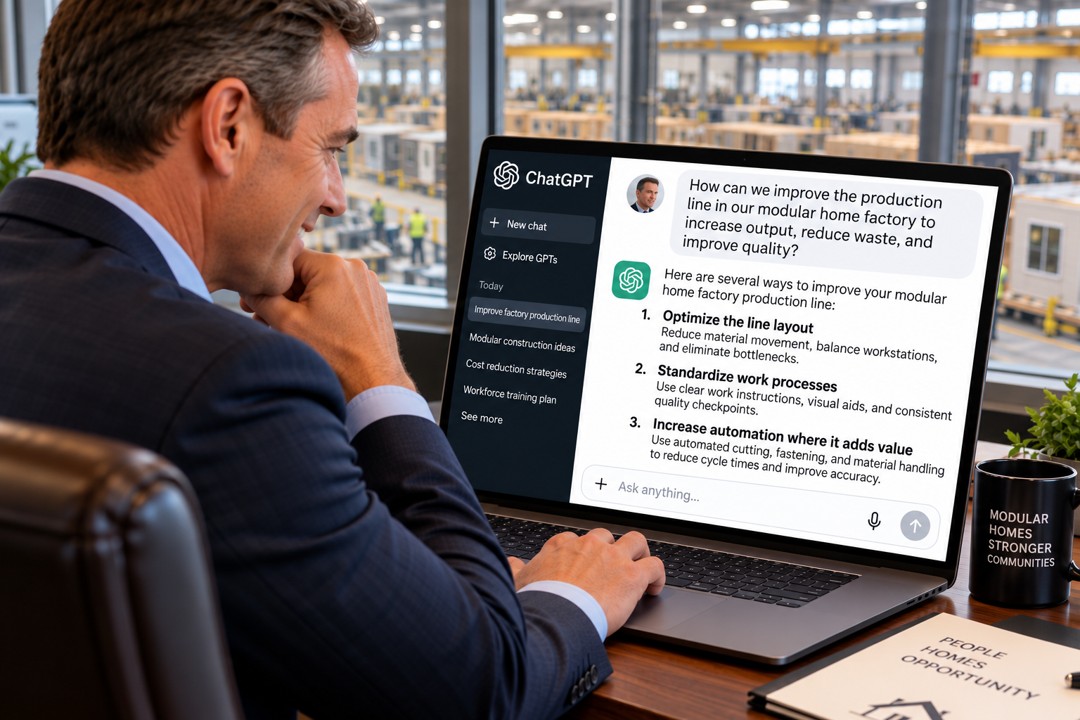
AI is a welcome helper here. Give it a few facts and some direction, and you have a draft to work with. I can understand the attraction. Nobody started a modular factory because they loved writing weekly updates.
But a quiet temptation hides in that convenience: once something helps us write the answer, we start asking it to decide what the answer should be.
When Assistance Becomes Dependence
Consider a factory owner asking AI to draft a marketing piece about a new home design. That is a reasonable assignment. The owner knows the product, understands the buyer, and needs help putting the story into words.
Now imagine asking AI which buyer to pursue, what that buyer wants, which floor plan to offer, and how to distinguish the factory from its competitors. Those can be useful questions to explore. The trouble starts when the first polished response becomes the plan.
Offsite construction already has enough companies using the same promises: faster construction, better quality, less waste. Let several factories ask similar questions and accept the answers without much challenge, and we risk producing more interchangeable thinking.
The brochures might improve while the ideas behind them get thinner.
The Value of Wrestling With a Problem
Creative thought in this industry often begins with an inconvenience. Someone notices that a production station keeps backing up. A builder questions a detail everyone else accepts. A service manager connects several callbacks to a design decision made months earlier.
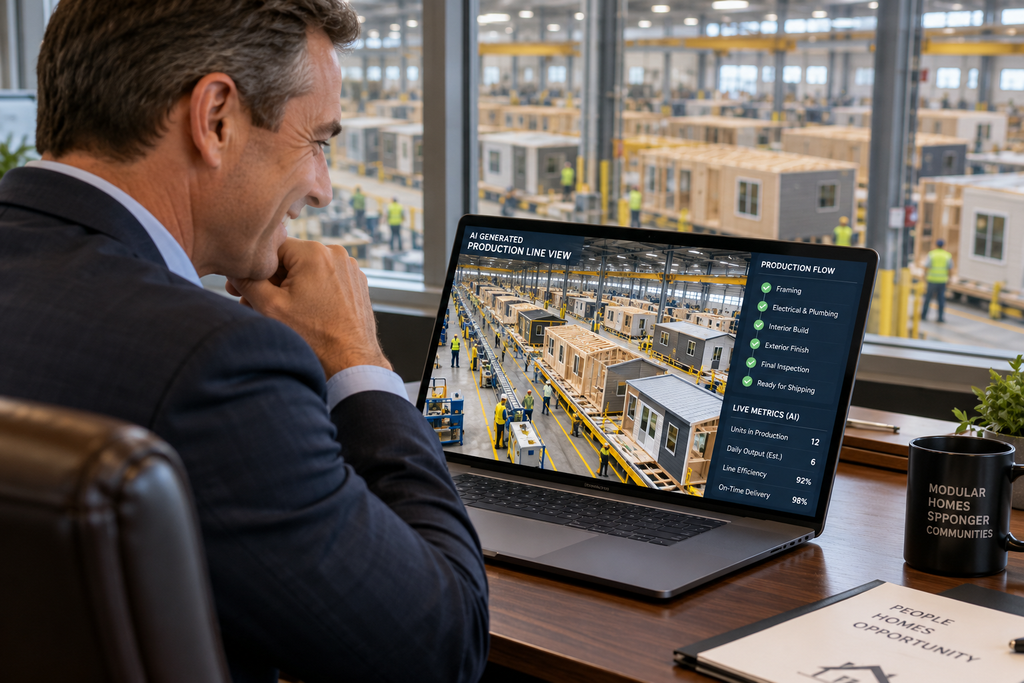
Working through those problems builds understanding. Frustration, questions, and failed attempts help people discover what they were missing.
AI can suggest options, challenge assumptions, or help organize the evidence. But a convincing suggestion still needs someone who understands the factory to test it against reality. Does it fit the line? Can the crew build it consistently? Will it survive transportation? Does it solve the customer’s problem?
A paragraph can sound finished long before the thinking is finished.
That matters for the next generation entering our factories, too. If we give new employees complete answers before they learn to frame questions, we may make them productive at presenting ideas without making them capable of evaluating them.
Gary’s Observation

I want AI to take more of the repetitive work off our desks. Plenty is available, and people running offsite businesses could use the breathing room.
What concerns me is what we do with the time we get back. Do we walk the production floor, talk to builders, examine an old assumption, and develop something better? Or do we simply ask AI to generate the next decision?
The laziest part of our work deserves some automation. Our curiosity deserves some exercise.
An offsite factory needs people willing to ask why something keeps going wrong—and stay with the question after the easy answer falls apart.