



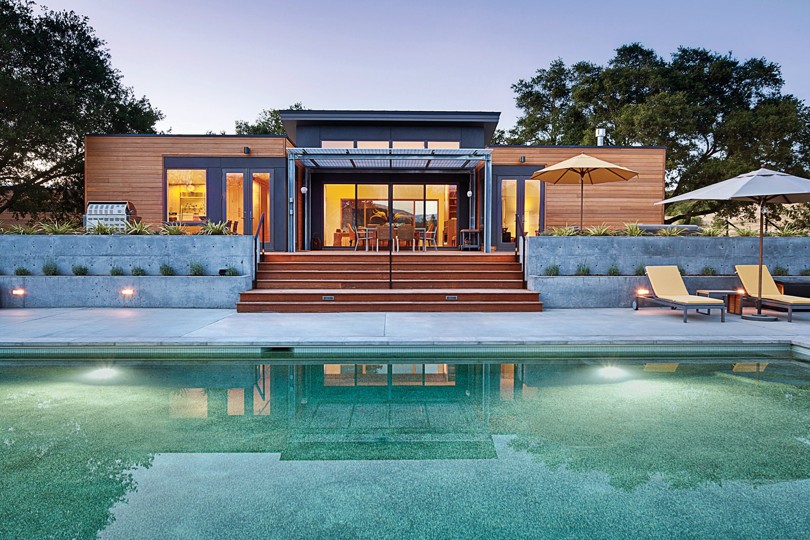
On September 13, 2012, I wrote about a company that had just raised $60 million to build houses that folded up for the ride to the jobsite. Blu Homes had a quarter-million square feet of factory space in a former shipbuilding plant in Vallejo, California. It had investors willing to finance more sales, marketing, and design work. And it had something every modular sales rep would love to take to a planning board meeting. Unfold one of those homes and people could see for themselves why a highway lane shouldn’t get to decide the width of their living room.
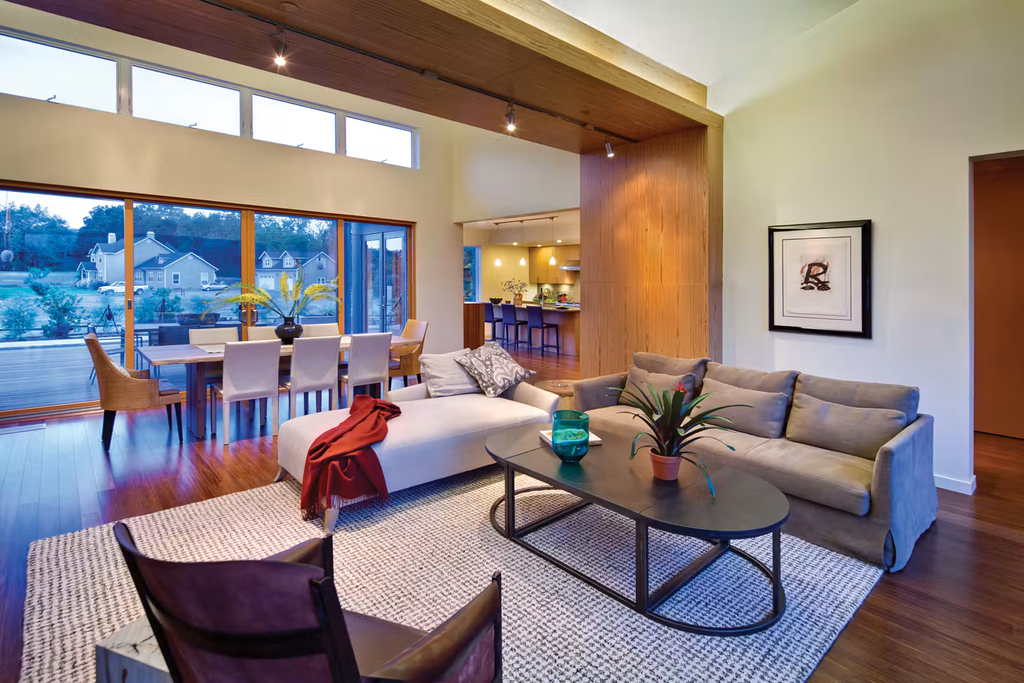
Photo – Blu Homes
Fourteen years later, another company with a folding house caught my attention for a curious reason. Boxabl’s November 10 announcement concerned a proposed mortgage venture. There wasn’t much for a camera crew to film. Two companies had signed a letter of intent. Yet if I owned a piece of that factory, I’d care more about what happens to the first loan application than about watching another house unfold.
To understand why, it helps to go back to Vallejo while things were still looking pretty good.
When the factory was part of the attraction
Blu understood something about the customer that our industry occasionally forgets. Very few people wake up wanting to buy a construction method. Give them a bright, open home with a high ceiling and a place they can picture themselves having coffee on Sunday morning, and now you have their attention. Blu’s signature Breezehouse gave people that picture. The folding system let Blu put the house they wanted on a truck.
For a while, the numbers gave people in this business good reason to pay attention, too. In early 2014, the San Francisco Chronicle reported that employment at Blu’s Mare Island operation had grown from 20 to 262. Sales had risen from roughly $35 million in 2012 to $60 million in 2013. That second $60 million is worth pausing over. The first came from investors. The second was reported sales. Customers had opened their checkbooks.
In October 2016, Blu opened a model home village beside its factory. A prospective customer could visit Mare Island, walk through a finished home and see where it came from. A year later, the Chronicle was reporting on the next occupant, Factory_OS. Blu had spent millions improving the building, closed its operation there, and outsourced production. By 2019, its homes were being built in Southern California and trucked back to the Bay Area. In May 2020, Dvele acquired Blu.
That sequence tells a more interesting story than saying Blu failed. A homebuyer could still get a Blu home after Blu stopped running the plant that had been such a persuasive part of the sales tour. The design had value under a different manufacturing arrangement. What ended was the original proposition that Blu would fill that enormous building with its own work.
I couldn’t tell you which individual cost tipped that decision. What I can tell you is what a factory owner sees in those two $60 million figures. One paid for the opportunity to build a business. The other measured the value of what it sold. To decide whether to keep the lights on in Vallejo, you’d need a third figure. How much was left after Blu delivered what it promised?
Boxabl starts at the other end of the market
Blu invited a family to imagine a modern luxury home. Boxabl’s Casita poses a smaller, more immediate question. Could you put a home in the backyard you already own? California accessory dwelling units have become a focus for the company, which reported statewide approval for its two-bedroom Casita in November 2025 and its one-bedroom model in April 2026. Boxabl also went public in July 2026. Anyone curious about how the factory is doing can now read its filings.
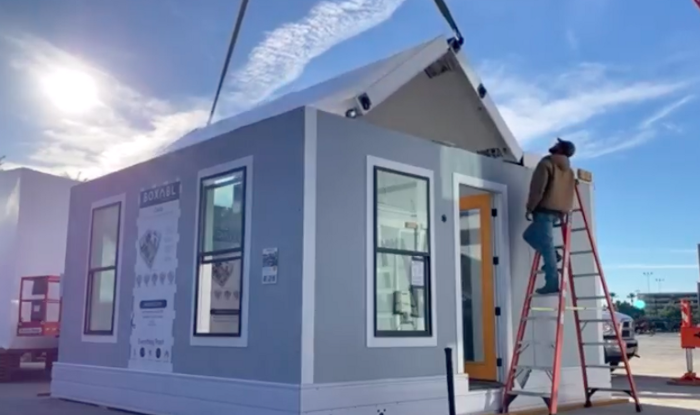
photo -Boxabl
One pair of numbers in those filings deserves as much attention as the unfolding demonstration. In the three months ended June 30, Boxabl produced 15 Casitas. It recorded $495,000 in revenue from seven Casitas delivered to four customers. A unit built in June can perfectly well ship in July, and a unit delivered in June may have been built months earlier. Those figures measure two activities that run on different clocks. The crew can finish its work while the customer still has plenty left to do.
The cost of holding inventory shows up elsewhere in the filing. For the first six months of 2026, Boxabl reported about $4.9 million in adjustments to the value of finished goods and another $1.8 million in allowances for slow-moving and obsolete inventory. Together, inventory-related adjustments accounted for about 72 percent of its reported cost of goods sold. Dividing that cost by the number of homes delivered would give a badly distorted picture of what it took to build one Casita. The figures do show that Boxabl had to mark down value it had been carrying on its books.
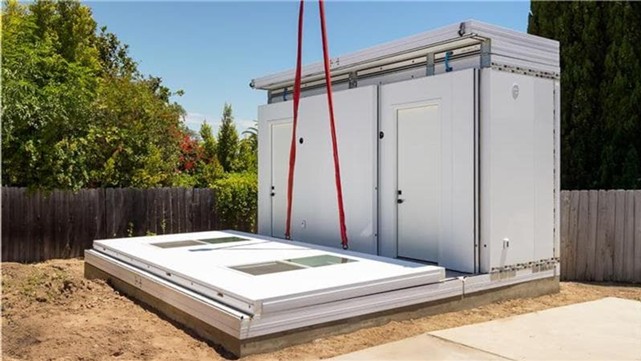
photo – Boxabl
Now put yourself across the kitchen table from a couple who would like one of those Casitas for an aging parent. They already own the yard. They like the floor plan. They may even have the factory price written on a pad between them. Dad’s first question is whether he can get from the driveway to his door without climbing steps. His daughter wants to know who will give her one reliable figure for the home, the foundation, the utility trench, and getting the yard put back together. Her husband wants to know when the first payment is due.
Everybody at that table already understands how the house unfolds. Which of those three questions can the salesperson answer before the couple gets up?
Why a mortgage announcement belongs in a factory story
Boxabl and Warp Speed Holdings have signed a nonbinding letter of intent to explore a lending venture, targeting an early 2027 launch. Among the ideas is construction-to-permanent financing that could cover land, site improvements, manufacturing, delivery and installation. As of November 16, that is a proposed program. The announcement establishes neither a closed loan nor a funded construction draw.
Still, there’s a practical idea here. Imagine the lender wants evidence of progress on the property before releasing funds, while a good share of the work is already sitting under a factory roof. Somebody has to agree in advance on what the lender will accept, who verifies it, and when the money moves. Solve that once for a single buyer, and you’ve helped a family. Solve it on terms the next fifty buyers, their contractors and the factory can use, and you may have changed how many homes that plant can afford to build.
Blu tried to make a premium house practical to ship. Boxabl is now trying to make a compact home practical to buy. Both had good reason to tackle the highway problem. What makes Boxabl worth watching today is its willingness to work on the part of the transaction where the buyer puts down the brochure and asks for a monthly payment.
Gary’s Observation

If I were visiting Boxabl tomorrow, I’d gladly watch a Casita unfold. Then I’d ask the sales manager to pick one California backyard where somebody has moved in and walk me through the job. What was the first estimate? What did the owner finally pay? How long did the finished unit wait? And after the installer, the freight company and the factory all got paid, would everybody involved take the next order on the same terms?
Blu left behind a fine question for anyone putting money into a housing factory. A company can design a house people want, sell millions of dollars’ worth of them and still decide somebody else ought to manufacture it. Boxabl has a chance to write a different ending. The person I’d most like to hear from is the local builder who has already installed one Casita and is reaching for the phone to order a second. I’d like to know what made that call worth making.