





Offsite’s collapse in Western Australia offers a sobering reminder that building more capacity and building a stronger business are two different accomplishments.
Walk through a new offsite factory with its owner and sooner or later you will hear the number. It might be 500 homes a year, 1,500, or enough to make a housing minister stop for a photograph. Someone will point toward the production line, explain what the equipment can do, and describe how much faster everything will move once the operation reaches its stride.
I enjoy those tours. After spending more than half my life around this industry, I still like seeing people find better ways to build. But somewhere between the new saw and the loading dock, I usually start wondering about a less exciting number: how much money the company needs to keep everything moving until the customer pays.
That question hangs over the collapse of Offsite, the panelized construction business in Welshpool, Western Australia. Its story includes a substantial factory expansion, ambitious production claims, a growing workforce, and then a shutdown that reportedly left hundreds of homes waiting for components. Before anyone turns that into another argument about whether factory construction works, we ought to look at what is known—and acknowledge what is still missing.
From Formwork to a Much Bigger Ambition
Offsite’s roots reach back to a concrete formwork business established in 2009. According to the published description of a September 2026 interview with managing director and executive chairman Norm Roberts, the business changed direction in 2019 and was purchased by his group in 2024. The company has a history behind the operation, followed by new ownership and plans to take it considerably further. woodcentral.com.au
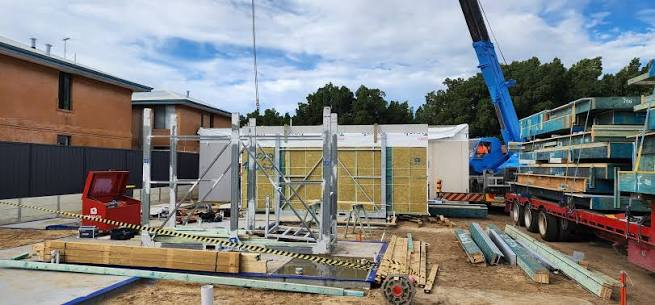
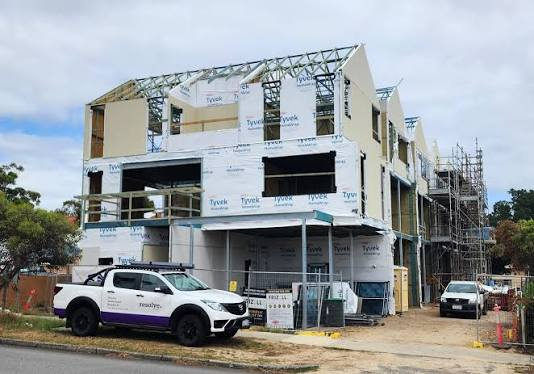
The company manufactured panelized building systems, including walls, floors, roofs, and stairs. These were components transported to the jobsite for assembly, rather than complete volumetric modules rolling out of the factory. That distinction matters because the factory’s work still had to fit into a builder’s larger construction sequence, with all the scheduling and coordination that entails.
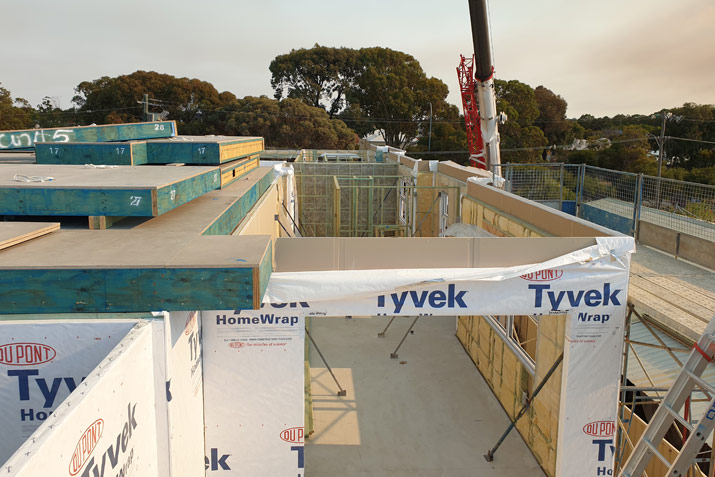
The proposition was familiar to anyone in our industry: move more work indoors, engineer repeatable components, and give builders a more predictable way to deliver housing. There is a sensible business case behind that approach. The challenge is turning the case into an operation that performs consistently enough, and earns enough, to support itself.
The Factory Got Bigger—and So Did the Expectations
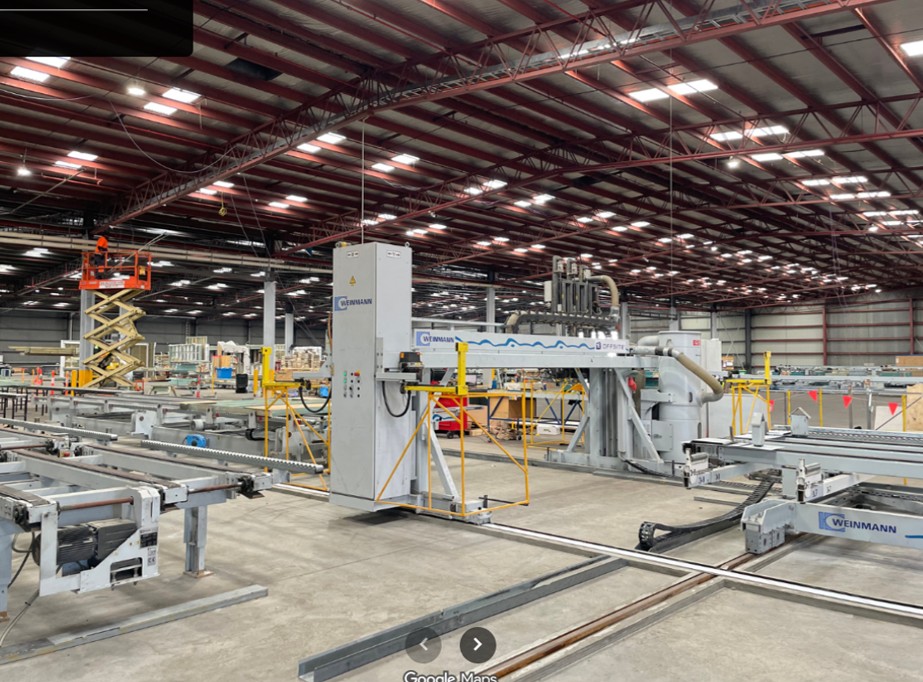
In May 2025, Offsite announced its move into an 11,000-square-meter facility in Welshpool, approximately 118,400 square feet. The company described a tenfold increase in production capacity and said it could design, manufacture, and assemble more than 2,500 dwellings annually. Its announcement included three HOMAG Weinmann lines and a new Hundegger saw coming from Germany.
That is a considerable manufacturing ambition. It is also a capacity claim, which should never be confused with a verified number of homes delivered. Equipment capacity tells us what may be possible under the right conditions; actual output tells us what happened after drawings, materials, labor, scheduling, and customers all had their say.
The published description of Roberts’ September 21 appearance on The Perth Property Show described growth from 25 employees at a 3,000-square-meter site to more than 160 employees in the larger factory. It also mentioned plans for a larger second facility and opportunities beyond conventional housing. By October 21, administrators had been appointed.
That short interval deserves attention, but it does not establish when financial problems began or what management knew. A published interview is not a current set of accounts. The timeline does establish how quickly the public story shifted from expanding production to dealing with financial failure.
When the Factory Stops, the Problems Keep Moving
The company named in the administration notice is Maneon Pty Ltd, formerly trading as Offsite, Advanced Offsite Construction, and Peregrine Structures. Clint Joseph and Giovanni Carrello of BRI Ferrier WA were appointed administrators on October 21, 2026, and a second creditors’ meeting notice was published in November.
By October 30, Business News was reporting that the factory had closed, more than 100 workers had been dismissed, and orders for hundreds of homes were stalled. The report also described creditors and investors being owed millions. Those consequences reach into households, businesses, and supplier accounts well beyond the factory itself.

As of November 18, The West Australian’s public news listing reported approximately A$40 million in creditor claims and described the business as headed toward liquidation. That figure represents reported claims, rather than a final debt total independently verified for this article. The records reviewed also did not establish that liquidation had already occurred.
For builders waiting on components, the distinction between administration and liquidation does not make the immediate scheduling problem disappear. A wall package that fails to arrive can disrupt follow-on trades, inspections, and commitments to customers. The factory may have stopped spending money on production, while the projects depending on it continue accumulating costs.
What We Know—and What We Shouldn’t Pretend to Know
The natural question is what caused the failure. At this stage, I have not reviewed an administrator’s report establishing whether the causes included contract losses, insufficient working capital, delayed payments, financing problems, production difficulties, or a combination of factors. Choosing a favorite explanation would make the article easier to write, but it would not make it accurate.
We can say that substantial expansion preceded the collapse. We cannot say, on that fact alone, that expansion caused it. We can also say that orders were reportedly left stranded, but that does not tell us whether those orders were profitable, funded, approved, or ready to move through production.
Those missing details are precisely what factory owners should want to understand. They separate an uncomfortable headline from a useful business lesson, and they’re why the administrators’ findings will matter more than anyone’s theory about what must have happened.
Capacity Comes With Bills Attached
Even without a complete explanation of Offsite’s failure, its trajectory raises questions every expanding manufacturer should consider. A larger building and more equipment may improve production economics, but they also create commitments that arrive before the operation reaches its planned output.
New employees need training. New equipment needs to fit into the production sequence. Purchasing has to support the pace, supervisors need reliable information, and the work arriving at each station has to be ready. The spreadsheet can assume that everything settles down in three months; the payroll account has to handle whatever actually happens.
That is why I want to hear more than the annual production target when someone describes an expansion. How much cash does the business need during the transition? What happens if deliveries take longer than forecast? How far can production fall below expectations before management has to change course?
These are ordinary management questions, not an argument against investing in a factory. Asking them early gives an owner more choices than asking them once suppliers start calling about overdue invoices.
A Backlog Needs More Than a Big Total
The reported disruption to hundreds of homes makes Offsite’s situation especially worth examining. There was apparently work waiting for the factory, yet orders did not prevent the shutdown. We still need the financial and contractual details to understand why.
Across the industry, a backlog can contain several very different kinds of work. One project may be approved, properly priced, and ready for production. Another may still be waiting for financing. A third may have been profitable when it was sold, before changes and delays began eating into the margin.
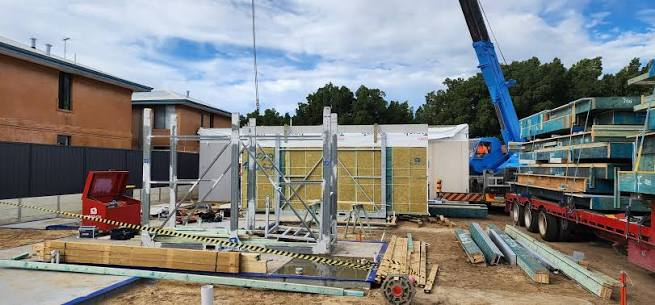
Add those projects together, and you get a number that looks reassuring in a management presentation. Look at each one separately, and you may discover that only part of the total can produce dependable revenue in the coming weeks. That is why I would rather see a smaller amount of work management understands thoroughly than a large backlog nobody has taken apart.
This is not a description of Offsite’s contracts, which have not been established here. It is a reason for other owners to look beyond the total and ask what can ship, what should earn money, and how much cash the factory must provide before payment arrives.
The Production Line Doesn’t Control the Jobsite
One of the enduring frustrations of offsite construction is that a disciplined factory can still depend on an unpredictable project. The production team may be ready while the customer waits for a decision, the site is behind schedule, or a detail changes after purchasing and ordering the materials.
Someone absorbs the consequences. That might mean storing completed work, rescheduling labor, carrying materials longer, or revising drawings and production instructions. The equipment can perform exactly as promised while the commercial arrangements leave the manufacturer paying for disruptions it did not create.
Clear decisions about production releases, changes, delivery readiness, and payment belong alongside the engineering. They deserve attention before the work reaches the line, when people still have the opportunity to agree on responsibilities. Whether such issues contributed to Offsite’s failure remains unanswered, but they are worth examining in any factory’s business model.
Replacing a Supplier Is Easier Said Than Done
For builders affected by a shutdown, finding another manufacturer may be only the beginning. A replacement needs suitable drawings and specifications, clarity about engineering responsibilities, compatible materials and methods, and room in its own production schedule. Forwarding the original purchase order does not resolve all of that.
This is why a builder should understand who controls the project documents and how work could continue if supply is interrupted. It is a practical conversation to have while the relationship is healthy. Nobody enjoys discussing what happens if a supplier fails, but the alternative is having that discussion when a customer is already demanding a new completion date.
The industry also needs to resist treating one company’s collapse as proof that its construction method is unsound. Financial sustainability and building performance both deserve scrutiny, but one does not automatically establish the other. We will learn more by examining the business carefully than by declaring victory for whichever construction method we preferred beforehand.
Gary’s Observation

What bothers me about stories like this is how easily the people disappear behind the numbers. We discuss factory capacity, investment, and debt while workers figure out how to replace a paycheck and builders try to explain delays they did not anticipate. Whatever the final findings show, this was somebody’s livelihood long before it became an industry headline.
I still believe in what offsite construction can do. I have spent too many years around capable people building good homes to let every business failure erase that experience. But believing in the process does not give us permission to stop asking whether the business can afford the promises being made in its name.
If I were sitting across the desk from a factory owner planning an expansion, I would want to talk about the jobs already being built. Are they making the money the estimates promised? Are customers paying when expected? Can the company handle a bad month without turning every management meeting into an emergency?
Then we could walk out and admire the new equipment. I would probably enjoy that part as much as anyone, but I would enjoy it considerably more knowing the owner had answers to the questions back in the office.
Offsite’s full story still needs the administrators’ findings. Until those are available, the useful question for the rest of us is whether our own growth is making the business stronger—or simply giving it more obligations to meet. The factory tour will show you what the machines can do. The owner ought to know what the business can afford.