




At some point in every modular factory project, the conversation needs to shift from how the plant gets financed to how it earns its living. Both conversations matter, but the second one tends to get less attention when everyone is still admiring the building.
Cleveland’s proposed MMY US factory gives our industry a good reason to have both. Bringing manufacturing into an old industrial property is worth celebrating. Making that property the home of a dependable housing business is where the real work begins.
What Cleveland Is Putting Together
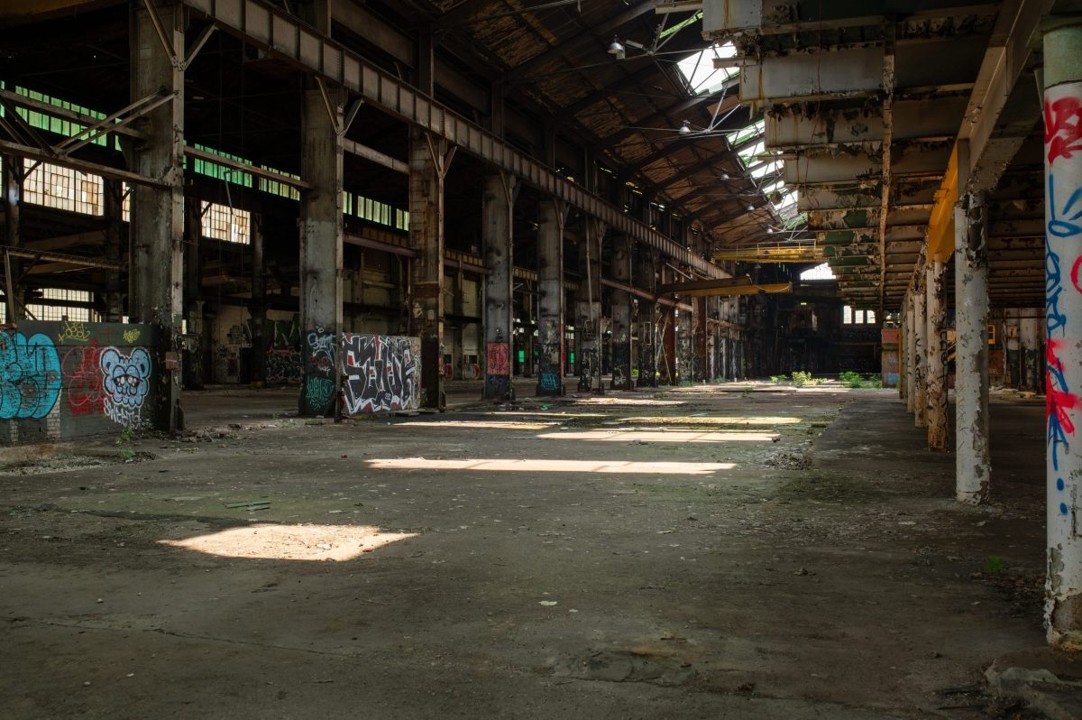
According to Sean McDonnell’s November 17 report for Ideastream Public Media, MMY US has lined up approximately $22 million in public incentives for a Cleveland modular factory with a $26.5 million construction budget. The proposed facility would occupy roughly 183,000 square feet at the former Wellman-Seaver-Morgan property on Central Avenue, where Hulett ore unloaders were once produced.
The financing includes federal and state tax credits, public loans, and grants. Cleveland’s proposed $1 million contribution, split between a grant and a loan, remained under consideration. The developer’s share is reported at $4.5 million.
Construction is expected to run through 2027, with opening anticipated in 2028. Officials project 120 full-time jobs and a minimum factory wage of $20 an hour. MMY already has a facility in Louisville, Kentucky. Ideastream Public Media
Those are plans and projections, rather than completed results. Also, describing the entire incentive package as a taxpayer check would miss the differences between loans, tax credits, and grants.
A Building Budget Is Only the Beginning
For a factory owner, the next question should be straightforward: what money will carry the operation through the period when expenses are real and production is still learning to behave?
That question belongs beside the construction budget. A renovated building does not train supervisors, eliminate rework, or make a new crew hit its labor estimate. Materials may need to be purchased well before the finished product produces cash. A delayed customer project can turn a planned shipment into a storage problem.
These are operating questions I would ask of any new modular plant. They are not evidence that MMY has overlooked them. They tell us whether a promising investment has enough room to become a working business.
I would much rather hear a management team explain a conservative startup schedule than promise that everything will run at full speed shortly after someone cuts a ribbon. The factory floor has a way of correcting optimistic spreadsheets, usually at considerable expense.
Who Is Ready to Buy What the Factory Builds?
Housing need and factory orders are two very different measurements. A community can desperately need homes while the builders trying to provide them are still working through land purchases, financing, utilities, and approvals.
For a modular manufacturer, the useful question is how much of that need has become work that can actually enter production. There should be a customer, an agreed product, a workable price, and a delivery schedule tied to something more dependable than somebody’s best guess.

Consider a hypothetical builder ordering a group of homes for neighborhood infill. That sounds like exactly the kind of work a factory should want. But if only some lots are ready, the production plan needs to reflect that reality. Building the remaining homes early does not speed up the utility connections.
A strong relationship between factory and builder makes those conditions visible before production begins. Otherwise, the plant can be busy making products that its customer cannot accept, which is a particularly expensive way to look productive.
The People Between the Plan and the Product
Whenever I hear a factory employment projection, I want to know who will teach those employees how the work is supposed to flow. Hiring is the beginning of workforce development, and the people doing the teaching need time to do it properly.
A good lead person has to recognize more than a crooked wall or a missing fastener. That person needs to know when a drawing question should stop work, when a material substitution requires approval, and when a problem is about to travel into the next station.
Management also has to make reporting problems worthwhile. If the employee who spots an error gets blamed for slowing production, the next error may travel farther before anyone mentions it. That is how a small correction becomes a finished-module repair.
For a new plant, I would put supervisor preparation and clear decision authority near the top of the startup list. Equipment deserves attention, but somebody still has to decide what happens when the equipment, the drawing, and the material on the cart disagree.
Measure What Happens After the Opening
Public officials have good reasons to care about employment and property reuse. Builders have equally good reasons to care about delivery dates, complete shipments, consistent quality, and whether the next order will be priced sensibly.
A successful factory needs to satisfy both groups. That means looking beyond hiring announcements to employee retention, and beyond production totals to homes delivered and accepted. A module leaving a station is progress; a customer willing to place another profitable order is a much stronger business signal.
I would also want to see how problems are resolved after delivery. The first order tests the product. The response to the first difficult service issue helps determine whether there will be a second order.
Gary’s Observation

I want projects like this to succeed because our industry needs factories that builders can count on year after year. An old industrial property finding a productive new purpose is a good story. A manufacturing team building a durable business there would be even better.
My interest would be in the ordinary Tuesday several months after opening. Are the drawings settled? Are materials at the stations where they belong? Does the supervisor have an answer for the crew? Is the customer ready for the shipment? Those details tell me more about a factory’s future than the size of its opening celebration.
Cleveland can help create the opportunity. The lasting value will come from the people who turn that opportunity into homes, satisfied customers, and enough margin to keep doing it.