




France’s Technologies & Habitats has entered judicial liquidation, raising familiar questions about what it takes to keep a modular manufacturer operating.
A modular factory can have a product customers want, employees who know how to build it, and millions in annual sales. Those are meaningful accomplishments. They still don’t tell you whether the business has enough financial strength to keep opening its doors.
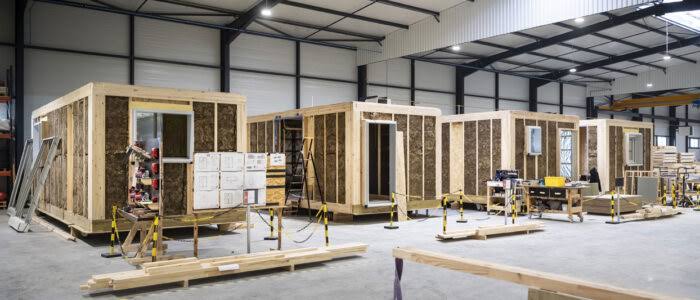
That is the uncomfortable backdrop to the situation at Technologies & Habitats, a timber-modular manufacturer in Saint-Félix, in France’s Haute-Savoie region. The company has entered court-ordered liquidation while it seeks a buyer. For anyone running a modular factory on this side of the Atlantic, it is a story worth watching carefully—and resisting the temptation to explain too quickly.
The Factory Has a Temporary Runway
The court-appointed practitioner’s record lists judicial liquidation on November 6, 2026, with publication in France’s official commercial announcements bulletin on November 13. The proceedings are being handled through the Annecy Commercial Court.
According to an acquisition listing published by AVCA Legal, continued trading is authorized through February 6, 2027, while the company seeks an acquirer for its assets and activities. The listing reports €14.8 million in revenue for 2025 and an employment range of 50 to 99 people, based on 2024 public workforce data. That range should not be mistaken for a verified current headcount.
There is an important distinction here for readers accustomed to seeing “liquidation” and immediately picturing a padlocked gate. The business has permission to continue operating temporarily. Whether that opportunity produces a viable transaction remains unresolved.
Sales Tell Only Part of the Story
The revenue figure deserves attention because it represents an operating business with meaningful commercial activity. But annual sales alone cannot tell a factory owner—or a potential buyer—whether the operation is healthy.
Anyone who has sat through a difficult cash meeting understands the difference. Revenue is one number. What remains after producing the work, paying overhead, correcting problems, and meeting other obligations is another. When customer payments arrive, they matter just as much to the people trying to cover next Friday’s payroll.
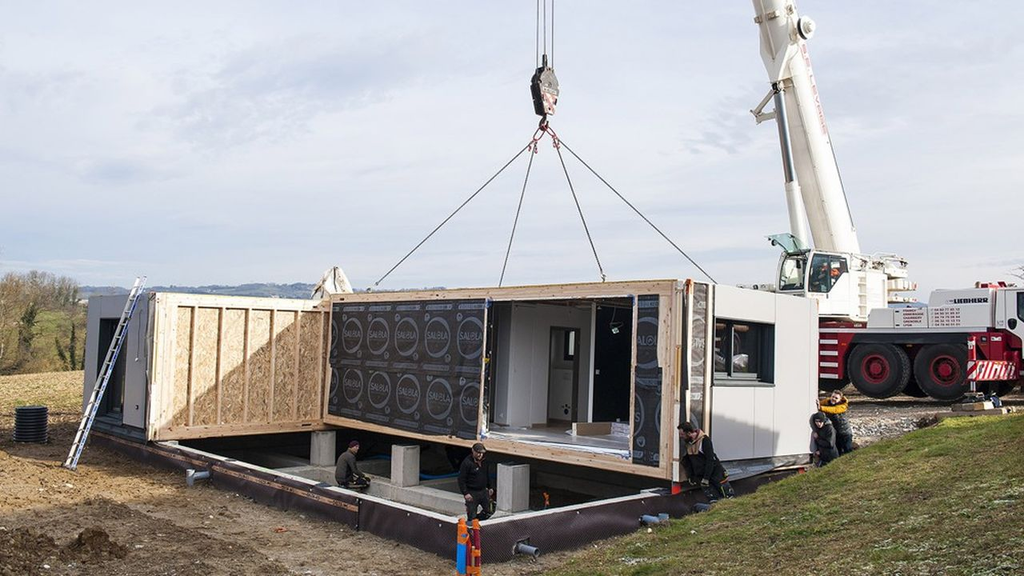
For a modular manufacturer, money can be committed well before a finished unit leaves the building. Materials arrive, employees put hours into production, and work moves through stations while the next customer payment may depend on a contractual milestone. A profitable order can still require substantial cash to carry it through production.
Those are general factory economics, not established explanations for what happened at Technologies & Habitats. The available notices do not identify a specific operational or commercial cause. They confirm a financial-distress event, but they do not give us permission to invent the management decisions behind it.
Don’t Turn an Unknown Cause Into a Convenient Verdict
Whenever an offsite company runs into trouble, somebody is ready with an explanation. The factory was too ambitious. The market wasn’t ready. Labor cost too much. Management didn’t understand manufacturing. The building system was too complicated.
Sometimes a later investigation supports one of those arguments. Sometimes the actual problem is something outsiders never saw. Until the evidence is available, assigning blame mostly tells us what the commentator already believed.
That matters in this case because timber construction and the broader push toward lower-carbon buildings can easily become part of the argument. Supporters may treat a promising product as proof that the business deserved to succeed. Critics may treat liquidation as proof that the product never made sense. Neither conclusion follows from the information available.
A construction system and the company selling it need separate examinations. Product performance, customer value, production efficiency, financing, and management all deserve scrutiny, but they should not be collapsed into one convenient verdict.
What a Buyer Would Need to Understand
For a prospective acquirer, the useful question goes well beyond the price of the equipment. It is whether the operation can become a dependable business under a workable ownership and financial structure.
That assessment would ordinarily include the quality of the remaining orders, the cost of completing them, the condition of supplier relationships, and the availability of the people needed to deliver the work. A backlog total has limited meaning until someone determines which projects are ready, adequately funded, and commercially worthwhile.
There is also a difference between acquiring production capacity and preserving a functioning production team. Equipment can be inventoried. The knowledge held by a supervisor who understands every awkward connection detail is harder to put on a spreadsheet.
A buyer could potentially preserve valuable capabilities and employment. But a transaction only becomes a durable solution when the business has the resources and operating conditions to perform after the acquisition. Buying a factory and making it financially sustainable are two different assignments.
The Questions Readers Should Bring Home
American modular manufacturers do not need to know the cause of this particular liquidation to use the news as a reason to examine their own operations. The exercise should start with questions specific enough to produce useful answers.
How much cash must the factory commit between releasing an order and collecting the next payment? Which scheduled projects still depend on unresolved customer decisions, financing, or site readiness? How much reported margin remains after the actual cost of completing and servicing the job?
Those questions should lead to a shared view among sales, production, and finance. If sales sees a strong backlog, production sees interruptions, and finance sees a widening cash gap, ownership needs to understand how all three descriptions can be true at the same time.
The goal is to discover that mismatch while there is still room to act. A factory owner needs more than reassurance that work is coming. The owner needs to know what that work will demand from the business before it starts paying the business back.
Gary’s Observation

I would like to see a buyer emerge for Technologies & Habitats who can preserve the useful parts of the operation and give its people a credible future. There is nothing satisfying about watching a factory enter liquidation, especially when the public information leaves so much of the story unanswered.
What bothers me about these situations is how quickly our industry reaches for either an excuse or a victory lap. We should be able to acknowledge financial failure without declaring the entire construction method a failure. We should also be able to admire a product without assuming its manufacturer has built a sound business.
For the owner reading this between a production meeting and a call from the bank, the practical lesson is straightforward: know what your sales require from your cash, your people, and your factory. A respectable revenue number deserves recognition. It also deserves a second question: what did it take to earn it, and what did the business actually keep?