






There was a time when a modular factory owner could draw a circle around the plant and have a pretty good idea where the competition lived. Transportation costs, delivery routes, and relationships with local builders helped define the market. A competitor halfway around the world generally wasn’t part of the Monday morning sales meeting.
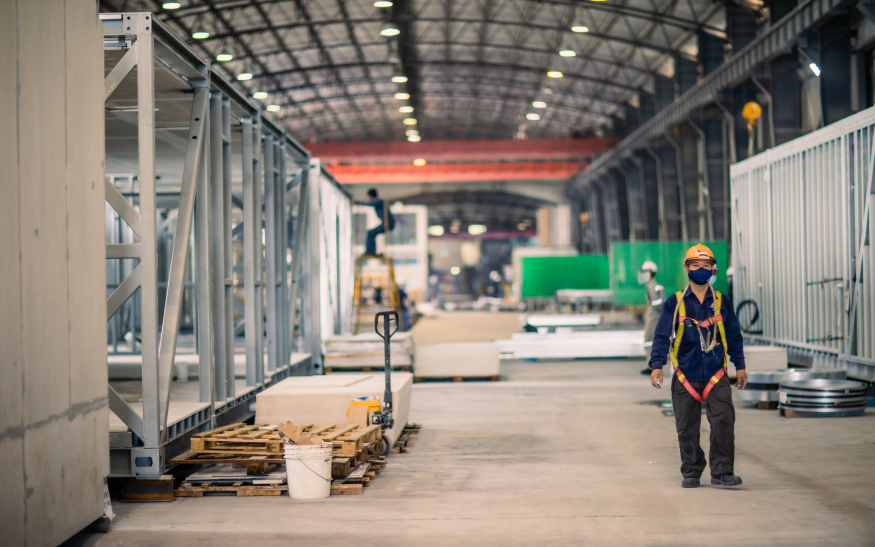
NuHome’s housing project in Wiltshire, England, gives factory owners a reason to redraw that circle. The UK developer is preparing to deliver 18 homes manufactured by TLC Modular in Vietnam, with completion scheduled for May 2027. The interesting part is how many decisions have to stay connected between the factory floor and the finished neighborhood.
A Small Development With a Long Supply Chain
According to NuHome’s November update, the development includes four one-bedroom flats, four two-bedroom houses, and ten three-bedroom houses, produced from 32 volumetric modules. All are being manufactured in one production program and are intended to travel together.
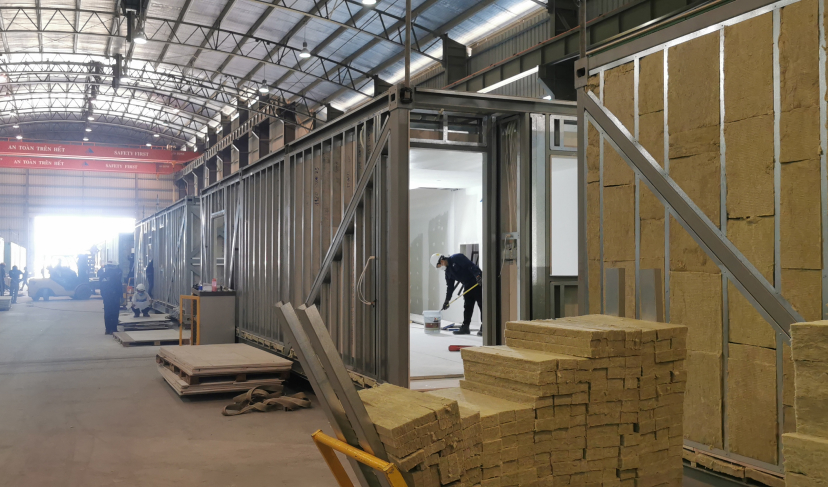
Final factory work includes building services, underfloor heating, decoration, cladding, and windows. Each module receives its own inspection record before being closed up. Those details sound routine until you consider what happens when a concealed problem is discovered after an ocean crossing.
Anyone who has spent time around modular construction knows the familiar promise: “We’ll take care of that on site.” Sometimes that is a reasonable plan. Sometimes it means an unresolved factory problem has just been handed to somebody with fewer tools, less information, and a more expensive workday.
Put an ocean between those two people, and that promise deserves considerably more scrutiny.
The Approval Schedule Matters as Much as Production
NuHome reports that the project received Full Plans Approval from UK Building Control on October 13 after resolving all 22 outstanding design review items. The insulated raft foundations for all 18 homes had been inspected and approved in September.
Those milestones deserve attention because factory productivity cannot rescue a project whose design decisions remain unsettled. A production line can move steadily while the overall development moves toward trouble.
For managers, the useful question is what those 22 items affected and when the answers reached the people building the modules. A revised drawing sitting in someone’s inbox does very little good if the crew is working from yesterday’s version.
The broader lesson is familiar: approvals, purchasing, production, and site preparation need a shared set of decisions. Distance makes the consequences of getting that wrong harder to absorb.

Parallel Work Still Needs a Meeting Point
One attraction of offsite construction is the ability to prepare foundations while homes are being manufactured. NuHome’s project uses that separation across two countries, allowing UK site work and Vietnamese factory work to advance independently.
But independent activities eventually have to meet with considerable precision. Foundation dimensions, service locations, lifting arrangements, and module connections must agree when the crane starts working.
A foundation crew cannot build from one assumption while the factory builds from another. Both can finish their assigned work on schedule and still create an expensive problem together.
For factory owners, this is where coordination earns its money. Someone needs responsibility for confirming that the latest approved information reaches both operations and that completed work matches it. A calendar showing two green progress bars is not enough.
One Shipment Concentrates the Stakes
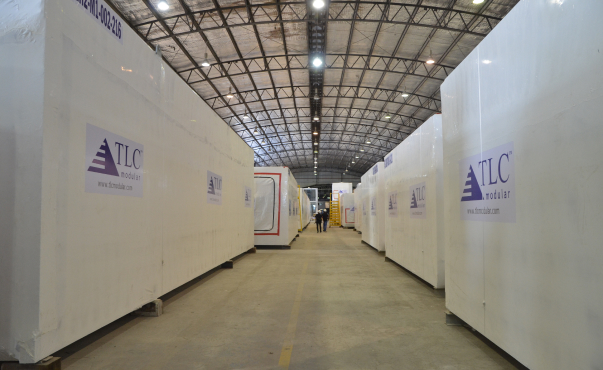
NuHome expects the homes to leave Vietnam in early 2027, with approximately five weeks at sea. After arrival, the modules will be transported to the site, craned onto their foundations, connected, tested, and commissioned.
Producing and shipping the development together offers an opportunity to coordinate a defined batch of work. It also concentrates exposure around a major delivery event. A shipping delay or receiving-site problem could affect the installation program for the entire development.
That does not make the approach unworkable. It makes contingency planning part of the job before the shipment leaves.
Where would modules wait if the site became unavailable? Who checks for transit damage? What happens if a replacement component is needed quickly? These are ordinary operating questions, but the answers become especially important when the manufacturing team is several time zones away.
Accreditation Supports Confidence; Execution Must Follow
NuHome states that the system carries its Full Accreditation under the Buildoffsite Property Assurance Scheme, or BOPAS, including a 60-year durability assessment. NuHome serves as the UK main contractor, while TLC Modular manufactures the units.
For housing providers and others evaluating an unfamiliar building system, independent assessment helps establish confidence. It gives the conversation something more substantial than attractive renderings and assurances that the factory knows what it is doing.
However, assessed durability should not be confused with a promise that every project will arrive without defects or delays. Manufacturing inspections, transport protection, installation quality, and maintenance still matter.
The practical test is whether responsibility remains clear from production through occupancy. Residents need someone who can resolve a problem. They should not have to untangle an international supply chain to get an answer.
What Domestic Factories Should Watch
It would be premature to declare this project proof that imported modular homes are cheaper or better. The supplied information does not establish a comparative installed cost, and the development has not yet reached its scheduled completion.
Domestic manufacturers should still pay attention. Developers can evaluate manufacturing partners beyond their own national markets, and local factories need to explain the value they bring.
Proximity can support easier inspections, faster service, shorter transport routes, and more direct communication. Those advantages become persuasive when a factory delivers them consistently.
The comparison that matters is the completed home: total cost, delivery reliability, quality, and post-handover support. A low factory price is only one part of that calculation.
Gary’s Observation

What catches my attention about NuHome is the management discipline this arrangement demands. Eighteen homes are a manageable number to discuss around a conference table, but there are plenty of opportunities for one missed decision to become everybody’s problem.
I will be more interested in the handover results than the shipping photographs. If this project delivers as intended, the lesson for factory owners will be worth studying: know exactly what you are building, resolve the questions before they become rework, and make sure someone owns every connection between the factory and the customer.
That is good modular management, regardless of which country supplies the modules.