




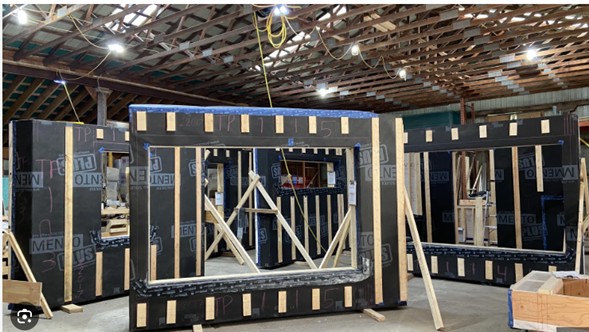
At the edge of the boreal forest in Kirkland Lake, Ontario, something new is taking shape. It looks at first like just another prefabrication facility, but it carries a purpose and a vision that go beyond most factory launches. What’s being built here is not a conventional modular plant at all, but a panelized factory—an important distinction that speaks volumes about both the construction method and the communities it is meant to serve.
The $20-million facility, scheduled to open in 2026, will produce prefabricated panels—walls, floors, and roofs—that can be transported across the North and assembled into homes and community buildings. While modular factories typically build entire volumetric units complete with finishes, shipped intact on flatbeds, panelized plants create building blocks that are easier to move, more flexible in design, and better suited to the logistical challenges of remote communities. In Kirkland Lake, where winter roads and vast distances make shipping a constant obstacle, panelization offers both efficiency and adaptability.
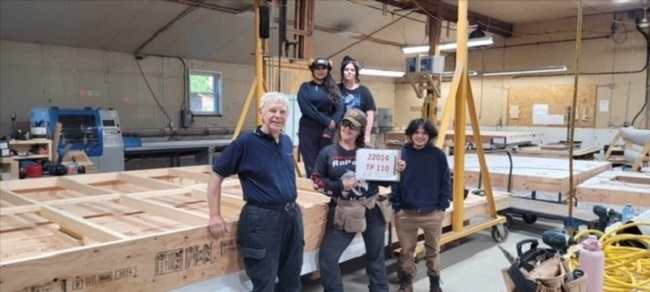
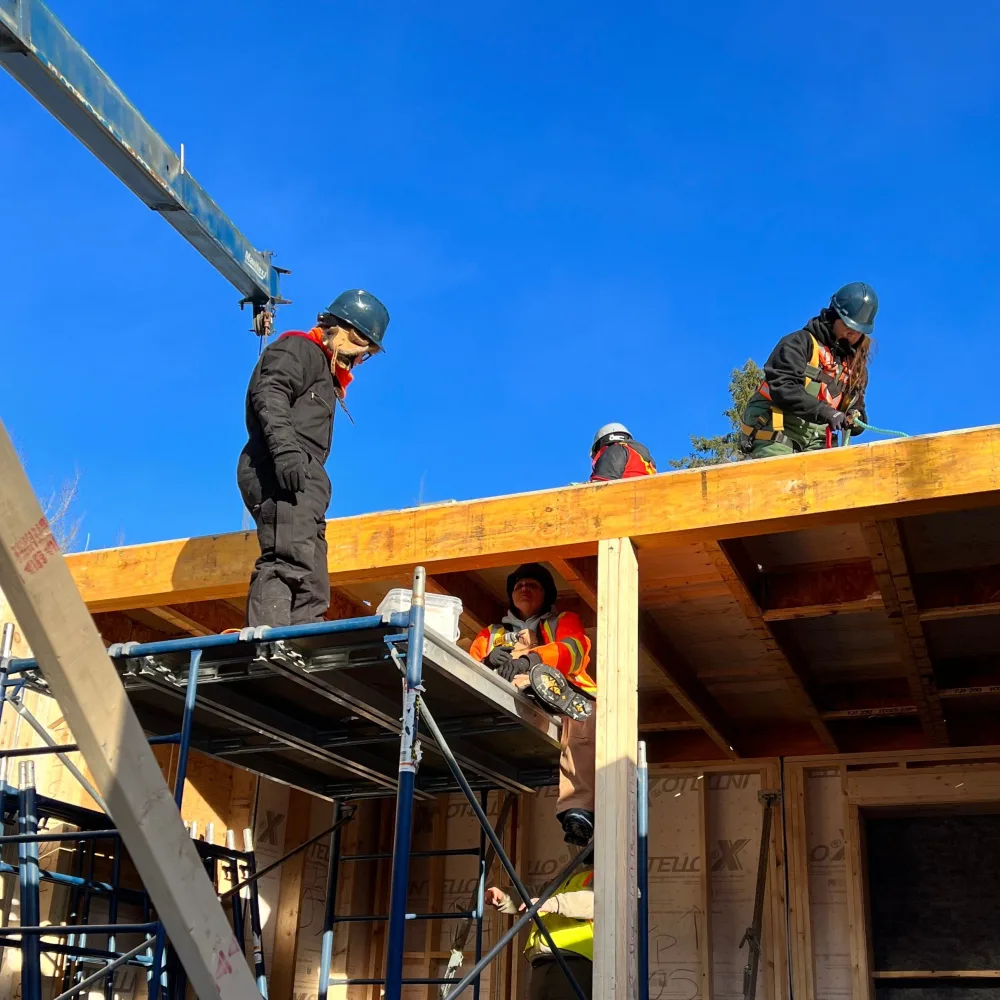
What sets this project apart is not just the technology, but the people behind it. The initiative is led by Keepers of the Circle, an Indigenous women’s organization in Northern Ontario. Their path to this factory began with a bold experiment in 2022, when six Indigenous women—none with previous construction experience—built a 480-square-foot passive, off-grid home in just three months. The success of that pilot sparked a vision of scaling the idea into a full enterprise, one that could train, employ, and empower women while supplying badly needed housing.
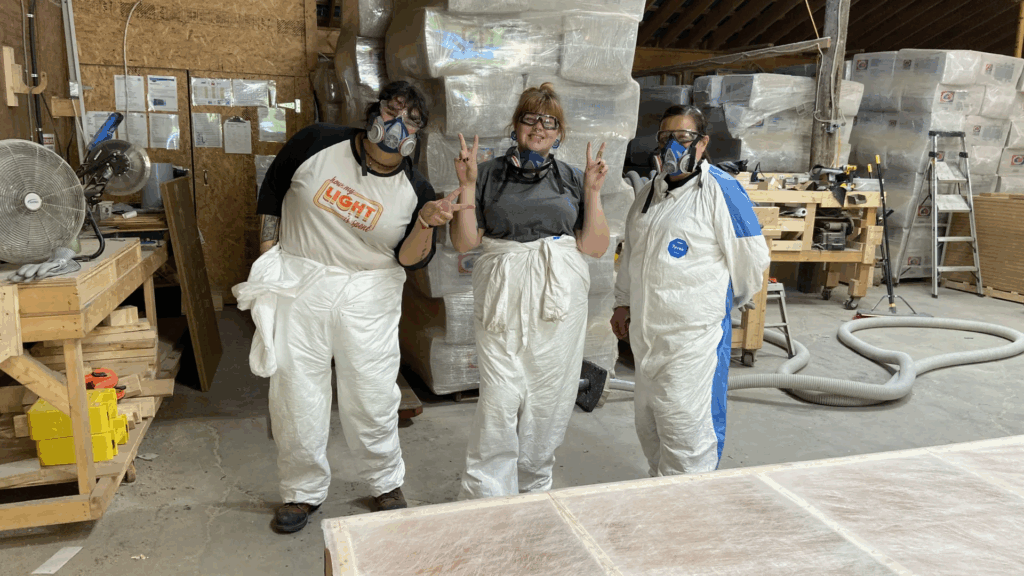
all photos – Keepers of the Circle
The new plant will cover 24,000 square feet, with an additional 10,000-square-foot administration wing. More than just a workplace, it will include a daycare, cultural space, and accommodations for trainees who cannot commute daily. Preference in hiring will go to Indigenous women, though it will remain open to others. As Bertha Cormier, Executive Director of Keepers of the Circle, has said, this is first and foremost an Indigenous women-led social enterprise, designed to give Indigenous women a strong foothold in an industry where they have long been absent.

Local and provincial leaders have recognized the significance of the project. The Town of Kirkland Lake sold the land for one dollar an acre, an unusually concrete gesture of reconciliation. Ontario’s Minister of Economic Development, Vic Fedeli, praised the factory as a locally made northern solution to housing challenges not just in the region, but potentially across the province. Funders have also stepped in. The McConnell Foundation, through its Reconciliation initiatives, contributed $400,000 to support the design of culturally appropriate, climate-resilient housing. That funding will help Indigenous women architects take the lead in shaping homes that reflect cultural traditions while meeting the demands of modern energy performance.
Once operational, the factory is expected to produce up to 100 homes a year while employing around 30 people per shift. In absolute numbers, that may seem modest. But in the North, where construction is constrained by seasonality, weather, and transport, an additional 100 homes a year can be transformative. These are not generic boxes rolling off an assembly line. They are homes designed for cold climates and northern living, assembled from panels that can be shipped over seasonal roads and built with local participation.
The factory is not only about housing supply—it is also about building capacity and confidence. The women who train and work there will acquire skills that ripple outward into their communities, strengthening local economies and reshaping career possibilities. A new generation will see construction not as something done by outsiders, but as something they can own, design, and control. In a region where housing shortages and limited opportunity have long been intertwined, this is no small change.
There is also a lesson here for the broader offsite industry. For years, most of the focus has been on large-scale modular factories aiming to achieve efficiencies through volume and repetition. This project suggests a different model: smaller in scale, more localized in ownership, and deliberately tied to cultural and social outcomes. It demonstrates that the future of offsite construction need not be defined solely by automation and investor backing, but also by community intent and social enterprise.
By the time the factory opens in mid-2026, it could mark the beginning of a new housing ecosystem in Northern Ontario. Unlike many prefabrication plants, which simply drop houses into communities, this one is embedded within the communities themselves. The homes it produces will not just be buildings; they will be cultural expressions, economic drivers, and symbols of self-determination.
For an industry often accused of being too focused on scale and speed, the Kirkland Lake factory is a reminder that impact comes in different forms. Sometimes it is measured not in cubic feet shipped, but in the confidence built when six women prove they can construct a house, or in the pride of a town that sells land for a dollar to back an idea worth far more. Panel by panel, this factory is assembling more than homes. It is building trust, skills, and a new model of what offsite construction can mean when it belongs to the people it serves.
.
With over 9,000 published articles on modular and offsite construction, Gary Fleisher remains one of the most trusted voices in the industry.
.

CLICK HERE to read the latest edition

Contact Gary Fleisher