




One of the least talked about—but most influential—forces shaping every project isn’t labor, materials, or even financing. It’s building codes. And whether you’re a factory owner, builder, or developer, how you navigate those codes can quietly determine your profit, your timeline, and your ability to innovate.
The Comfort—and Trap—of Prescriptive Codes
Most modular factories and builders still live in a prescriptive world. These are the codes that spell everything out in black and white. What size, what material, how thick, how installed. There’s comfort in that.
In a factory environment where consistency and repeatability are king, prescriptive codes feel like a natural fit. They reduce arguments with inspectors, streamline approvals, and give production teams a clear roadmap. For factories trying to keep lines moving and avoid costly delays, that certainty is hard to walk away from.
But here’s the problem I’ve seen over and over again. That same clarity becomes a ceiling. When a factory wants to introduce a new wall system, a better insulation package, or automation that changes how something is assembled, prescriptive codes don’t bend easily. They weren’t written for innovation—they were written for control.
And in today’s offsite world, control is starting to conflict with progress.
Performance-Based Codes: Freedom with a Price Tag
On the other side of the spectrum are performance-based codes. These don’t tell you how to build something—they tell you how it has to perform. Energy efficiency, structural integrity, fire resistance. The outcome matters more than the method.
For innovative modular factories, this sounds like freedom. And in many ways, it is.
Factories experimenting with robotics, new materials, or advanced building systems can use performance-based codes to bypass outdated methods and leap forward. It opens the door to smarter design, better energy performance, and potentially lower long-term costs.
But there’s a catch, and it’s a big one.
Proving performance isn’t simple. It requires engineering, testing, documentation, and often convincing an inspector or jurisdiction that your approach works. That adds time, cost, and uncertainty—three things most factories and developers try to eliminate rather than invite.
So while performance-based codes promise innovation, they also demand a level of expertise and patience that not every company is ready for.
Where Modular Factories Really Stand Today
Here’s the reality in today’s modular and offsite environment.
Most factories operate in a hybrid mindset, whether they realize it or not. They lean heavily on prescriptive codes for production efficiency but selectively push into performance-based approaches when they need a competitive edge.
The larger, better-capitalized factories—especially those investing in automation, AI-driven processes, or advanced materials—are the ones pushing hardest toward performance-based solutions. They have the resources to test, validate, and defend their methods.
Smaller factories, or those already struggling with margins, tend to stay safely within prescriptive boundaries. Not because they don’t want to innovate, but because the risk of stepping outside those lines can feel overwhelming.
And then there’s the third player in this story—the builder or developer.
Many of them don’t fully understand the difference. They assume a “code-compliant” modular unit is the same everywhere, not realizing that how that compliance is achieved can dramatically impact cost, performance, and long-term value.
That disconnect creates friction, change orders, and sometimes costly misunderstandings long before a module ever leaves the factory.
The Global Shift You Can’t Ignore
Around the world, performance-based codes are gaining ground. Countries like Australia, Canada, and the UK are already embracing them in key areas like energy efficiency and structural design.
The United States is moving more slowly, but the shift is happening. Green building initiatives, resilience standards, and sustainability goals are quietly pushing more jurisdictions toward performance-based thinking.
For the offsite industry, this isn’t just a regulatory change. It’s a strategic inflection point.
Factories that learn how to operate in both worlds—leveraging prescriptive efficiency while mastering performance-based innovation—will have a significant advantage. Those that don’t may find themselves stuck producing yesterday’s solutions in a market that’s demanding tomorrow’s performance.
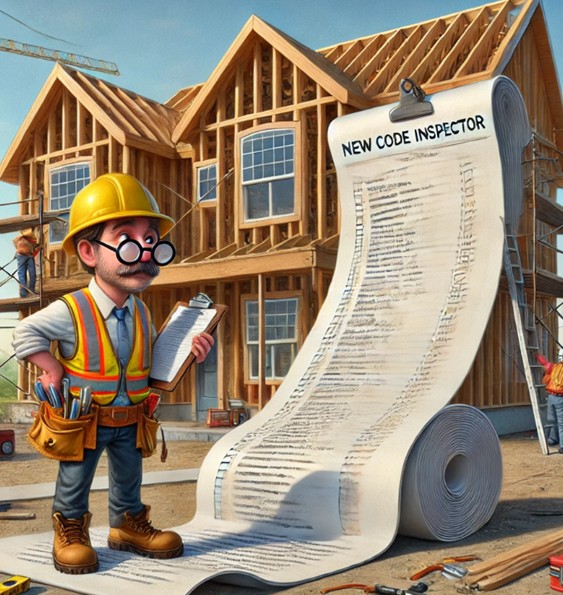
The Hidden Cost No One Talks About
What doesn’t get discussed enough is how these two code approaches impact profit.
Prescriptive codes can quietly inflate costs by forcing materials or methods that exceed what’s actually needed for a specific project. Performance-based codes, on the other hand, can increase upfront costs through engineering and approvals.
Either way, if a factory or builder doesn’t fully understand the trade-offs, they’re likely leaving money on the table—or worse, exposing themselves to risk they didn’t anticipate.
And in an industry where a 1% swing in profit can make or break a year, that’s not a small issue.
Modcoach Observation

Most factory owners and builders think they’re in the construction business. They’re not. They’re in the compliance business first—and the ones who truly understand how to work both sides of the code equation are the ones quietly outperforming everyone else.
If you’re still treating building codes as something to “follow” instead of something to strategically leverage, you’re already behind. The next wave of profitable modular factories won’t just build better modules—they’ll know exactly when to follow the rules and when to prove there’s a better way.
And if you’re not sure where your operation stands right now, that’s a conversation worth having sooner rather than later.