






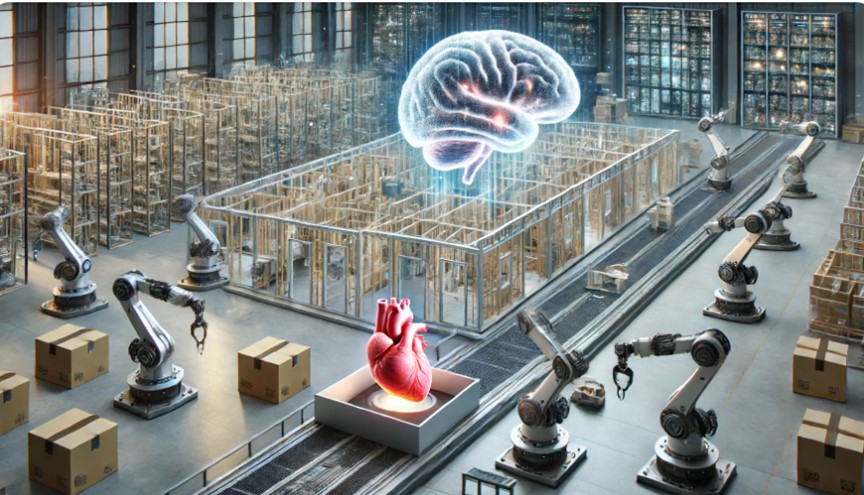
Here’s what I hear when I walk through a modular construction factory. The hum of machinery, the clang of tools, the chatter of workers create a symphony of productivity, and a radio(s) either playing rock or country. But beneath this surface lies a complex system, mirroring the intricacies of the human body. Just as each part of our body plays a crucial role in keeping us alive and functioning, every management position in a modular construction factory is essential to its success.

.
.
Are you ready to join me on a trip through the human/modular body? Hang on, It’s a wild ride!
The Brain: The General Manager
At the helm of this intricate operation is the General Manager, the brain of our factory body. The GM is the central control unit, responsible for overall coordination, decision-making, and strategic planning. Just as the brain processes information and sends out commands, the GM synthesizes data from all departments and makes crucial decisions that steer the factory towards its goals.

.
Without the brain, the body would be directionless; without the GM, the factory would be in chaos.
The Nervous System: The Operations Manager and IT Manager
The nervous system, with its network of nerves and communication pathways, is mirrored by the Operations Manager and the IT Manager. The Operations Manager ensures seamless communication and coordination between different parts of the factory, optimizing operational efficiency. Meanwhile, the IT Manager manages the digital infrastructure, ensuring that information flows smoothly and securely. Together, they keep the factory responsive and interconnected, much like how the nervous system keeps our body alert and coordinated.
The Muscles: The Production Manager
Moving deeper into the factory, we find the muscles—the Production Manager. This role is responsible for the actual production work, ensuring the factory operates smoothly and efficiently. Just as muscles power our movements and actions, the Production Manager drives the production processes, ensuring that every modular unit is built to perfection. Without strong muscles, our bodies would be weak; without an effective Production Manager, the factory’s output would falter.
The Bowels: The Chief Financial Officer
The Chief Financial Officer (CFO) is akin to the bowels of the human body, playing a vital yet often unseen role in ensuring the overall health and functionality of the organization. Just as the bowels are responsible for the crucial process of digestion and waste removal, the CFO manages the complex financial transactions and budgeting that sustain the company’s operations. This executive filters through financial data, extracting valuable nutrients in the form of insights and strategies, while efficiently disposing of fiscal waste through cost-cutting measures and risk management. In both systems, a disruption can lead to significant dysfunction, highlighting the essential nature of the CFO’s work in maintaining the financial health and stability of the company.
The Eyes: The Quality Control Manager
Vigilant and precise, the Quality Control Manager is the factory’s eyes. This role inspects and monitors the quality of the output, ensuring everything meets the required standards. Just as our eyes constantly scan our surroundings for potential issues, the Quality Control Manager scrutinizes every product, catching imperfections and ensuring excellence. Sharp vision is crucial for navigating the world; rigorous quality control is essential for maintaining a factory’s reputation.
The Skeleton: The Engineering Manager
Providing structure and support is the Engineering Manager, the skeleton of our factory body. This role oversees the design and engineering of modular units, ensuring stability and compliance with all necessary regulations.


.
Just as our skeleton gives us form and protects vital organs, the Engineering Manager ensures that every design is sound and every unit is built to last. Without a solid skeleton, our bodies would collapse; without robust engineering, the factory’s products would fail.
The Digestive System: The Supply Chain Manager
Feeding the factory’s needs is the Supply Chain Manager, akin to the digestive system. This role manages the intake and processing of materials, ensuring the factory has the necessary resources to function. Just as our digestive system breaks down food and distributes nutrients, the Supply Chain Manager ensures that materials are procured, stored, and delivered efficiently. A healthy digestive system keeps us nourished; a well-managed supply chain keeps the factory running smoothly.
The Heart: The Human Resources Manager
At the core of the factory’s human element is the Human Resources Manager, the heart. This role manages the workforce, focusing on employee welfare, recruitment, and development. Just as the heart pumps blood and sustains life, the HR Manager ensures that the workforce is motivated, well-trained, and supported.

.
A strong heart is vital for life; a robust HR department is crucial for maintaining a productive and happy workforce.
The Skin: The Health and Safety Manager
Protecting the factory’s wellbeing is the Health and Safety Manager, the skin. This role ensures a safe working environment, compliance with safety regulations, and conducts safety training. Just as our skin shields us from external harm, the Health and Safety Manager safeguards the workforce from hazards and ensures a safe working environment. Healthy skin protects our body; a diligent Health and Safety Manager protects the factory’s most valuable asset—its people.
The Liver: The Finance Manager
Filtering and managing the factory’s financial health is the Finance Manager, the liver. This role oversees budgets, financial planning, cost control, and financial reporting. Just as the liver detoxifies and processes what we consume, the Finance Manager ensures that the factory’s finances are in order, identifying potential financial issues and keeping the factory financially healthy. A functioning liver is essential for health; sound financial management is critical for a factory’s sustainability.
The Mouth: The Sales and Marketing Manager
Communicating with the world is the Sales and Marketing Manager, the mouth. This role promotes and sells the factory’s products, managing customer relationships and overseeing marketing initiatives. Just as the mouth enables us to speak and express ourselves, the Sales and Marketing Manager articulates the factory’s value, attracting customers and building the brand. Effective communication is key to personal relationships; impactful sales and marketing are vital for business success.
The Hands: The Project Manager
Executing and managing specific projects is the Project Manager, the hands. This role ensures projects are completed effectively and efficiently, much like how our hands allow us to perform tasks and interact with our environment. Skilled hands are essential for daily activities; a competent Project Manager is crucial for delivering successful projects on time and within budget.
The Creative Brain: The R&D Manager
Driving innovation is the R&D Manager, representing the creative areas of the brain. This role leads research and development efforts for new products, processes, and technologies. Just as our creative brain imagines and innovates, the R&D Manager drives the factory’s progress and adaptation to new trends. Creativity fuels human advancement; innovative R&D propels a factory’s growth and competitiveness.
Each of these roles is vital to the modular construction factory’s success, much like each part of the human body is essential for our survival and well-being. Together, they create a harmonious system that builds the future of construction, one modular unit at a time.
Investors: The Lifeblood of a Modular Construction Factory
In the intricate analogy of a modular construction factory as a human body, where do investors fit in? Investors, with their financial support and strategic influence, can be likened to the lifeblood that sustains and energizes the entire system. Just as blood delivers oxygen and nutrients to every part of our body, investors provide the capital and resources necessary for the factory to thrive and grow.

.
The Heartbeat of Innovation and Growth
Imagine the factory as a body constantly on the move, striving for improvement and expansion. Investors are the heartbeat, pumping vital capital into the factory’s veins, ensuring it has the resources to pursue innovation, expand operations, and adapt to market demands. This infusion of funds enables the factory to invest in cutting-edge technology, hire top talent, and explore new markets.
Sustaining Vital Functions
Just as blood sustains our organs and tissues, investors sustain the factory’s vital functions. Their financial backing allows for continuous operations, from procuring materials to paying salaries. Without this steady flow of capital, the factory would struggle to maintain its day-to-day activities, much like how our bodies would falter without a healthy circulatory system.
Enabling Strategic Decisions
Investors also play a strategic role, much like how blood flow is directed to different parts of the body based on need. They influence major decisions, such as entering new markets, launching new product lines, or implementing efficiency improvements. Their insights and expectations drive the factory’s strategic planning, ensuring that resources are allocated where they will have the most significant impact.
Facilitating Adaptation and Resilience
In times of crisis or market shifts, investors provide the financial resilience needed for the factory to adapt and survive. Just as our body adjusts blood flow in response to different stimuli, investors help the factory navigate challenges by providing emergency funding, restructuring debt, or supporting pivots in strategy. Their support ensures that the factory can withstand fluctuations and emerge stronger.
Enhancing the Factory’s Value
Investors are also instrumental in enhancing the factory’s overall value. Their involvement often brings credibility and attracts additional investment, much like how a well-functioning circulatory system supports overall health and vitality. By injecting capital and confidence, investors help the factory grow its market presence, increase its valuation, and achieve long-term success.
Bridging Connections
Just as blood carries essential nutrients and oxygen, investors bring in valuable connections and networks. These relationships can open doors to new opportunities, from strategic partnerships to market expansions. Investors’ networks can facilitate introductions to key industry players, potential clients, and additional funding sources, amplifying the factory’s reach and influence.
A Balanced Flow
It’s crucial to maintain a balanced flow, ensuring that the factory doesn’t become overly dependent on investor capital without achieving sustainable growth. Just as an imbalanced blood flow can cause health issues, mismanaged investments can lead to financial instability. A harmonious relationship between the factory and its investors ensures mutual growth and success.
Modcoach Note: The Lifeblood in Action
In my analogy of a modular construction factory as a human body, investors are the lifeblood, vital for sustaining and energizing every function. Their financial support, strategic influence, and network connections are essential for the factory’s innovation, growth, and resilience. Just as blood nourishes and revitalizes our bodies, investors empower the factory to build a sustainable and prosperous future, one modular unit at a time.
.

CLICK HERE to read the latest edition

Contact Gary Fleisher