





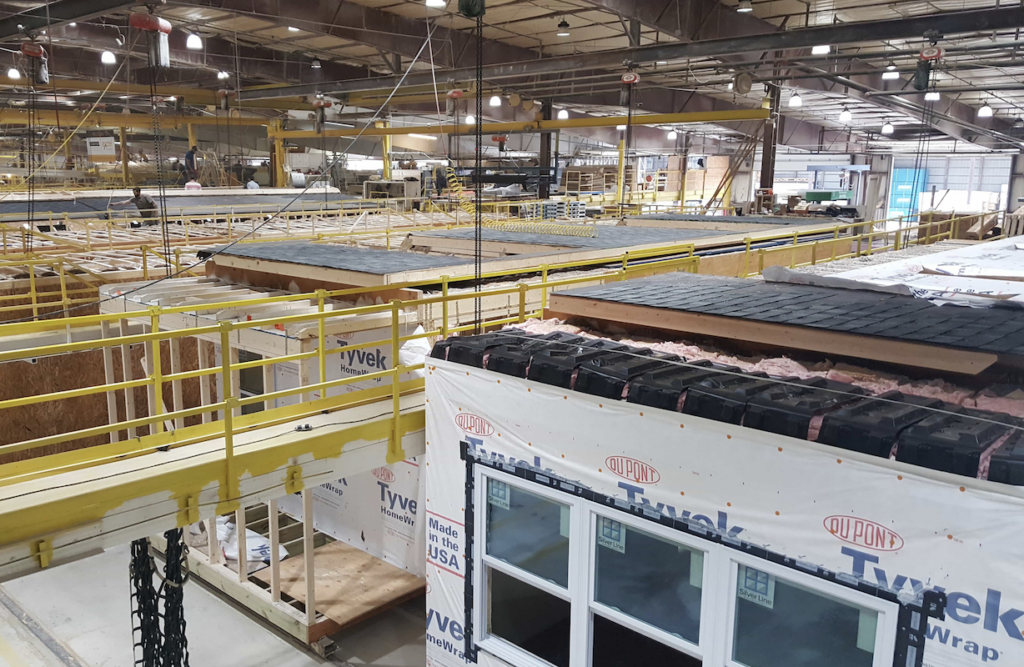
The difference often comes down to what management does every day—and what it allows to happen again tomorrow.
I sometimes wonder why two manufacturers can buy similar equipment, hire from the same labor market, and serve many of the same customers, yet have such different results. One seems to move forward with a reasonable amount of control. The other seems to spend every afternoon trying to recover from something that went wrong that morning.
Financing, product mix, experience, and market conditions certainly differ. No management philosophy can make those disappear. But when I think about what gives a factory a better chance of succeeding, I keep coming back to a few basic habits. Most owners already understand them. The difficulty is making them part of the operation when orders are piling up, someone calls off, and a builder wants a delivery date moved again.
For those of us in offsite construction, that is where the conversation needs to get practical. We can talk about automation, expansion, and the next generation of manufacturing all day long, but the underlying business still needs to work. Here are five habits I believe belong in every factory’s daily routine.
1. They Want to Hear About Problems While There Is Still Time to Fix Them
If I were evaluating a factory, one of my first questions would be whether employees feel comfortable telling management something is wrong. That sounds simple enough until you consider what can happen to the person who points out a mistake. Does the supervisor investigate, or does the employee get a lecture about slowing down production?
Imagine a worker noticing that a window opening does not match the drawing. There is still time to stop, check the information, and correct it before the wall moves farther through production. But if that worker has learned that questions bring criticism, the temptation is to keep moving. Now a problem that could have been corrected at one station travels through several more, accumulating labor and materials along the way.

I want employees to understand that raising a concern is part of doing their job well. That does not mean every concern turns out to be a defect or every suggestion gets adopted. It means someone listens, checks the facts, and explains what happens next. A suggestion box is of little value if everyone knows that nothing ever comes out of it.
Management also needs to close the loop. When someone identifies a recurring problem, assign responsibility for investigating it and a date for reviewing the answer. Otherwise, the factory teaches people that speaking up creates another discussion while the same problem waits for them tomorrow morning.
2. They Make Good Work Repeatable
Every factory values the experienced employee who knows how to make something fit, correct a difficult detail, or keep production moving. That knowledge is worth a great deal. I worry, however, when the business depends on keeping it all in one person’s head.

What happens when that employee takes a vacation, moves to another company, or retires? If the answer is that production will struggle until someone else figures it out, the factory has a weakness it needs to address. Critical work should have clear instructions, current drawings, appropriate training, and checks at the points where mistakes can still be corrected economically.
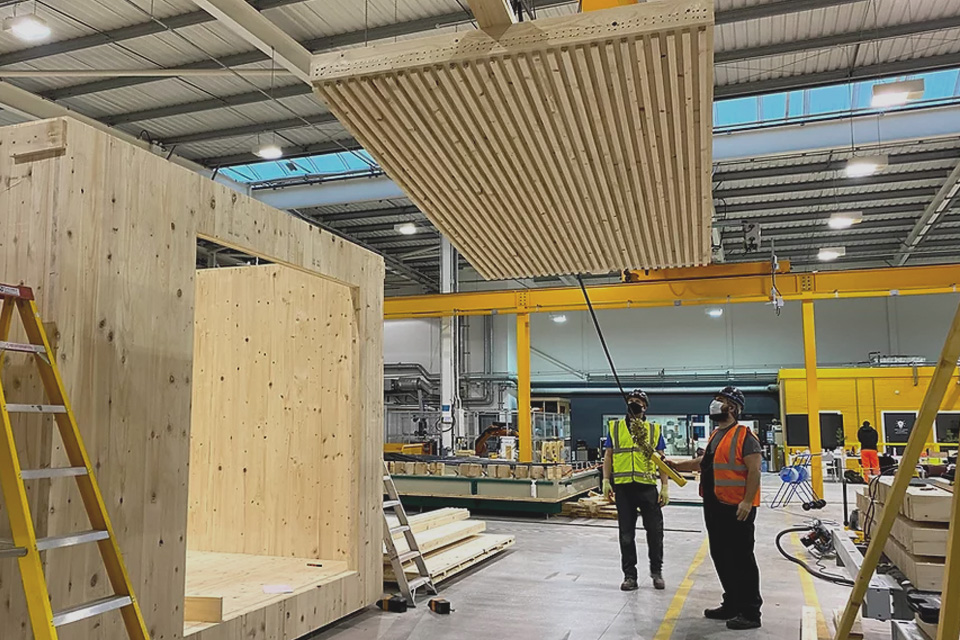
In an offsite factory, this might mean establishing how a wall assembly is checked before it is covered, how a plumbing connection is verified, or how a design change reaches everyone affected. Telling people to “build it the way we always do” leaves too much room for interpretation, particularly when the people doing the work have different levels of experience.
The best reason to establish a standard is to give everyone a dependable starting point. When an employee finds a better method, management can evaluate it, confirm that it meets the requirements, and teach it to the rest of the team. That is how individual knowledge becomes a company asset. Good procedures should improve as the factory learns.
3. They Pay Attention to the Entire Journey of the Product
One of the easiest ways to misunderstand a factory is to judge it by how busy everybody looks. Materials arrive, walls are assembled, and modules roll out the door. From a distance, it looks like progress. Then someone asks why deliveries are behind, and so much money is tied up in the yard.
I believe manufacturers need to follow the product through its delivery commitments. In offsite construction, that requires coordination among sales, engineering, purchasing, production, transportation, and the people responsible for site readiness. A production schedule built without reliable information from those groups can create impressive output and a very expensive waiting area.
Consider a factory that accelerates work on a project because the production line has an opening. If the site cannot accept delivery for several weeks, those modules may occupy carriers, require additional handling, and restrict space needed for the next project. Whether that decision makes sense depends on the full situation, including contractual payments and available capacity. It should be a deliberate business decision, with the consequences understood beforehand.
A useful management meeting asks what is preventing the next promised delivery and who can remove that obstacle. Sometimes the answer is on the production floor. Sometimes it is an unanswered engineering question, an unavailable component, or a foundation that will not be ready. The factory gets stronger when it manages those issues together.
4. They Know Which Work Actually Earns Money
A full order book is encouraging, but I would want to know what is inside it before celebrating. Are those orders priced to cover the work being promised? Do the production assumptions hold up? Has someone accounted for the engineering time, special purchasing, change orders, and delivery requirements?
Customization is a good example. A buyer asks for a change that appears relatively minor, and sales wants to accommodate it. The material difference may be easy to calculate. The additional drawing time, disruption to a familiar assembly process, and risk of a purchasing error may receive much less attention. A factory can keep saying yes while gradually giving away the margin it expected to earn.
The discipline is to compare estimated costs with actual results and use the differences to improve the next decision. If a certain type of project repeatedly requires overtime or generates service calls, management should understand why. Perhaps the price needs adjustment, the design needs simplification, or the production method needs improvement. Without that review, the company can become very good at selling work that disappoints it financially.
Cash deserves its own attention, too. A job can show an expected profit while creating pressure because suppliers and employees must be paid well before customer payments arrive. Owners need visibility into both earnings and cash timing. Being busy does not settle a supplier’s invoice.
5. They Make Accountability Apply to Management
Accountability is a popular word in manufacturing, especially when discussing the production floor. Employees are expected to arrive on time, follow instructions, meet quality requirements, and complete their work. Those are reasonable expectations. I believe the same level of clarity should apply to the people making decisions upstairs.
If production is expected to meet a schedule, management needs to provide usable information, materials, and timely decisions. When priorities change, someone should explain what changes. Moving one customer’s order ahead usually affects another commitment, and pretending otherwise leaves supervisors trying to satisfy promises that no longer fit together.
A short daily meeting can help, as long as it ends with decisions. What is the issue? Who owns the next action? When will it be completed? What assistance is needed? At the next meeting, follow up. Repeatedly carrying the same unresolved item forward should trigger a closer look at why it remains unresolved.
I also think owners should pay attention to how often the same employees are called upon to rescue the operation. Their effort deserves appreciation, but recurring emergencies deserve investigation. If a capable supervisor spends every afternoon correcting avoidable problems, imagine what that person could accomplish with time to train employees, improve a process, or prepare for the next project.
Gary’s Observation

None of these five habits requires a factory owner to wait for a new building, a major equipment purchase, or a stronger housing market. They require attention, consistency, and a willingness to examine how management’s own decisions affect the operation. That makes them accessible, although certainly not effortless.
If I were sitting with an owner tomorrow morning, I would suggest choosing one recurring problem and following it carefully. Find out where it begins, why it keeps returning, who has the information needed to correct it, and what must change to keep it from coming back. Assign responsibility, provide support, and review the results. A factory can learn a great deal from solving one familiar problem properly.
Difficult customers, delayed materials, employee absences, and surprises on the jobsite will always happen. My measure of a well-run manufacturer is whether it becomes more capable of handling those challenges without putting the whole operation into crisis. The goal is a business that can deliver dependable work, protect its earnings, and give its people a reasonable chance to succeed every day. That is worth building as carefully as any home coming down the line.