
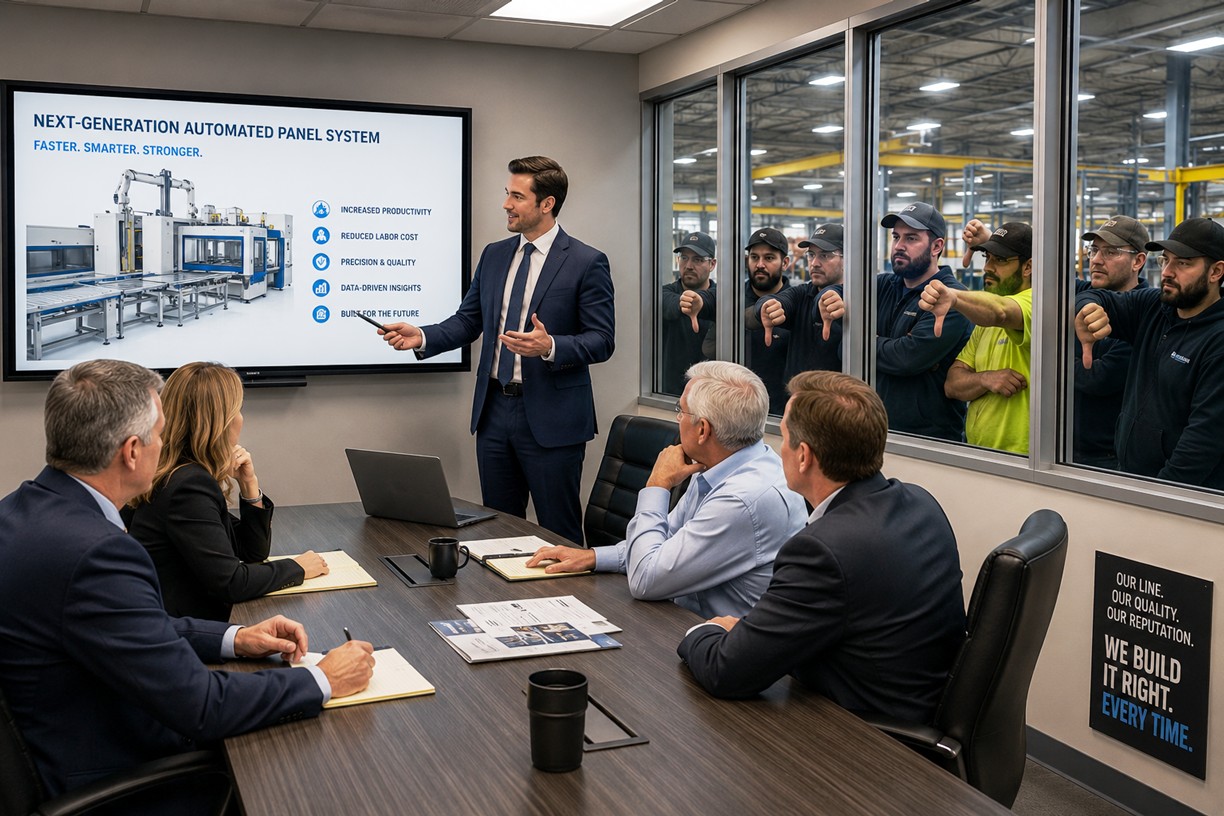
More production can expose weaknesses instead of creating strength.
A modular construction company that has achieved consistent profitability has already accomplished something many factories never do. It has found customers, established dependable production processes, controlled enough of its costs, and survived the inevitable problems that come with building homes inside a factory.
Then someone asks the question that changes everything: What comes next?
The usual answer is growth. Add another production line. Enter a new territory. Acquire another factory. Buy a transportation company. Bring more site work under direct control. Each idea may sound like the logical next step for a successful company, but growth can become dangerous when owners begin confusing a larger operation with a stronger one.
I have watched companies grow carefully and become regional leaders. I have also watched companies increase sales, hire more people, purchase equipment, and expand their facilities only to discover that they had multiplied every weakness already hiding inside the business.
Scaling does not cure operational problems. It gives them more room to spread.
First, Determine What Is Actually Working
Before a modular company expands, its owners should understand why the existing operation is profitable. Is the company succeeding because of strong production management, a loyal builder network, disciplined purchasing, a specialized product, or simply an unusually favorable market?
Those are very different foundations for growth.
A company with repeatable systems may be ready to scale. A company being held together by three experienced employees, constant intervention from the owner, and a handful of unusually patient customers probably is not. If key information lives in people’s heads instead of documented processes, expansion could place the entire operation at risk.
Owners should also determine whether the factory is truly operating at capacity. I have visited plants that believed they needed more floor space when their real problems were poor scheduling, material shortages, engineering delays, weak supervision, or workstations that were never properly balanced.
Adding square footage to an inefficient process creates a larger inefficient process.
The safest growth usually begins by improving what the company already does well. That may mean increasing throughput, reducing rework, strengthening the builder network, expanding a successful product line, or entering a nearby market that can be served without disrupting the factory’s core operation.
Doing more of what already works may not create the most exciting announcement, but it is often the most responsible place to begin.
Expanding the Core Business
A profitable modular manufacturer may decide to grow within its existing business model. This could include entering an adjacent territory, developing products for multifamily or workforce housing, introducing higher-performance homes, or adding capacity to serve an existing backlog.
This approach appears less risky because the company remains close to what it knows. However, even familiar growth places new demands on engineering, purchasing, production, transportation, sales, service, and cash flow.
Entering another state may require different plan approvals, code interpretations, transportation permits, foundation requirements, and builder relationships. Moving from custom homes into multifamily projects can change payment schedules, production sequencing, contract exposure, and the amount of working capital needed before the company is paid.
Management must look beyond projected revenue and ask whether every department can support the additional work. Sales may be able to fill the backlog long before engineering and production can deliver it.
That is when growth begins damaging customer relationships instead of strengthening the company.
Buying Growth Through Horizontal Expansion
Another path is horizontal integration: acquiring a competitor, purchasing a factory in another region, or combining with a company serving a different part of the modular market.
On paper, this can look like a shortcut to greater market share. The acquiring company gains customers, employees, facilities, dealer relationships, and possibly a recognized regional brand. It may also gain outdated equipment, poor contracts, hidden warranty problems, weak management, and a workplace culture that resists change.
Buying a factory is easier than integrating one.
Owners must understand why the other company is available. Was it poorly managed, undercapitalized, unable to generate enough sales, or simply caught in a difficult market? If the buyer cannot identify the real problem, it may inherit the same failure with a new name on the building.
Culture deserves special attention. Two companies may manufacture similar products while operating in completely different ways. One factory may rely on detailed procedures and accountability, while the other survives through improvisation and the daily heroics of a few longtime employees.
Those differences will not disappear when the acquisition paperwork is signed.
Horizontal growth can be successful, but only when the buyer has the management depth, financial strength, and patience to integrate the operation without weakening the original company. If the existing factory still depends on the owner to solve every important problem, adding another location may simply give that owner two factories to rescue.
Taking Control Through Vertical Integration
Vertical integration allows a modular company to control more of what happens before and after production. A manufacturer might acquire a transportation company, create its own set crews, purchase a component operation, establish an internal design department, or take greater responsibility for site completion.
The attraction is easy to understand. Factory owners become frustrated when outside suppliers, transporters, builders, or site contractors delay projects and damage the customer’s perception of the modular process. Taking control appears to offer better scheduling, quality, accountability, and margins.
Sometimes it does.
However, every business added to the organization introduces new risks. Running trucks is not the same as building modules. Managing set crews is not the same as managing a production line. Performing site work introduces weather, labor availability, local subcontractors, permitting problems, and conditions the factory cannot control.
Vertical integration should solve a clearly identified problem. It should not begin simply because an owner is tired of dealing with a supplier or believes every outside margin belongs inside the factory.
The company must decide whether it can perform the work better, not merely whether it can own the company performing it. If the answer is uncertain, a stronger partnership or carefully written agreement may provide many of the same benefits without requiring another acquisition.
Cash Flow Must Lead the Conversation
Growth discussions often begin with sales forecasts and projected profits. They should begin with cash.
A modular factory can be profitable on paper and still run out of money. Expanding production requires materials, labor, equipment, engineering, insurance, training, and additional management long before the final payment arrives. Large projects can make this problem worse because more cash becomes tied up in work in progress.
Owners should model what happens if a project is delayed, a developer misses a payment, a new market develops more slowly than expected, or production fails to reach its planned output. Growth plans usually look convincing when every assumption goes right. A responsible plan must also show what happens when several assumptions go wrong at the same time.
A full backlog is not the same as available cash, and projected profit cannot make payroll.
Before expanding, owners should know how much working capital the plan will consume, when the operation is expected to generate positive cash flow, and how long the company can survive if that schedule slips. If those answers are vague, the growth plan is not ready.
Management Capacity Is Often the Real Limitation
Factories tend to focus on physical capacity: square footage, production stations, equipment, and modules per week. Management capacity is harder to measure, but it often becomes the real obstacle.
Who will lead the expansion? Who will manage the current operation while senior leadership focuses on the new one? Is there a second-in-command capable of making decisions without waiting for the owner? Are the department managers prepared to train more employees, enforce standards, and handle a faster production pace?
If a factory’s best people are already working at their limits, growth will not create more leadership. It will dilute the leadership the company has.
Before buying another factory or entering a major new market, the owner should be able to step away from the existing operation without production immediately losing direction. If that cannot happen, the company may be successful, but it is not yet scalable.
Choose the Problem Before Choosing the Strategy
There is no single correct growth path for every modular company. Some should expand their core operations. Others may benefit from acquiring a competitor or controlling more of the supply chain. A few should remain at their present size and improve margins, quality, and customer service instead of chasing additional volume.
The decision should begin with the problem the company is trying to solve.
If the problem is insufficient production capacity, improve the current process before constructing another building. If the problem is geographic reach, consider whether a sales presence or strategic partnership could test the market before buying a factory. If the problem is unreliable transportation, determine whether stronger contracts, dedicated carriers, or ownership provides the best answer.
Growth should be the result of disciplined analysis, not an emotional response to a large backlog, a competitor’s expansion, or an investor’s expectations.
The modular industry has seen enough factories built around optimistic projections and ambitious announcements. Sustainable growth is usually quieter. It begins with reliable systems, adequate cash, capable managers, proven demand, and an honest understanding of what the company can execute.
Gary’s Observation

I have never believed a modular company should grow simply because it has reached the point where growth appears possible. The better question is whether the operation can become larger without losing the discipline, quality, cash control, and customer confidence that made it successful in the first place.
Growth may increase revenue and attract attention, but if it also weakens the foundation of the company, was it really success?