
By Gary Fleisher
When one established modular company acquires another, the announcement usually emphasizes growth, capacity, and new opportunities. Those things deserve attention, but I have learned to look beyond the combined square footage. An acquisition may be completed with signatures and financing, but combining two manufacturing businesses successfully requires much more than changing the name on the building.
On September 8, MODUS Structures announced that it had completed its acquisition of ROC Modular. The transaction brings together two established Alberta modular companies, creating a combined organization with more than 460 employees and approximately 260,000 square feet of certified manufacturing space across three facilities in Crossfield and Bow Island.
ROC Modular
The combined company will operate under the MODUS Structures name. Crossfield will remain its headquarters and a major manufacturing center, while ROC’s Bow Island operation will continue as part of the production network. The purchase price and financing terms were not disclosed. MODUS and ROC acquisition announcement
On paper, the combination is impressive. What interests me more is whether MODUS can turn three factories into one coordinated production system.
Two Established Companies Bring Different Strengths
MODUS was established in 2004 and has more than two decades of experience delivering offsite buildings for housing, education, continuing care, institutional, commercial and industrial customers. Before the acquisition, the company reported operating two manufacturing facilities totaling approximately 200,000 square feet.
ROC adds another 60,000-square-foot certified facility in Bow Island, along with experience in permanent modular construction, affordable and social housing, Indigenous projects, multifamily buildings, hospitality, staff housing, schools, workforce accommodations, emergency-response facilities, wellsite buildings and industrial applications.
That range of markets could help the combined company balance demand. Housing may slow while education or government work strengthens. Energy-sector demand may rise while hospitality activity weakens. A broader customer base can reduce dependence on one type of project, provided management does not stretch the organization across more markets than it can serve effectively.
The acquisition also gives MODUS more choices about where projects are manufactured. In theory, work can be allocated according to plant capacity, labor availability, shipping distance, equipment, and production expertise.
In practice, balancing production across several factories is much harder than moving colored blocks around on a planning spreadsheet.
Three Factories Need One Operating Language
The first major challenge will be determining how similarly the three plants operate.
Do they estimate projects using the same assumptions? Do their engineering departments follow compatible drawing and approval processes? Are bills of materials structured consistently? Do production managers measure labor hours, rework, throughput, and completion in the same way?
Even familiar terms can mean different things in different factories. One plant may consider a module completed when it leaves the production line. Another may not consider it complete until inspection, protection, and shipping preparation are finished. One facility may schedule by project, another by module, and another by production station.
If management cannot compare performance accurately, it cannot confidently decide which factory should manufacture which project.
The goal should not necessarily be to make every plant identical. Different equipment, employees and product types may require different production methods. However, the company needs enough common information to understand capacity, costs, quality and delivery risk across the entire network.
Three factories using three unrelated systems are not automatically an integrated company. They may simply be three businesses reporting to the same ownership group.
Capacity Is Valuable Only When the Backlog Is Ready
The announcement describes the ability to balance production across a larger manufacturing footprint. That could become one of the acquisition’s greatest advantages, but only when the company has enough production-ready work.
I continue to distinguish between a sales pipeline and a factory backlog. A proposal awaiting funding is not backlog. A project still being redesigned for modular construction is not ready for production. A signed contract with unresolved permits, incomplete engineering or an unprepared site can still become a scheduling problem.
A multi-plant company may be able to shift work when one facility becomes overloaded, but moving a project is not always simple. Provincial approvals, certifications, transportation distances, supplier relationships, and customer expectations may be tied to a particular factory. Drawings and material specifications may also reflect that plant’s established production methods.
Additional capacity creates opportunity. It also creates overhead that must be supported whether the factories are full or not.
That makes backlog quality more important than the headline number of projects under discussion.
Integration Cannot Stop at the Factory Door
MODUS and ROC both serve markets in which manufacturing is only one part of the project. Modules still have to be transported, staged, installed and connected to site-built work. A factory may meet its production target while the overall project loses time and money somewhere between the plant and final completion.
Combining design, engineering and manufacturing capacity will be valuable if the company also strengthens coordination with developers, general contractors, transportation companies, crane operators, set crews and site supervisors.
Otherwise, increased factory output can produce more finished modules waiting for jobsites that are not ready.
This acquisition could give MODUS greater control over the entire delivery process, especially if it transfers lessons from one operation across others. ROC’s experience with remote, Indigenous and workforce projects may contribute knowledge about logistics and difficult site conditions. MODUS may bring broader institutional relationships and established systems for education, continuing care, and government projects.
The opportunity is not simply to manufacture more boxes. It is to combine knowledge that improves the predictability of the completed project.
Employees Will Decide Whether the Combination Works
The announcement rightly emphasizes the combined workforce of more than 460 people. That number represents far more than production labor. It includes estimators, engineers, purchasing staff, quality-control personnel, supervisors, project managers, and employees who understand how work actually moves through each facility.
Acquisitions often create uncertainty among those employees. They begin wondering whose procedures will survive, which managers will remain, whether jobs will move between plants, and whether years of accumulated knowledge will be valued.
Management will need to identify the strongest practices in both organizations rather than automatically assuming the acquiring company already has the best answer. Some of ROC’s processes may be worth adopting across MODUS. Some MODUS systems may help Bow Island improve. Others may need to be redesigned entirely.
The people working inside the factories usually know where schedules fail, information gets lost, and rework begins. Listening to them early may be one of the least expensive and most productive parts of the integration.
A Significant Canadian Modular Company Is Emerging
This acquisition creates a substantial Canadian modular organization with enough manufacturing space, workforce, and market diversity to pursue larger and more complex projects. It also suggests that consolidation may become a more important growth strategy as the modular industry matures.
Building another factory is expensive and slow. Acquiring an operating company can provide capacity, certifications, experienced employees, equipment, and customers immediately. It can also bring hidden liabilities, incompatible systems, uneven backlog, and cultural problems.
The success of this transaction will not be determined by the announcement. It will be determined by what happens over the next several years: whether the plants remain productive, employees stay, customers receive dependable delivery, and the combined company earns acceptable margins.
Gary’s Observation
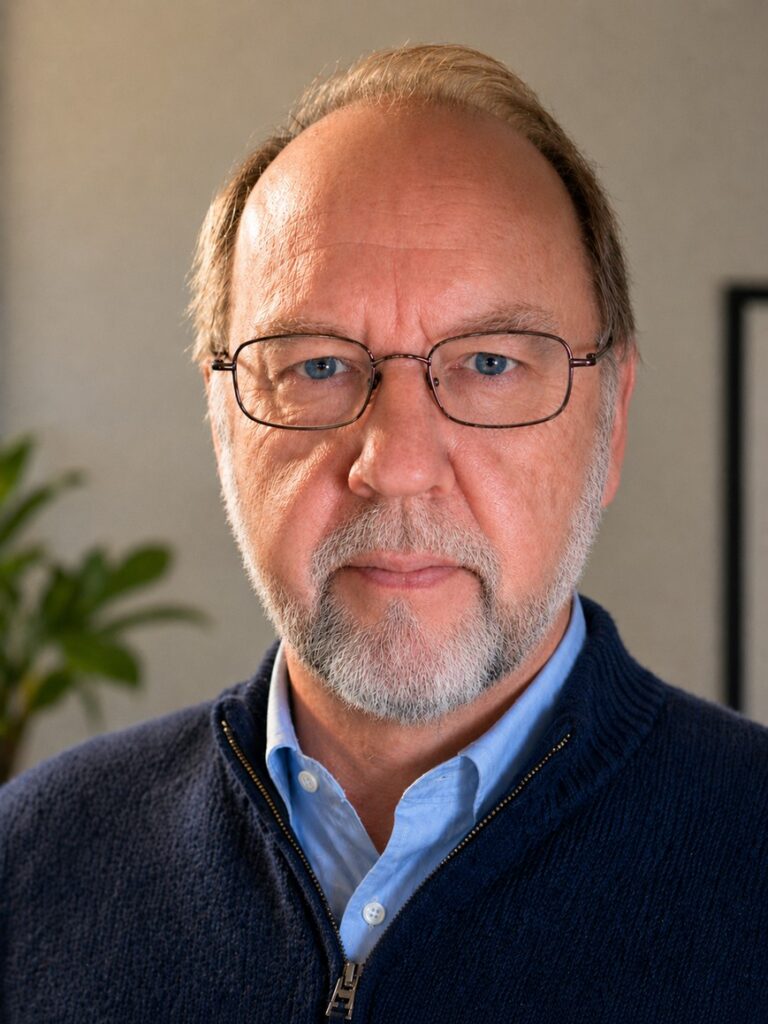
I believe the MODUS acquisition of ROC Modular has the ingredients to create a stronger modular company. It brings together experienced people, complementary markets and three operating factories rather than a collection of plans and promises.
But acquisitions do not create integration on their own. The real test will be whether MODUS can establish one reliable flow of information from estimating and engineering through purchasing, production, transportation and installation while preserving the knowledge already present inside each facility.
MODUS has acquired ROC’s factory capacity. Now it must earn the operational benefits that capacity is supposed to provide.