





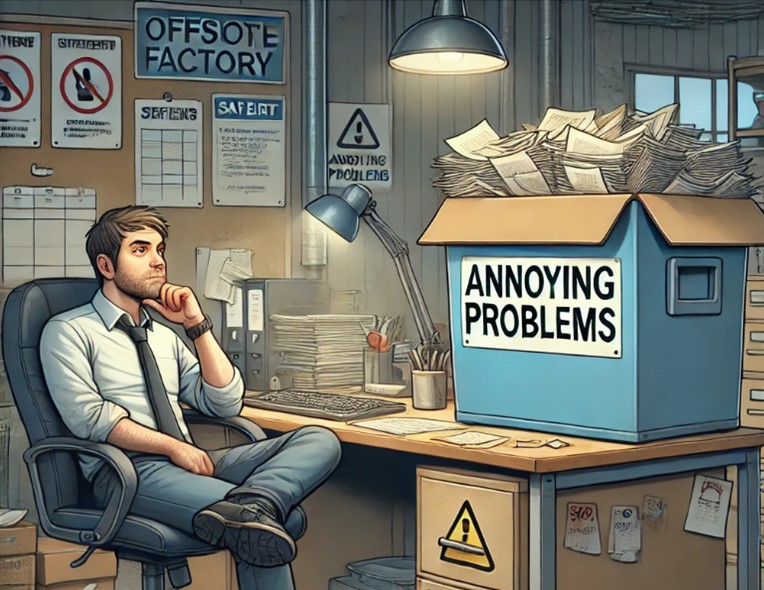
In offsite construction, factory owners and managers often face small, repetitive issues that they come to ignore over time. Like how I’ve tuned out my wife’s repeated requests to wind the mantle clock (sorry, dear!), offsite factories also develop “selective hearing.” They become accustomed to certain problems, filing them away as nuisances rather than actionable issues.

I want to share ten often-overlooked problems and suggest practical, light-hearted solutions to make life easier and more efficient for everyone.
1. Inter-Manager Disputes
Problem: Minor disagreements between managers can escalate quickly and disrupt team harmony. Whether it’s about resource allocation or scheduling, these spats can lead to inefficiencies and confusion on the factory floor.
Solution: Create a regular “open forum” meeting where managers can openly discuss issues without stepping on toes. Introduce a “coffee and consensus” session where they work out disagreements over coffee—sometimes, a casual setting can ease tensions.
2. Slow Supply Chain Responses
Problem: Waiting for materials is a daily headache. Orders are delayed, but no one takes ownership of follow-up, leading to halted production and frustrated team members.
Solution: Designate a “Supply Sleuth”—someone solely responsible for tracking supply orders and maintaining communication with vendors. Give them a creative badge or title to add a bit of humor, like “Supply Detective.” This small role can go a long way in keeping projects on track.

3. Increased Service Calls for Fixes
Problem: Production errors resulting in frequent service calls indicate there’s a hidden issue. But, these calls are often treated as one-offs and left unaddressed, causing repetitive fixes and resource waste.
Solution: Implement a monthly review meeting to analyze service calls and determine if there are patterns. Create a “Root Cause Task Force” to find long-term solutions rather than temporary patches. It’s about addressing the root, not the symptoms.
4. Rude or Dismissive Management
Problem: Managers who brush off employee concerns, even unintentionally, foster resentment. This rudeness, often a result of stress, goes unchecked and creates a toxic work environment.
Solution: Create an anonymous feedback system that allows employees to rate their interactions with management. Use a rating of 1 to 5 “ears” (to tie into our selective hearing theme). Once feedback is collected, conduct training sessions on effective, respectful communication.
5. Slow Response Time for Quotes
Problem: Quote requests pile up, and delays lead to lost business. The response time for quotes is often left to the end of the day, putting potential clients on the back burner.
Solution: Establish a “Quote Quick Team” dedicated to responding to inquiries within a set timeframe. Equip them with a set of pre-approved templates for different scenarios, so they’re not starting from scratch each time.

6. Employee Grumbles from the Production Line
Problem: Grumbles about mundane aspects, like temperature or break times, are often ignored. While these may seem minor, they affect morale, which in turn impacts productivity.
Solution: Organize a monthly “Grumble Hour” where employees can voice concerns and suggestions. Implementing even one or two simple fixes (like a fan or extra water cooler) shows you’re listening, and employees will appreciate the effort.
7. Lingering Safety Concerns
Problem: Safety procedures that are often brushed off as “good enough” can lead to bigger issues down the line. Managers sometimes assume employees know better, but unchecked hazards can lead to accidents.
Solution: Create a rotating “Safety Champion” role. Every month, a different employee is responsible for identifying any safety oversights and working with management to implement changes. It keeps safety fresh and spreads responsibility throughout the team.
8. Complaints About Outdated Equipment
Problem: Equipment breakdowns are seen as routine, so staff just get used to dealing with them instead of requesting upgrades or repairs.
Solution: Start a “Petition for Improvement” process where employees can document the impact of outdated equipment on productivity. This makes a clear case for upgrades and can help justify the budget to upper management.
9. Overlooked Celebrations for Small Wins
Problem: Employee milestones or small project achievements are often missed because everyone’s so focused on moving to the next task. This lack of recognition contributes to low morale.
Solution: Institute a “High-Five Friday” ritual where each Friday, team members give shout-outs to one another for specific achievements that week. A little celebration can go a long way in making everyone feel valued and motivated.
10. Frequent Late Start of Meetings
Problem: Meetings that routinely start late waste time and signal that punctuality isn’t important. This sets a bad example for other areas of factory operations.
Solution: Introduce a “Timeliness Token” system. If meetings start on time all week, the team gets a small reward, like donuts or coffee on Friday. It’s a fun way to reinforce punctuality and show that every minute matters.
Modcoach Note
Selective hearing may make life easier in the short term, but over time, it chips away at productivity, morale, and ultimately, the bottom line. Embracing solutions that address these seemingly small issues can yield big rewards. Remember, it’s the small, often-ignored problems that add up, just like that clock on my mantle that I’ve been tuning out. So, let’s start paying attention to the little things—because in a well-run offsite factory, there’s no room for selective hearing.
.

CLICK HERE to read the latest edition

Contact Gary Fleisher