


Sixteen Steps Between a Dream and Reality
Every year, I talk with developers, investors, entrepreneurs, and even retired executives who have decided that opening a modular factory looks like a great business opportunity.
On paper, it often does. The country needs housing; offsite construction promises greater efficiency; skilled labor remains difficult to find; and government officials at every level continue to talk about affordable housing solutions. It is easy to conclude that building a factory should be a winning proposition. Unfortunately, that is where many factory startups begin making mistakes.
Opening a modular factory is not like opening a retail store, launching a software company, or buying a franchise. It is one of the most complex manufacturing businesses you can enter. The number of moving parts, regulations, capital requirements, and operational challenges surprises almost everyone who enters the industry for the first time. Over the years, I have watched factories succeed, struggle, and fail. The difference is rarely the building itself. More often than not, success or failure is determined by the planning that took place long before the first piece of equipment was installed.
Start With the Market, Not the Building
Many new factory owners become obsessed with finding a building, purchasing equipment, or creating a production line. While those things matter, none of them matter if there is not enough demand to keep the factory busy. Before signing a lease or purchasing land, determine exactly who your customers will be, what products you will build, and how many units the market can realistically absorb. Too many factories are built on optimistic assumptions rather than verified demand, and a half-empty factory quickly becomes one of the most expensive assets a company can own.
Develop a Realistic Business Plan and Secure Adequate Capital
Investors, lenders, and factory owners all love projections, but reality rarely follows a spreadsheet. A solid business plan must include startup costs, operating expenses, staffing requirements, transportation expenses, equipment maintenance, insurance costs, financing expenses, and a realistic timeline to profitability. Most new factories underestimate both costs and the time required to reach full production capacity, which often pushes the break-even point much further into the future than expected.
Capital requirements are another area where newcomers frequently underestimate what lies ahead. Opening a modular factory requires substantial investment long before the first home leaves the production line. Equipment, engineering, permits, inventory, payroll, software systems, quality control programs, transportation arrangements, and facility improvements consume cash at an alarming rate. Having enough money to open the doors is only part of the challenge; having enough capital to survive the first year or two while production ramps up is what determines whether a factory has a realistic chance to succeed.
Build the Right Facility Around the Right Process
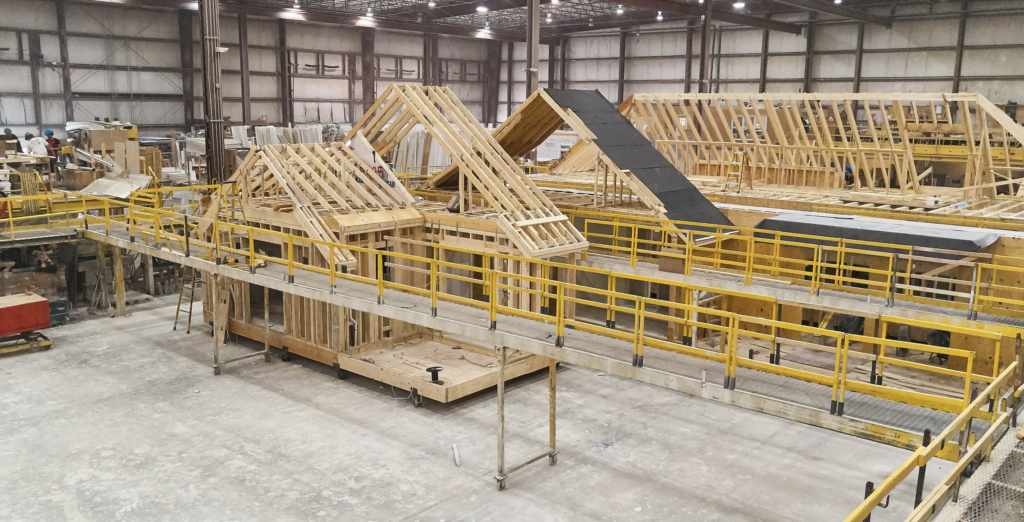
The perfect building rarely exists, which means most factory owners end up modifying an existing industrial facility or constructing a new one. Either option presents challenges related to layout, utilities, ceiling heights, loading areas, transportation access, and local zoning requirements. The facility should support an efficient workflow from receiving materials to final shipment, as poor layout decisions can create bottlenecks and inefficiencies that persist for decades.
Before purchasing machinery, determine exactly how your product will move through the factory. The most successful production lines are designed around process flow rather than around the latest piece of equipment that looked impressive at a trade show. Every station should have a purpose, every handoff should be planned, and potential bottlenecks should be identified before production begins. The smoother the process, the more profitable and predictable the operation becomes.
Engineering and Compliance Matter More Than You Think
Engineering is the backbone of every successful modular factory. Poor drawings cause production delays, design errors lead to warranty issues, and incomplete documentation creates confusion on the production floor. Investing in experienced engineering and drafting personnel may not seem exciting, but it is one of the smartest investments a new factory can make.
At the same time, every factory owner must understand the regulatory environment they are entering. State approvals, third-party inspections, quality assurance programs, transportation regulations, local codes, and certification requirements all play significant roles in daily operations. Many newcomers underestimate how much time and effort compliance requires, only to discover later that regulatory issues can delay production, shipments, and revenue.
Quality and Supply Chains Must Be Built Into the System
Quality cannot be inspected into a product after it is built. It must be built into every process from the beginning. Successful factories establish documented quality procedures, inspection points, accountability systems, and continuous improvement programs before production starts. The factories that struggle often treat quality assurance as something that can be addressed later, and customers eventually notice the difference.
Supply chain planning deserves the same attention. Materials do not magically appear when needed, and disruptions continue to affect manufacturers throughout the country. Long lead times, shortages, transportation delays, and price volatility remain ongoing challenges. Strong supplier relationships often become a competitive advantage, while weak supplier relationships can bring production to a standstill at the worst possible moment.
Technology Is a Tool, Not a Strategy
Technology continues to attract enormous attention throughout the offsite construction industry. Robotics, automation, artificial intelligence, and advanced software platforms all have the potential to improve efficiency. However, not every factory needs advanced automation on day one. Technology should solve specific problems and generate measurable returns.
I have seen factory owners purchase expensive equipment because they were impressed by a demonstration or trade show presentation. Sometimes those investments paid off, but often the equipment sat idle while management struggled to justify the expense. Buying technology simply because it is innovative can become a very costly lesson.
Transportation and Logistics Cannot Be an Afterthought
A completed module is only valuable if it can be delivered to the jobsite safely and economically. Transportation logistics should be considered early in the planning process rather than after production begins. Route restrictions, permitting requirements, escort vehicles, weather conditions, crane availability, and set crew scheduling all influence factory operations.
Many factories discover transportation challenges after they have already built homes. By that point, solving the problem becomes much more expensive and disruptive than it would have been during the planning stage.
People Still Determine Success
The wrong management team can destroy a factory even when everything else is done correctly. A strong General Manager, Production Manager, Engineering Manager, and Sales Leader establishes culture, accountability, productivity, and long-term direction. Finding experienced people is difficult, but settling for the wrong people is often worse.
The same applies to production employees. Most factories cannot simply hire an experienced workforce overnight. Recruiting, training, retaining, and developing employees must become an ongoing process. The best factories create systems that allow new employees to become productive quickly while maintaining quality and safety standards.
Build the Sales Pipeline Before the Production Line
This may sound obvious, but it is frequently overlooked. Many factories spend enormous amounts of time planning production capacity while assuming sales will somehow take care of themselves. A production line without orders quickly becomes a very expensive warehouse.
Dealer networks, builder relationships, developer partnerships, and direct sales channels should be established long before the first module is completed. The factories that reach profitability fastest are usually the ones that begin developing customers well before production begins.
Maintain Financial Discipline and Seek Experienced Advice
Cash flow problems have ended more factories than poor production. Strong accounting systems, inventory controls, purchasing procedures, budgeting processes, and financial reporting are essential from day one. Owners should know where every dollar is going and why, because manufacturing surprises are almost always expensive.
No one knows everything about modular construction, which is why experienced advisors can be invaluable. Engineers, production specialists, transportation experts, financial professionals, and industry consultants often help factory owners avoid costly mistakes. Their fees may seem expensive at first, but they are usually insignificant compared to the cost of solving problems that could have been prevented.
Modcoach Observation

Over the years, I have seen factories launch with beautiful buildings, state-of-the-art equipment, impressive investor presentations, and grand opening celebrations. Some of them were gone within three years. I have also seen modest factories open quietly with realistic expectations, experienced leadership, disciplined financial management, and a clear understanding of their market. Those are often the factories still operating ten or twenty years later.
Opening a modular factory is not really about constructing a building or installing equipment. It is about creating a sustainable business that can consistently produce quality homes, manage cash flow, serve customers, and adapt to changing market conditions. The factory itself is simply the tool. Success comes from everything that happens before the first wall is built and long after the first module leaves the door.