




A few years ago, researchers at the UCLA Center on Everyday Lives of Families did something that almost no one in housing had ever attempted before. Instead of asking homeowners how they used their houses, they watched how families actually lived in them.
Their landmark research project—later published in the book Life at Home in the Twenty‑First Century: 32 Families Open Their Doors—followed 32 middle-class families in the Los Angeles area. Anthropologists, sociologists, architects, and behavioral scientists spent years studying daily routines inside these homes.
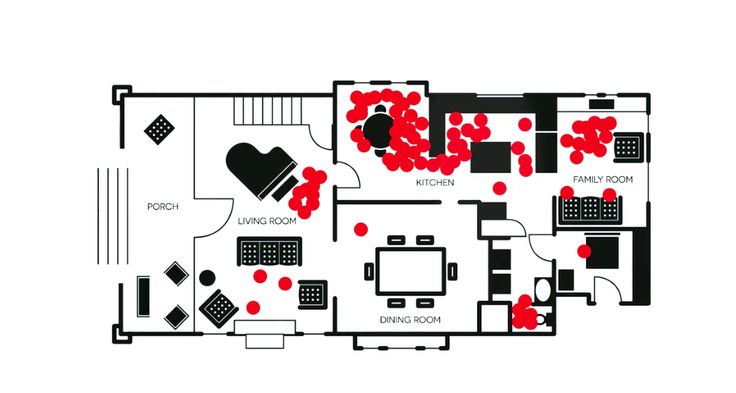
The researchers collected thousands of photographs, hours of video recordings, and movement tracking data that showed exactly where people spent their time inside the house. What they discovered revealed something surprising about modern American homes: much of the space we build simply isn’t used very often.
The Myth of the Fully Used House
For decades, residential design has assumed that families use most of the rooms in their homes on a regular basis. The UCLA study quietly shattered that assumption.
Movement tracking showed that families tended to cluster in just a few rooms, while large portions of the home saw little daily activity. In many houses, everyday life revolved around only three primary spaces: the kitchen, the family room, and an informal eating area.
Other rooms—particularly formal living rooms and formal dining rooms—were often used only occasionally, sometimes just for holidays or special gatherings. Some homes had entire spaces that remained largely untouched during the course of a normal week.
In other words, homes designed with many distinct rooms often functioned more like a few active zones surrounded by underused square footage.
The “Kitchen Gravity” Effect
One of the most fascinating discoveries from the research was something the team informally called “kitchen gravity.”
No matter how large the house was, family members naturally gravitated toward the kitchen. Even when homes had separate dining rooms and formal sitting areas, people gathered where food was prepared, snacks were shared, and conversations unfolded around the kitchen table or island.

Children did homework there. Parents sorted mail there. Casual conversations happened there. Even when the television was in another room, the kitchen remained the center of daily interaction.
This finding helps explain why modern home designs increasingly feature open kitchens connected directly to living areas. Builders and architects eventually realized that the kitchen was not just a work space—it had become the social hub of the home.
A Surprising Amount of Stuff
The UCLA research also uncovered another reality of modern life: American homes are filled with an extraordinary number of possessions.
In one house alone, researchers counted more than 2,000 visible items in just three rooms. Closets were packed, countertops were crowded, and storage areas were overflowing.
Garages told a similar story. In many of the homes studied, the garage had become a storage unit rather than a place to park cars. In fact, a large percentage of families could not park their vehicles in the garage at all because it was filled with household belongings.
The abundance of possessions was not just an organizational issue. Researchers even observed that clutter could increase stress levels among some family members.
Bigger Houses Didn’t Always Mean Better Living
Another subtle but important conclusion from the UCLA project was that larger homes did not necessarily produce happier family dynamics.
Families living in bigger houses still spent most of their time together in the same few rooms. Extra square footage often meant more storage space or rooms that were rarely used.
This doesn’t mean larger homes are undesirable, but it does suggest that the design and functionality of space may matter more than the sheer amount of it.
Lessons for Builders, Designers, and Homeowners
For architects, builders, and developers, the UCLA findings carry an important message.
Traditional home design has long been influenced by cultural expectations—formal dining rooms, formal living rooms, grand entryways. But real family behavior often tells a different story.
Modern families appear to value shared spaces that support everyday interaction far more than rarely used formal rooms. Open kitchens, comfortable gathering areas, and flexible multipurpose spaces better reflect how people actually live.
Designing homes around real behavior rather than tradition could lead to houses that are not only more efficient but also more enjoyable to live in.
A Modcoach Observation
When I think about the UCLA study, it reminds me of the ranch homes built across America in the 1950s and 60s. Those houses were often simple: a kitchen, a family room, a few bedrooms, and not much wasted space.
Then somewhere along the way we started building homes with rooms people felt they were supposed to have rather than rooms they truly needed.
The UCLA researchers simply documented what many homeowners quietly know already: life in a house happens in just a handful of places.
The real challenge for today’s housing industry isn’t necessarily building bigger homes. It may be learning how to build homes that better reflect how families actually live their lives.
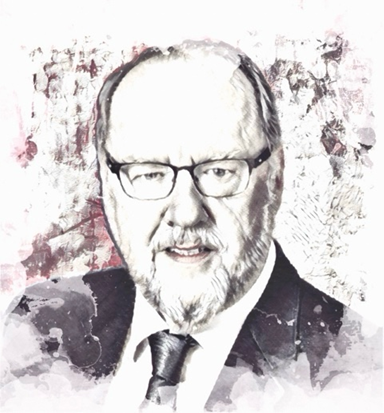
Gary Fleisher—known throughout the industry as The Modcoach—has been immersed in offsite and modular construction for over three decades. Beyond writing, he advises companies across the offsite ecosystem, offering practical marketing insight and strategic guidance grounded in real-world factory, builder, and market experience.