





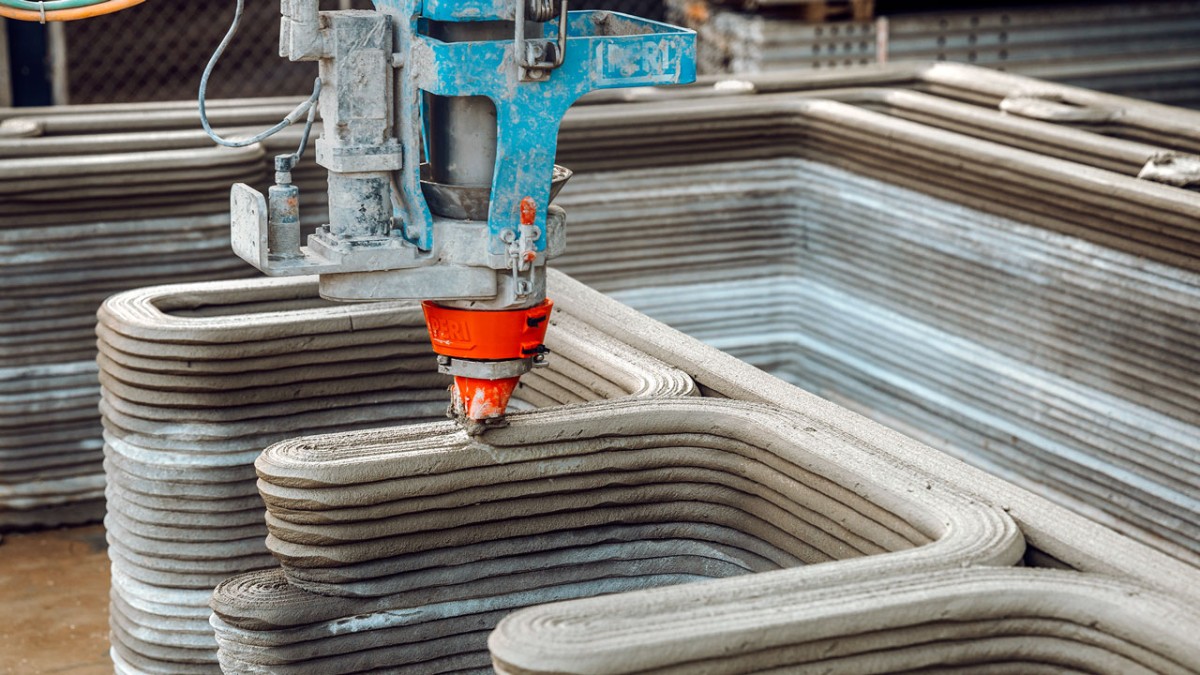
The Difference Between a Printed Shell and a Finished Home
Every few months, another headline appears announcing that a company has “printed a house in 24 hours” or “solved affordable housing” with a giant robotic concrete printer. The videos are impressive. A machine slowly moves back and forth while layers of concrete rise from the slab like toothpaste coming out of a tube. Investors smile, politicians tour the site, and reporters begin talking about the future of housing.
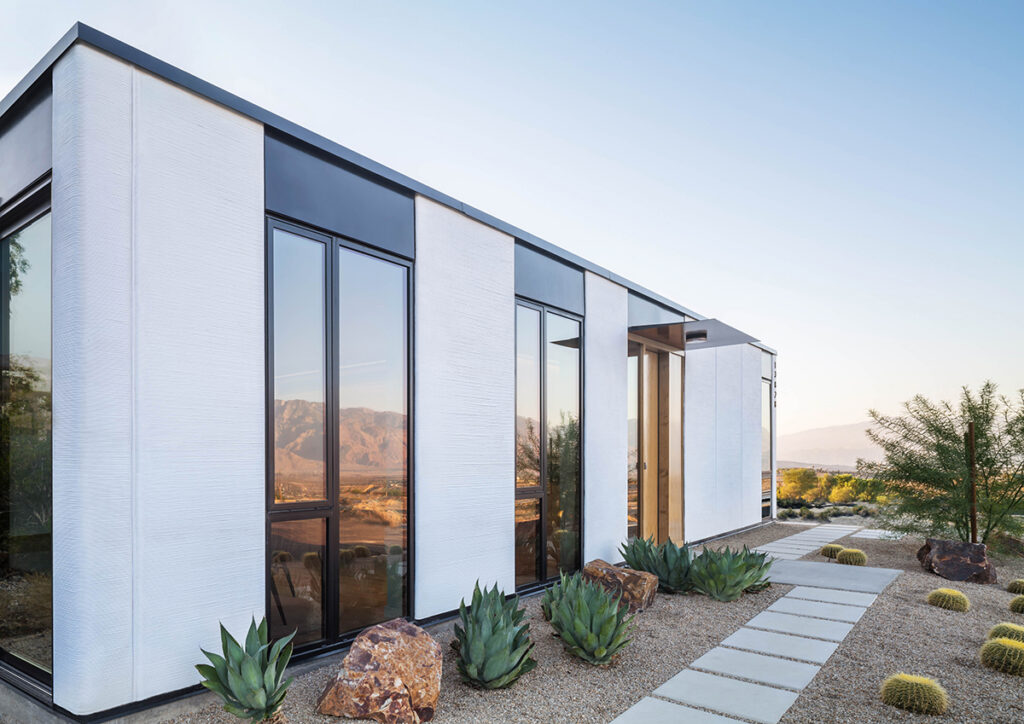
Then something interesting happens. Six months later, the home still isn’t finished.
That’s because most people outside construction misunderstand what has actually been completed. In many cases, all that was printed were the exterior and perhaps some interior structural walls. The rest of the home still has to be built almost the same way homes have been completed for decades. The roof still needs to go on, electricians still pull wire, plumbers still run pipes, HVAC contractors still install systems, cabinets still get hung, bathrooms still need tile, flooring still needs installation, inspectors still show up, and utility companies still move at utility company speed.
The printer may eliminate part of the framing process, but it doesn’t eliminate construction itself.
The Public Sees a Miracle. Builders See a Shell
This is where the skepticism starts creeping into my thinking. When the public hears “house printed in 48 hours,” many assume a family could move in a week later. In reality, the printed portion may represent only a fraction of the total labor, scheduling, coordination, and cost involved in building a completed home.
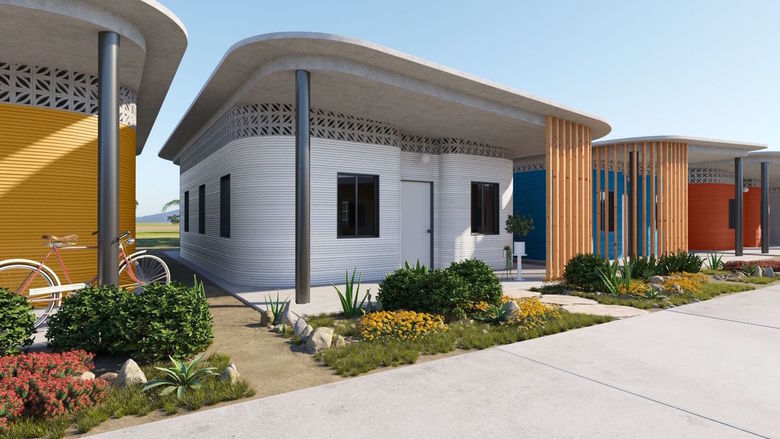
Traditional framing crews don’t just build walls. They create systems that allow every other trade to work efficiently afterward, and the entire construction industry has evolved around those systems for generations. 3D printed construction is trying to insert itself into that process while still relying heavily on conventional follow-up trades.
That doesn’t mean the technology is bad. It simply means the headlines are often far ahead of reality.
Faster? Yes. Entirely Revolutionary? Not Yet.
To be fair, there are real advantages to 3D-printed concrete homes. The shell can often be completed much faster than conventional framing, and in areas with severe labor shortages, that matters. In disaster recovery situations, it could matter even more. Printed concrete walls can also offer durability advantages in hurricane- or fire-prone regions, while some companies report lower material scrap and fewer on-site workers during the shell construction phase.
Those are meaningful benefits. But once the shell is complete, the project’s pace often slows back to normal construction speed because the rest of the work still depends on traditional trades, inspections, scheduling, deliveries, and subcontractors. In other words, the printer may compress one stage of construction while the remaining stages continue operating at ordinary speed. That’s a very different story than “houses built overnight.”

The Cost Question Nobody Likes Answering Clearly
Ask ten people in the 3D printed housing space whether these homes are truly cheaper, and you may get ten carefully worded answers because the honest answer is: sometimes.
The printing equipment itself is extremely expensive; the operators require specialized training; the concrete mixtures are often proprietary; engineering approvals can be complicated; and insurance and financing are still evolving. Many municipalities are uncertain about their permitting requirements, adding another layer of unpredictability.
Some projects have absolutely shown savings. Others quietly ended up costing about the same as conventional construction. And that’s before you factor in something the offsite industry already understands very well: prototypes almost always look cheaper in presentations than they do in full-scale production.
We learned that lesson many times in modular construction. A beautiful demonstration project can attract headlines, investors, and government tours, but repeating that process profitably hundreds or thousands of times is an entirely different challenge.
The Offsite Industry Has Seen This Movie Before
One reason I remain cautiously skeptical is that the offsite industry has a long history of revolutionary announcements that eventually collide with construction reality. Panelization was going to completely transform housing. Then, modular housing was going to dominate the market. Then, volumetric high-rise construction was going to replace conventional apartments. Then robotics would eliminate labor problems. Then AI would redesign everything overnight.
Most of those technologies did advance the industry, and some advanced it tremendously. But none of them eliminated the messy realities of land costs, zoning, labor shortages, financing, transportation, inspections, local politics, utility delays, or developer risk.
Construction has a way of humbling every technology eventually. That doesn’t mean innovation fails. It simply means housing is far more complicated than producing a product in a factory.
Where 3D Printing May Actually Shine
Ironically, the future of 3D concrete printing may not be complete homes at all. The technology may end up becoming far more useful in smaller, targeted applications where its advantages outweigh its complications.
Printing foundations could become common. Small ADUs might make sense. Emergency housing and disaster recovery structures could become ideal applications, while certain military or remote-site buildings may benefit greatly. Low-labor regions may eventually adopt the systems more aggressively than the traditional residential market.
The technology could also integrate into offsite construction rather than replace it. Imagine modular factories using printed wall systems, printed foundations, or hybrid structural components combined with traditional offsite methods. That may prove far more practical than trying to completely reinvent every part of residential construction.
Sometimes the future doesn’t replace the old system. Sometimes it simply becomes another tool inside it.
The Bigger Question Nobody Wants to Ask
There’s another question floating quietly in the background. If 3D printed housing eventually works at scale, who actually benefits the most?
Will it create affordable housing, or will it mainly generate larger profits for companies that control the printers, software, materials, and licensing systems? The construction industry has a long history of technologies that promised affordability but mostly improved margins somewhere else in the chain.
That doesn’t make the innovation dishonest, but it does mean we should probably stop pretending every new technology automatically solves affordability. Housing costs are driven by far more than wall systems. Land, infrastructure, financing, permits, labor, utilities, insurance, transportation, impact fees, and government regulations often account for a larger share of total project costs than the structure itself.
A faster wall system alone cannot magically erase those realities.
Modcoach Observation

I believe 3D concrete printing is real technology with real potential. I also believe some people are selling it as if it’s already solved problems that the entire construction industry has struggled with for generations.
The day may come when neighborhoods of printed homes become normal. But right now, much of the excitement still reminds me of watching someone frame a house and then announcing the project is almost complete before the plumber, electrician, roofer, HVAC contractor, insulation crew, drywall crew, cabinet installers, flooring installers, inspectors, and utility companies have even shown up.
In construction, finishing the shell is never the same as finishing the home.