






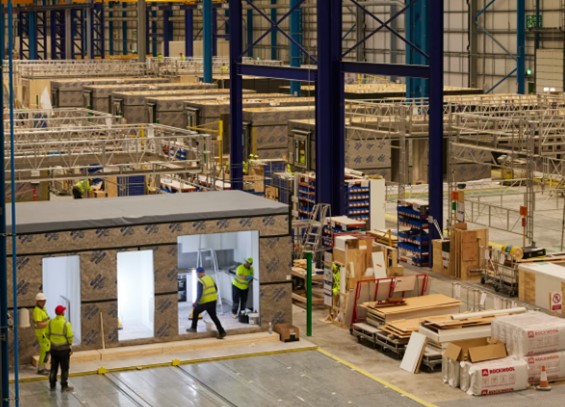
Repeatable projects and personalized homes can both produce profits. The trouble begins when a factory treats them as the same business.
Have you ever wondered why we talk about the modular construction industry as though every factory is chasing the same customer? We put apartment buildings, hotels, townhouses, and custom ranch homes under one heading, then act surprised when a production strategy that works beautifully for one creates problems for another.
They may all arrive on trucks, but that doesn’t make them the same business. Customers buy differently, engineering departments work differently, and production schedules carry very different risks. Before deciding how to grow a modular factory, somebody needs to answer a fairly basic question: What kind of business are we actually building?
Geography influences that answer. Dense metropolitan markets create opportunities for larger housing developments, while smaller communities support individual homes on scattered lots. But the dividing line isn’t a city limit. A suburban buyer may want a highly personalized home, while a rural developer may need forty identical rental units.
A more useful distinction is between a customer buying a repeatable building program and a customer buying a home designed around how a family lives.
When Repetition Is the Product
A developer planning an apartment building or hotel approaches modular construction with a particular set of questions. What will the completed project cost? When can the modules arrive? How much onsite work remains? Can the factory meet the specifications consistently enough to keep the entire development moving?
Several unit layouts, accessibility requirements, and architectural details may need careful attention. Repeatability doesn’t eliminate engineering. It creates an opportunity to spread that engineering effort across many similar modules.
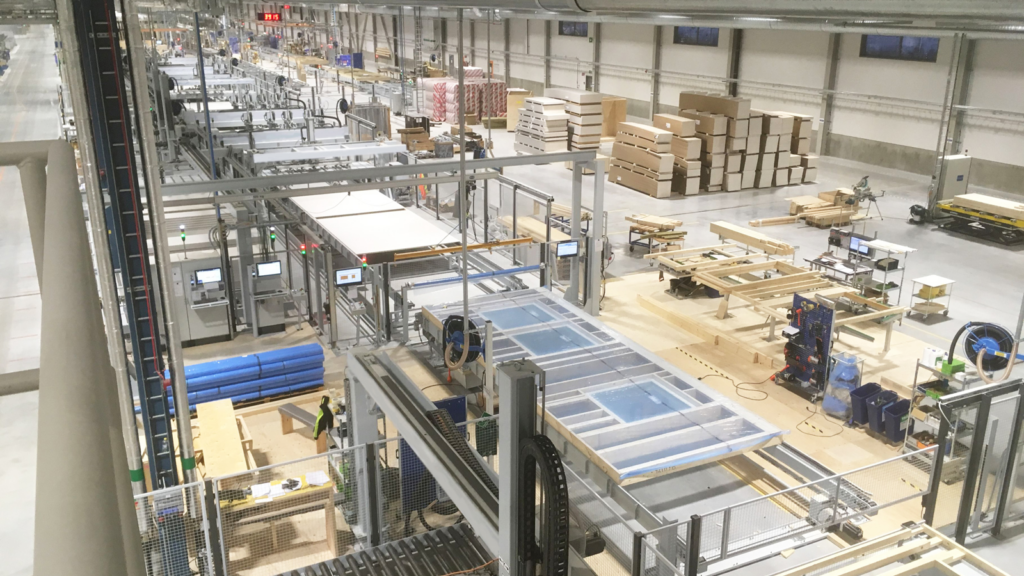
Once the design is settled, the value comes from executing it repeatedly. Purchasing can order materials in larger quantities. Production crews can become familiar with the assemblies. Quality checks can focus on recurring details. Each repetition gives the factory another opportunity to improve.
That is an attractive manufacturing proposition, provided the project is ready when the factory needs it. A large order can fill a production calendar, but financing delays, incomplete approvals, or an unprepared site can turn that same order into a very large scheduling problem.
I would much rather see a factory with a dependable release schedule than one celebrating a backlog that nobody can confidently put into production. There is a considerable difference between having work under contract and having work ready for the line.
When Personalization Is the Product
Now consider the family working with a local builder on a three-bedroom modular home. They may like almost everything about the standard plan, but “almost” is where the conversation begins.
They want a larger pantry, a room for sewing or woodworking, or a closed office door. Perhaps an aging parent will move in, making wider doorways and a different bathroom arrangement important. They aren’t trying to disrupt a manufacturing operation. They’re trying to make a major purchase fit their lives.
Telling that family that repetition is essential to factory efficiency will probably not close the sale. They understand the house is factory-built, but they still expect some say in what they buy.

For a factory organized to serve that customer, flexibility can be part of the product. The opportunity is to offer changes customers value and that the company can design, price, purchase, and build accurately.
That last part deserves attention. Charging extra for a change doesn’t automatically make it profitable. The additional price must cover the engineering time, purchasing effort, material differences, production labor, and any disruption the change creates.
A larger kitchen island might be an easy, profitable option. Moving plumbing after drawings have been released is an entirely different proposition, even if both requests arrive in an email labeled “a small change.”
Customization Needs Rules
The custom modular factory needs discipline just as much as the factory building repetitive commercial modules. Its discipline must accommodate a different sales process.
That means establishing which changes are available, how they are priced, who approves them, and when the customer must stop making them. A family can make meaningful choices without turning every home into a fresh engineering experiment.
Standard cabinet packages, approved bathroom configurations, alternate room layouts, and clearly defined structural options can give buyers flexibility while protecting production. The factory builds a system for handling variety instead of relying on someone in the office to remember what was promised.
The builder relationship matters here, too. A local builder who brings in several homes a year may never place an order large enough to make the factory’s annual highlight reel. But that builder can provide repeat business, local requirements knowledge, and a steady connection to the next customer.
Those relationships take time to develop. They can disappear much faster when delivery promises become unreliable.
The Big Order That Changes Everything
Now imagine a factory with an established network of custom-home builders winning a large commercial project. Management sees months of production, purchasing opportunities, and the chance to increase revenue. It is easy to understand the excitement.
The difficulty begins when the new project consumes more capacity than anyone allowed for. Engineering gets reassigned. Purchasing priorities change. Production slots promised to smaller builders begin moving down the calendar.
The sales team tells those builders to be patient because the factory has landed an important project. Unfortunately, the family waiting for its home considers its project important, too. So does the builder, who is paying expenses while waiting for delivery.
Some builders will tolerate the delay. Others will start calling competing factories, and a few will find that switching suppliers is less painful than explaining another missed date to their customers.
Then the commercial project ends. If the next large job is delayed and the smaller builders have taken their business elsewhere, the factory faces a gap that was partly created during its busiest months.
The big order may have produced a profit. Whether it strengthened the business is a separate question.
Serving Both Takes More Than Good Intentions
I don’t believe a factory must always choose one market and permanently shut the door on the other. There can be sound reasons to serve both, including a broader customer base and opportunities to balance different kinds of demand.
But that balance has to be designed into the operation. It cannot depend on management promising everyone that the schedule will somehow work out.
For some companies, the answer may be separate production lines or facilities. Others may reserve capacity for established residential builders, maintain separate engineering teams, or schedule commercial work in defined production blocks. Those approaches have costs, and the company needs enough business to support them.
Even without physical separation, management needs to understand the economics of each segment. How much engineering does each consume? What happens when a customer delays a decision? Who pays for storage? How much working capital is required before payment arrives?
A factory also needs rules for accepting work. An attractive contract can still be a poor fit if it overwhelms the company’s resources or forces it to abandon dependable customers.
Sometimes the most profitable production decision begins in the sales office with the words, “We cannot promise that delivery date.”
Gary’s Observation
I think the modular industry sometimes spends so much time explaining what factories can build that it spends too little time deciding what each factory should build. Technical capability matters, but it doesn’t answer questions about customers, cash flow, scheduling, or profitability.
A factory producing repeatable apartment modules can be an excellent business. So can a factory helping local builders deliver homes with carefully managed customization. Neither earns a profit simply by choosing its category. Both must organize the entire operation around the promises they make to customers.
The opportunity is to understand those promises before accepting the orders. If a company wants to serve both markets, it needs a practical system that protects capacity, manages pricing complexity, and keeps one group of customers from becoming an inconvenience when the other gets busy.
A full production line is a welcome sight. A full production line supported by profitable work and customers who intend to return is much better.