





Across much of the United States, entire neighborhoods are filled with ranch homes built in the 1950s, 60s, and 70s. Many of them sit on generous lots, were well constructed, and remain in desirable neighborhoods close to jobs, schools, and shopping. The problem is simple: families have grown, lifestyles have changed, and the original floor plans often feel cramped by today’s standards.
For many homeowners, the answer is an addition. And increasingly, builders and developers are discovering that modular construction can be one of the most practical and efficient ways to expand a ranch home, whether the project involves adding space to the first floor or placing a second-story “topper” on the existing structure.
Done correctly, modular additions can reduce construction time dramatically, minimize disruption to the homeowner, and deliver consistent factory-built quality. But like any form of construction, they require careful planning and an understanding of the modular process.
Why Modular Additions Are Gaining Attention
One of the most compelling advantages of modular construction is speed. When a traditional addition is built entirely on-site, progress can be slowed by weather delays, subcontractor scheduling, and unexpected jobsite problems.
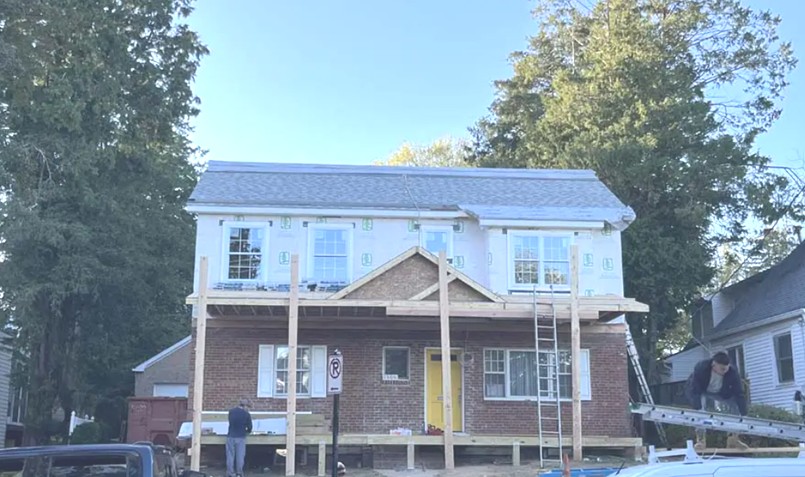
With modular construction, the process changes. While the site contractor prepares the foundation or modifies the existing structure, the addition itself is being built inside a factory. When the modules arrive, they are typically 80 to 90 percent complete, including insulation, windows, wiring, and often finished drywall.
For a second-story topper, the transformation can happen in a single day. The roof of the ranch home is removed in the morning, and by late afternoon a crane has placed the new modular floor system on top of the house. By evening, the structure is usually weather-tight again.
For homeowners who fear months of noise, dust, and disruption, this alone can make modular construction extremely appealing.
Less Chaos for the Homeowner
Anyone who has lived through a major renovation understands the toll it can take on daily life. Traditional additions often mean months of workers coming and going, open framing exposed to the elements, and construction activity that affects nearly every part of the house.
Modular construction reduces much of that chaos. Because most of the work happens inside the factory, the jobsite activity is significantly shorter.

For many topper projects, homeowners only need to relocate for a few days while the new modules are set and the structure is sealed. Compared with the lengthy disruptions of conventional construction, that difference can feel dramatic.
Factory Quality and Consistency
Another advantage often overlooked is the controlled factory environment where modular additions are built.
In a factory setting, materials are protected from rain and snow. Workers perform specialized tasks repeatedly, improving consistency and accuracy. Measuring systems, jigs, and quality inspections help ensure that walls, floors, and roof assemblies meet precise specifications.
The result is often a structure built with tighter tolerances and fewer construction variables than a similar addition framed entirely on a jobsite.
Predictable Costs and Fewer Surprises
Builders know that unexpected costs are one of the biggest headaches in any project. Weather delays, scheduling conflicts, and labor shortages can quickly erode margins.

Modular construction helps stabilize many of those variables. Factory production follows a controlled schedule, and labor costs are more predictable. Materials are purchased in bulk and protected from jobsite damage.
While modular additions are not always cheaper, they are often more predictable, which can be just as valuable for both builders and homeowners.
Why Ranch Homes Are Ideal for Modular Toppers
Ranch homes, by their nature, are especially good candidates for modular second-story additions.
Their wide footprints provide excellent support for modular floor systems, and many were built with structural designs that can be reinforced to carry additional loads. Instead of expanding outward onto the property, homeowners can add a second level containing bedrooms, offices, or even a full primary suite.
The modular sections arrive with framing complete, insulation installed, windows in place, and electrical and plumbing systems roughed in. What would normally take weeks of on-site framing can be accomplished in a matter of hours with a crane.
Modern Comfort and Energy Performance
Adding a modular section also gives homeowners the opportunity to incorporate modern building performance standards that their original ranch home likely lacks.
Improved insulation, tighter air sealing, and high-performance windows can dramatically improve comfort and reduce energy use. Many homeowners find that the new modular addition quickly becomes the most comfortable and energy-efficient space in the house.
The 7 Biggest Mistakes Builders Make with Modular Topper Additions
Despite the advantages, modular topper projects can quickly go wrong when builders unfamiliar with the process underestimate the planning required. After speaking with builders, factory personnel, and engineers over the years, several common mistakes appear again and again.
Mistake One: Failing to Verify Structural Capacity
One of the most serious mistakes occurs before the first module is ever built.
Not every ranch home was designed to support a second floor. Builders must work with structural engineers to determine whether the existing foundation, walls, and framing can carry the added load. In some cases reinforcement is required before the topper is installed.
Skipping this step can lead to costly redesigns or dangerous structural problems later.
Mistake Two: Underestimating Crane and Delivery Logistics
Modular toppers require cranes, and cranes require planning. Builders sometimes forget to consider access for large trucks and crane placement.
Trees, overhead wires, narrow streets, or soft soil can complicate delivery and lifting operations. Experienced modular builders plan these details well in advance so the crane set proceeds smoothly.
Mistake Three: Poor Integration with the Existing Home
A modular topper should feel like a natural extension of the home, not something dropped on top of it.
Builders must carefully coordinate rooflines, siding transitions, stair placement, and mechanical systems so the new level blends seamlessly with the original structure. When this integration is rushed, the finished home can look awkward or unfinished.
Mistake Four: Ignoring Mechanical and Utility Planning
Electrical, plumbing, and HVAC systems must be carefully coordinated between the factory-built modules and the existing house.
Builders sometimes assume these systems will simply connect without complications. In reality, careful planning is required to ensure mechanical systems are properly sized and located for the expanded home.
Mistake Five: Misunderstanding What the Factory Provides
Builders new to modular construction sometimes misunderstand what is included in the factory scope of work.
Transportation, crane costs, site preparation, and final finishing work are typically outside the factory’s responsibility. If these costs are not clearly understood at the beginning, both the builder and homeowner may face unpleasant surprises.
Mistake Six: Inadequate Scheduling Coordination
Modular construction relies on coordination between the factory schedule and the site contractor’s progress. If the foundation, structural reinforcements, or access preparations are not completed on time, module delivery can be delayed.
That delay can ripple through the entire project schedule.
Mistake Seven: Treating Modular Like Site-Built Construction
Perhaps the most common mistake is simply trying to treat a modular project like conventional construction.
Modular projects require detailed planning earlier in the process because once the modules are built, changes become far more difficult and expensive. Builders who understand this shift in workflow tend to achieve the best results.
A Modcoach Observation
Many builders still think of modular construction only in terms of building an entire house. But some of the smartest applications of modular building today involve expanding existing homes, especially the millions of ranch houses across America that families have outgrown.
Instead of tearing down a perfectly good home or enduring months of jobsite disruption, a modular addition or topper can deliver new living space quickly and efficiently. For builders new to modular construction, these projects can also serve as an excellent introduction to the modular process.
Like most things in construction, success comes down to planning, coordination, and understanding the system. When those pieces are in place, modular topper additions can turn an aging ranch home into something that feels brand new.

Gary Fleisher—known throughout the industry as The Modcoach—has been immersed in offsite and modular construction for over three decades. Beyond writing, he advises companies across the offsite ecosystem, offering practical marketing insight and strategic guidance grounded in real-world factory, builder, and market experience.