
Feast, Famine, and the Factory Floor
If you spend enough time walking the production lines of offsite and modular factories—as I have for more than three decades—you start to notice a pattern. It’s not written on the whiteboards. It’s not in the quarterly reports. And it rarely makes it into conference presentations.
But it’s there. Every single time.
One quarter the plant is running full tilt. Overtime is approved. Trucks are lined up. Managers are smiling. Investors are reassured. Everyone talks about expansion.
Six months later, the same factory is quiet. Temporary workers are gone. Full-time employees are worried. Executives are scrambling to find the next project. And lenders start asking uncomfortable questions.
The feast-or-famine cycle is still the number one issue facing the offsite industry today. Not automation. Not AI. Not robotics. Not sustainability.
Pipeline stability.
The Real Bottleneck Isn’t Technology
The industry has spent years talking about innovation. We’ve seen robots laying out wall panels, software tracking every screw and nail, and presentations about digital twins and predictive analytics. Those are important developments, and many will eventually transform how factories operate.
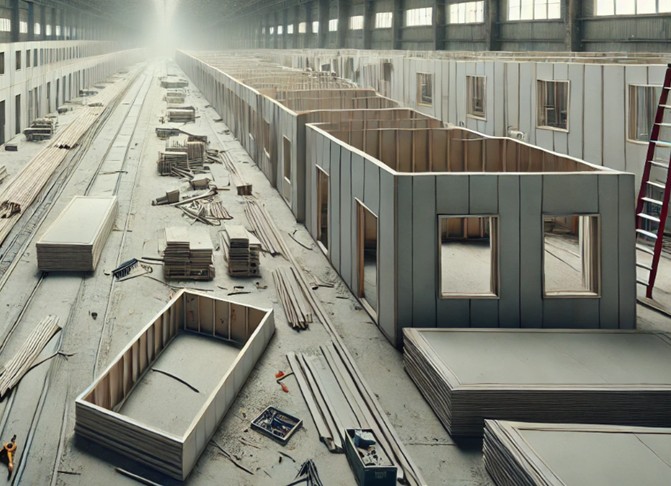
But none of them matter if the production line stops.
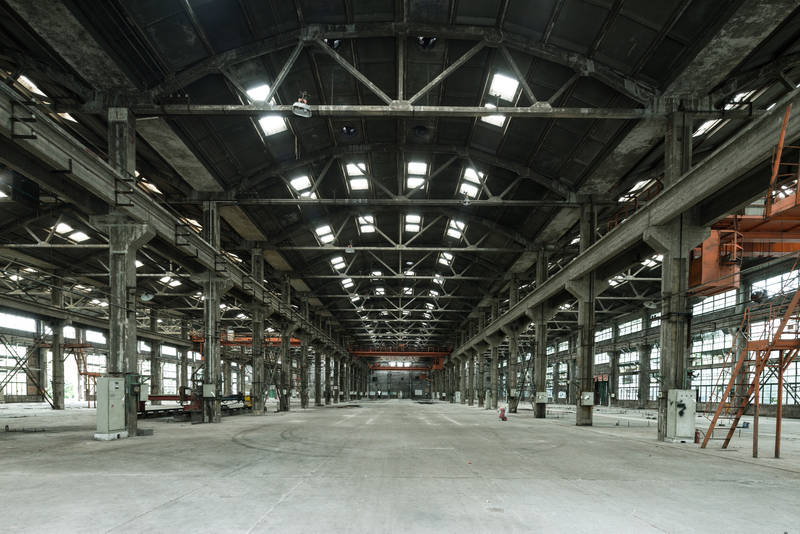
A factory can have the most advanced automation in the world, but if it does not have consistent work, it becomes a very expensive warehouse. Fixed costs don’t go away. Debt doesn’t pause. Equipment still depreciates. Skilled workers find more stable employment elsewhere.
Technology does not solve volatility. Strong pipelines do.
Why the Boom-and-Bust Cycle Persists
The offsite sector is still tied too closely to individual projects. One large multifamily development can fill a factory for months. When that project stalls due to financing, zoning delays, or changing market conditions, the production schedule collapses overnight.
Developers often assume the factory will simply wait.
Factories cannot.
Unlike site-built construction, where crews can be scaled up and down more easily, factories require stable throughput. They are manufacturing businesses, not project-based contractors. The mismatch between these two models is at the heart of the problem.

Many developers are still learning this.
Investors Have Learned the Hard Way
The last decade brought significant capital into the offsite industry. Some companies raised hundreds of millions of dollars based on bold visions and rapid growth projections. Many of those investors expected scalability similar to technology companies.
Instead, they discovered the realities of housing.
Projects move slowly. Financing is fragile. Interest rates change. Political priorities shift. And a single stalled project can disrupt months of planned production.
The result is that investors and lenders have become far more cautious. They are no longer impressed by innovation alone. They want stability, predictable margins, and diversified customer bases.
More importantly, they want to know the factory will still exist in three years.
Developers Are Asking Tougher Questions
This shift is already changing the conversation. Developers are no longer focused solely on price or speed. They are asking deeper questions before committing to offsite strategies:
Who guarantees delivery when financing gets tight?
Who holds pricing steady when material costs fluctuate?
Who stands behind warranties if the company restructures or shuts down?
These are not academic concerns. They are real risks that developers have experienced firsthand.
Trust has become as important as cost.
The Hidden Advantage of Stability
Factories that solve pipeline volatility will gain a powerful competitive advantage. They will attract repeat customers. They will build long-term developer partnerships. They will secure better financing. They will recruit and retain stronger teams.
But achieving stability requires a different mindset.
It means moving beyond one-off projects and toward strategic relationships. It means working with developers early in the design process. It means offering standardized product platforms that can be used across multiple projects. It means building diversified pipelines that include housing, hospitality, healthcare, education, and commercial work.
It also means saying no to projects that do not align with long-term goals.
This is not easy. But it is necessary.
The Cultural Shift Ahead
The industry must also shift its internal culture. Many factories still celebrate large contracts without asking whether they are repeatable. Growth without continuity creates instability. Stability without growth creates stagnation.
The winning formula lies somewhere in between.
Leadership teams must think like manufacturers, not contractors. They must focus on throughput, scheduling, and customer retention. They must measure success not just by annual revenue but by the consistency of monthly production.
This may sound boring.
But boring builds durable companies.
The Future Belongs to Reliable Factories
The next decade will not be defined by the most advanced technology. It will be defined by the most reliable factories. The ones that deliver consistently. The ones that manage risk. The ones that understand their customers and build trust over time.
The feast-or-famine cycle has been accepted for too long as a normal part of the business. It does not have to be.
Factories that solve this problem will move from surviving quarter to quarter to thriving year after year.
And when that happens, the offsite industry will finally begin to reach the scale it has always promised.
.
With more than 10,000 published articles on modular and offsite construction, Gary Fleisher remains one of the most trusted voices in the industry.
.
CLICK HERE to read the latest edition

Contact Gary Fleisher