


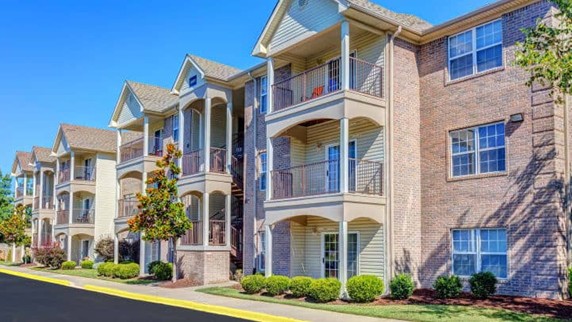
The Housing Industry’s Latest Buzzword
Over the past couple of years, a new phrase has been popping up everywhere in construction, development, government housing programs, and offsite construction conversations: workforce housing.
At first glance, it sounds like another trendy term dreamed up by consultants, developers, and marketing departments trying to soften the language around affordable housing. But the reality is that workforce housing is becoming one of the most important housing categories in America because it directly targets the people who keep communities functioning every single day.
Teachers, nurses, police officers, firefighters, warehouse workers, municipal employees, tradespeople, restaurant managers, and younger middle-income families are increasingly finding themselves unable to afford homes near where they work. They make too much money to qualify for many low-income housing programs, yet not enough to comfortably buy or rent in many growing markets.
That gap is what workforce housing is designed to address.
The Modern Definition
Today, workforce housing generally refers to homes priced for households earning somewhere between 60% and 120% of an area’s median income. In plain English, these are working people with steady jobs who simply can’t keep up with rising housing prices.
Unlike traditional affordable housing, workforce housing is often marketed as housing for the “missing middle.” These are the families who are increasingly squeezed between luxury housing prices and limited government-supported housing programs.
In many cities, that missing middle is enormous.
Developers and municipalities are now using the phrase because it sounds less politically charged than “affordable housing.” In some communities, mentioning affordable housing can immediately trigger opposition from nearby residents. Workforce housing, on the other hand, tends to create images of teachers, healthcare workers, and local families simply trying to live near their jobs.
That wording matters more than many people realize.
Offsite Construction’s New Opportunity
For the offsite construction industry, workforce housing could become one of the largest opportunities the industry has seen in decades.
Factories are already being approached to build apartments, townhouses, duplexes, cottage communities, and build-to-rent developments aimed squarely at workforce buyers and renters. Developers are attracted by faster construction schedules, more predictable costs, and the ability to produce housing at scale.
Municipalities are also paying attention.
Many cities are now openly discussing zoning changes, density allowances, modular incentives, and public-private partnerships specifically tied to workforce housing projects. Some employers are even exploring ways to help provide housing for their own employees near factories, hospitals, and distribution centers.
Ironically, what feels like a “new” housing trend is actually something America has done before.
When Workforce Housing Was Called Something Else
Back in the 1930s, 1940s, and even well into the post-war years, workforce housing wasn’t called workforce housing at all. It was simply known as company housing, mill villages, factory towns, or worker housing.

Across America, manufacturers, textile mills, steel companies, coal operators, railroads, and industrial employers built entire neighborhoods designed specifically to house their employees close to work. Many of these developments consisted of modest row houses, duplexes, and small detached homes built quickly and affordably near factories.
The idea wasn’t entirely charitable.
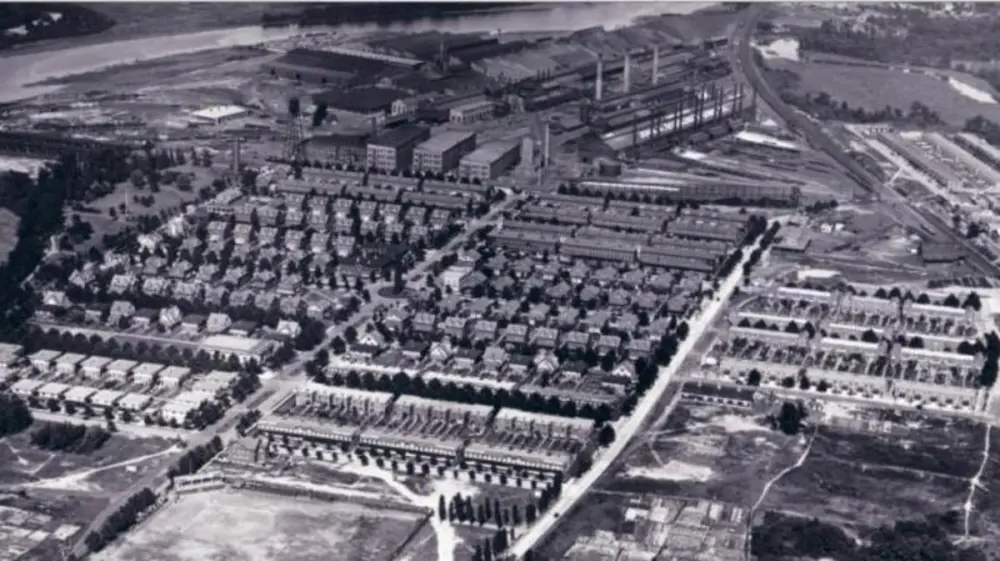
Employers needed reliable workers close to their facilities, especially in areas where transportation was limited. If workers lived nearby, absenteeism dropped, productivity improved, and companies maintained a more stable workforce.
Some of these villages became thriving communities.
In Pennsylvania, Ohio, West Virginia, and throughout the industrial Northeast and Midwest, rows of nearly identical worker homes lined streets within walking distance of mills and factories. Textile towns across the South followed the same model. Entire communities were built around employment centers.
Many of those homes still exist today.
The Rise of the Company Town
From the 1930s through much of the late twentieth century, the concept evolved into what many people later called “company towns.” While some became symbols of worker exploitation, others provided stable housing opportunities for generations of middle-class families.
In many cases, the homes were simple but practical.
The houses were not luxury homes, nor were they intended to be. They were designed to give working families affordable shelter while allowing local industries to maintain a dependable labor force. The neighborhoods often included schools, churches, corner stores, parks, and community gathering spaces.
Factories understood something that many employers are rediscovering today.
If workers cannot afford to live nearby, eventually the business itself suffers.
By the 1970s through 2000, however, many of these factory-based housing systems faded away as industries closed, manufacturing moved overseas, unions weakened, and suburban sprawl changed where and how Americans lived.
Housing became less connected to employment and more tied to speculative real estate markets.
Now the pendulum may be swinging back.
Why Workforce Housing Is Returning
The modern workforce housing movement is being fueled by several pressures all happening at once.
Home prices have risen dramatically in many markets while wages for middle-income workers have failed to keep pace. At the same time, labor shortages are becoming a serious concern for hospitals, schools, municipalities, and manufacturers trying to attract workers.
Some communities are now realizing that if teachers, nurses, police officers, and skilled workers cannot afford to live locally, the entire economic structure begins to weaken.
Employers are starting to notice it too.
Hospitals are struggling to recruit nurses in high-cost areas. School systems are losing younger teachers. Construction companies are facing worker shortages. Even factories are beginning to understand that labor recruitment becomes far more difficult when employees must commute long distances due to housing costs.
That realization is pushing workforce housing from a political talking point into an economic necessity.
Could Offsite Construction Lead the Way?
This may be one of the moments the offsite construction industry has been waiting for.
Workforce housing fits almost perfectly into the strengths of modular, panelized, and prefab construction. Repetitive designs, faster timelines, predictable production schedules, and scalable manufacturing all align well with what workforce housing developments require.
Instead of building one expensive custom home at a time, factories can potentially produce entire neighborhoods designed specifically for middle-income workers.
And unlike some past affordable housing projects, many of today’s workforce housing developments are being designed to look attractive, walkable, and community-oriented.
That matters because perception matters.
Modcoach Observation

What fascinates me most is that workforce housing is really America rediscovering something it already knew decades ago. Back then, factories and industries understood that housing workers near their jobs wasn’t just good for employees—it was good business.
For a short time, when I was 6 years old, my family lived in a row house originally built by the American Viscose Company in Lewistown, PA.
Somewhere along the way, we forgot that lesson.
Now, after decades of rising housing prices, impossible commutes, and shrinking affordability, the construction industry is once again being asked to solve a problem it helped create. The difference this time is that offsite construction may finally have the technology, production capacity, and public acceptance to become a major part of the solution.